By Majeed Salaam
When Tabitha Iliya lost her husband nine years ago, her world collapsed into a daily struggle for survival. With six children to feed, no formal education, and no safety net, the 48-year-old widow from Kaduna State became the sole provider of a household on the brink. Her only source of income? A small roadside sugarcane trade that barely earned enough for food, let alone security.
“Some days, we did not even make N1, 000,” Tabitha recalled. “But we still had to pay rent, buy firewood, and send the ‘[children to school.”
Living in a poorly constructed building with no fencing, no access to clean water, and a collapsed communal toilet, her family was exposed to the elements and constant insecurity. “Rain used to flood our kitchen. The walls were open. I slept with one eye open,” she said. “We did not just lack shelter – we lacked peace.”
Things worsened when her landlord increased the rent from N20, 000 to N30, 000 per year – an impossible sum for a woman selling sugarcane with no steady capital. To help, her eldest daughter began braiding hair at a nearby salon, juggling school with adulthood far too soon.
But Tabitha never gave up hope. And hope, it turned out, had been quietly making its way toward her.
A Life-Changing Intervention
In 2024, Tabitha was introduced to the Adashe Women Society – a nationwide support network for disadvantaged women, including widows, single mothers, and displaced individuals. Through Adashe, she learned about the Social Housing Program by Family Homes Funds Limited (FHFL), a federal initiative aiming to empower Nigeria’s most vulnerable with more than just shelter.
“When they told me I could apply for a home… I laughed,” Tabitha says. “I thought it was a joke. But something inside told me to try.”
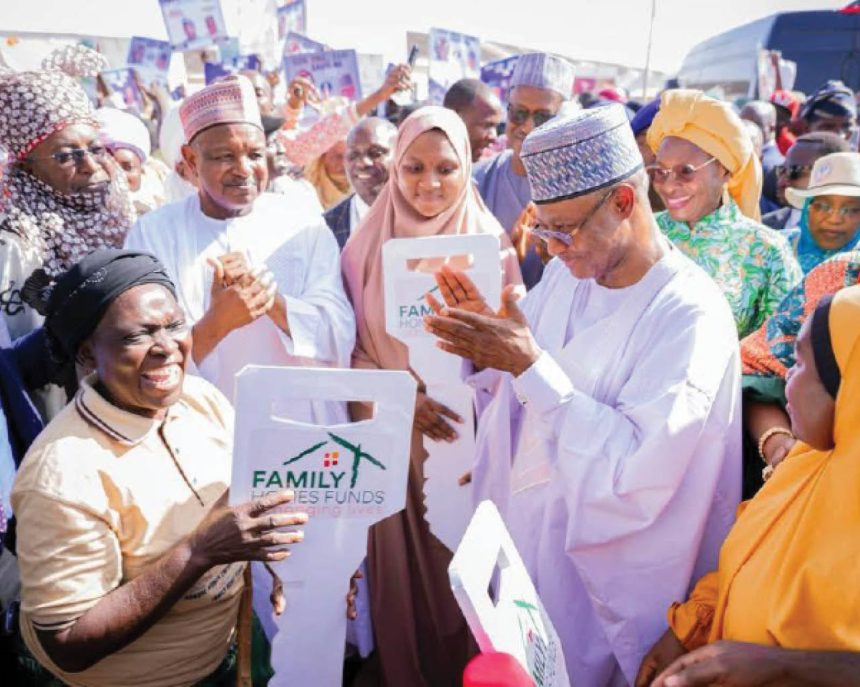
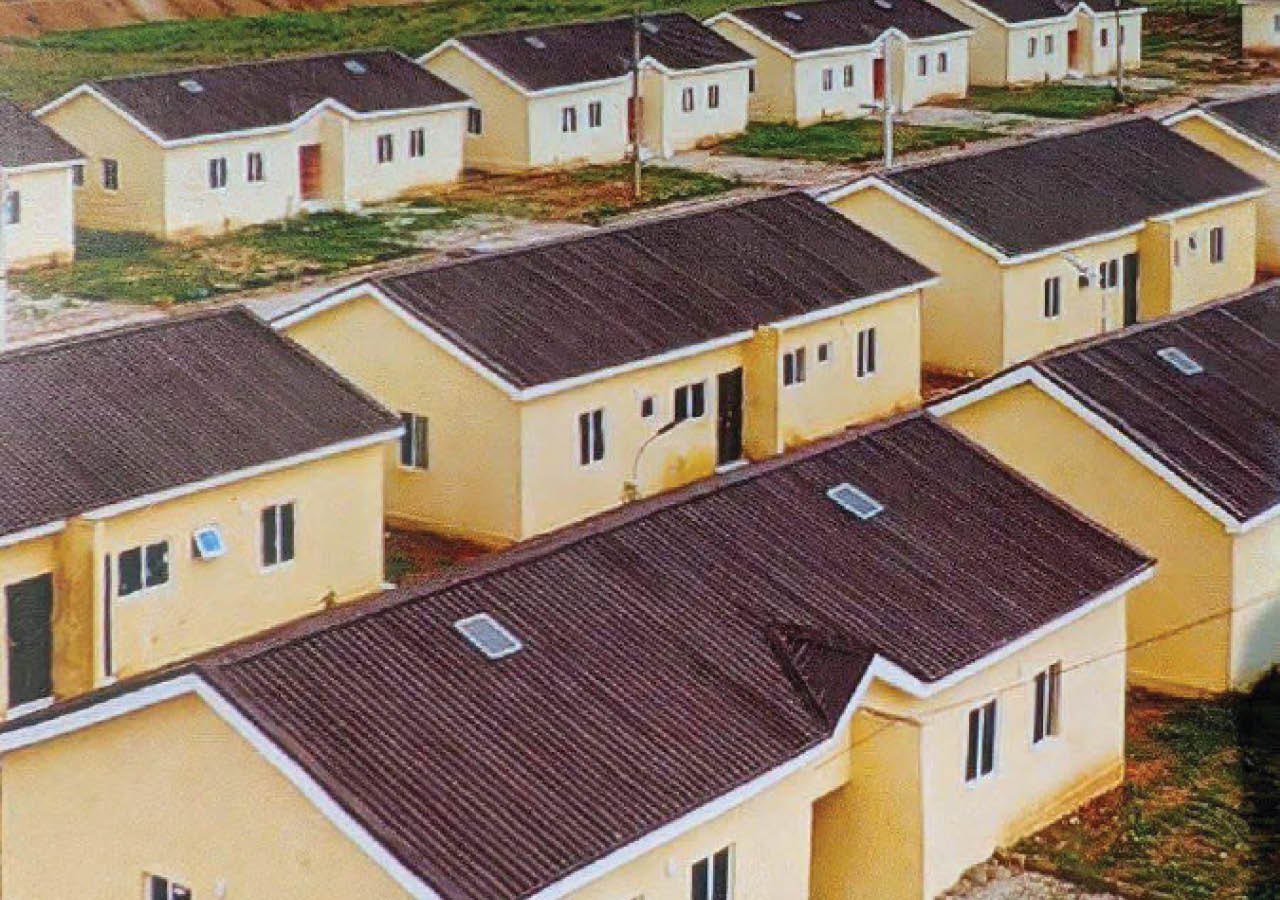
Her application was accepted. Tabitha was selected as one of 100 women to receive a fully built, energy-efficient two-bedroom home along the Kaduna-Zaria Road, under the pilot phase of FHFL’s groundbreaking initiative.
“Everything changed from that moment,” she says. “They did not just give me a house. They gave me training, tools, and capital to start a new life.”
From Vulnerable to Entrepreneur
As part of the program’s four-pillar empowerment model – housing, skills training, equipment, and business capital – Tabitha was enrolled in a cosmetology course. She learned how to style hair, apply makeup, and produce small beauty products. Upon graduation, she received a basic beauty kit and startup capital to begin offering her services from her new home.
“The first time I earned N3, 000 from one client, I cried,” Tabitha shared. “It felt like I had broken out of prison.”
Today, her small salon setup, tucked neatly in her living room, has become a source of both income and confidence. Her children no longer sleep in fear. Her youngest now wants to study science. “We even have running water,” she laughs. “I never thought I would say that.”
FHFL’s housing program is far more than construction – it is a social model for inclusion, sustainability, and human dignity. The EPS prefabricated panels used in the homes reduce cost, shorten construction time, and lower environmental impact. Each home is designed to maximise airflow, natural lighting, and energy efficiency, aligning with both Nigeria’s climate targets and the UN Sustainable Development Goals.
But the true strength of the program lies in its holistic approach. Every woman selected is given the tools to rise, not just shelter. As FHFL’s team explains, “We do not just hand over keys – we hand over control. Control of your life, your income, your children’s future.”
With backing from the Federal Ministry of Budget and Economic Planning, the initiative is designed for replication and scale, targeting underprivileged women, internally displaced persons, and the economically excluded across Nigeria.
A Future Reimagined
Tabitha now plans to expand her services into bridal styling, and she dreams of employing other young women in her community. “This time last year, I was hiding from landlords,” she says. “Now I talk about business with confidence.”
Her story – like those of 99 other women in the pilot phase – is proof that real change comes when policy meets compassion and structure meets story. “For the first time in a long time,” she says, “I feel human again.”