REFORM TALKS with Enam Obiosio
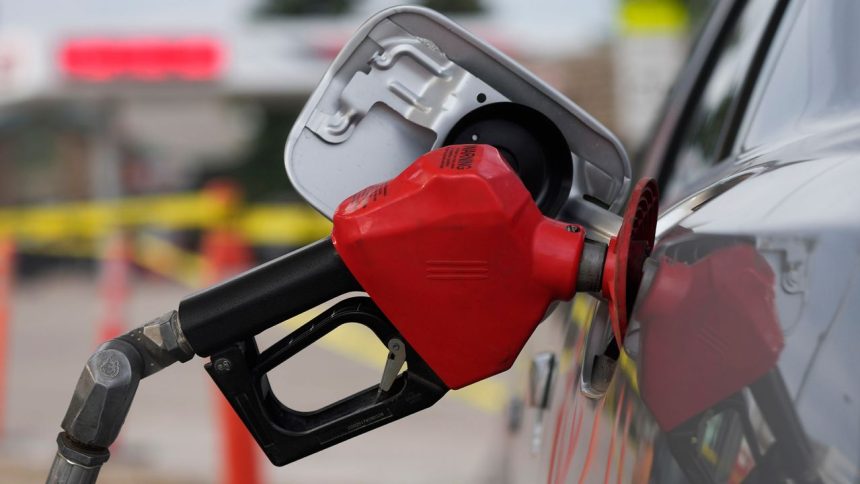
When news broke that the federal government was introducing a 5% fuel surcharge effective January 2026, the immediate reaction across the country was predictable: anger, fear, and suspicion. Nigerians have endured repeated waves of economic hardship – from the removal of fuel subsidies to surging inflation – so any policy that hints at higher petrol prices naturally triggers alarm. Trade unions have already threatened strikes, and ordinary citizens wonder if this is yet another burden on already thin wallets.
But I believe that before dismissing the idea outright, we need to look at what this surcharge is really designed to do and what it could mean for Nigeria’s development journey. The proposal, as explained by Taiwo Oyedele, Chairman of the Presidential Committee on Fiscal Policy and Tax Reforms, is not another cash grab. It is a ring-fenced levy – a dedicated pool of funds – to fix Nigeria’s failing roads. And if handled transparently and effectively, it could be one of the most important reforms of this decade.
Nigeria has about 200,000 kilometres of roads, and yet only around 60,000 of them are in decent condition. Anyone who has travelled outside Lagos or Abuja can testify to the nightmare of our highways – potholes deep enough to swallow tyres, bridges crying out for repair, and routes that should take four hours stretching into 10 because vehicles crawl through dangerous, broken terrain.
This is not just an inconvenience. It is a bleeding wound on the economy. Bad roads destroy goods before they get to market. They raise the cost of transporting food, cement, textiles, and every other commodity that feeds and clothes Nigerians. They also increase accidents, injuries, and deaths.
The numbers speak clearly. Food inflation in rural areas compared to urban centres is sometimes 5% higher, largely because of transport challenges. In most countries, the rural–urban food price gap is under one percent. What does this mean? That Nigeria is paying an invisible tax every day, collected not by government but by bad roads. That is the true surcharge – one that extracts more from citizens than any official levy.
The proposed 5% surcharge is designed to directly tackle this road deficit. In theory, every naira collected will be channeled into rehabilitating and constructing roads that ease the movement of goods and people. Done right, this is not just taxation; it is investment. An investment that lowers inflation, boosts productivity, and makes Nigerian businesses more competitive.
Some argue that we already saved money from removing fuel subsidies in 2023 and that those funds should be enough to fix infrastructure. But the truth, as Oyedele admitted, is sobering: even with the billions saved from subsidy removal, Nigeria’s infrastructure gap is so massive that subsidy revenues alone cannot close it. Roads, power, railways, and ports all demand huge sums. Without a dedicated mechanism like this surcharge, we will continue to patch potholes instead of building the highways of the future.
Of course, timing is everything. Nigerians are already squeezed. So how do we introduce such a policy without breaking households? Oyedele’s proposal offers an answer: tie the implementation to favourable economic conditions. If the naira strengthens against the dollar, or if crude oil prices dip, the surcharge can be rolled out with little or no noticeable increase in pump prices. In other words, the levy would be counterbalanced by market gains.
This kind of smart, flexible timing shows that policymakers are not blind to the realities ordinary Nigerians face. It is a recognition that reform must be sensitive and not punitive.
We already have an example that works – the Road Infrastructure Tax Credit Scheme. Under this model, private companies like Dangote, NLNG, Lafarge, and MTN invest directly in road construction in exchange for tax credits. The transformation around Apapa, once crippled by endless traffic jams, is evidence that this approach delivers results.
Imagine if the same principle is applied to the new surcharge. Instead of disappearing into the black hole of “federal accounts,” funds can be pooled into transparent, project-specific road investments, perhaps with private sector participation to ensure efficiency and accountability. Every Nigerian should be able to see where their surcharge is going – “this naira fixed this highway, that bridge, this bypass.”
Here lies the real obstacle: trust. Nigerians have been promised too many reforms that never materialized. We have seen taxes collected with fanfare only to vanish in the fog of bureaucracy and corruption. The fear is real: what stops this surcharge from becoming another slush fund?
This is where government must rise to the challenge. First, transparency: publish quarterly reports on every road project funded by the surcharge. Second, accountability: involve civil society, professional bodies, and even the media in monitoring and verifying progress. Third, discipline: ensure that the funds cannot be diverted, no matter the temptation. Only by demonstrating results – kilometre by kilometre, bridge by bridge – can government win public confidence.
I do not deny the worries of labour unions or ordinary Nigerians. Prices are high, wages stagnant, and patience is thin. Any tax proposal in such an environment feels like a slap. But we must ask ourselves: do we want to continue paying the hidden tax of bad roads, which costs us far more in inflation, accidents, and lost opportunities? Or do we want to take a bold, transparent step toward fixing the very arteries that power our economy?
If implemented with integrity, the surcharge could be the beginning of a new compact between government and citizens – one that says: yes, you pay, but you also see the results. Roads that cut travel times in half, food prices that begin to stabilize, businesses that can move goods cheaply and safely. That is the development bargain worth making.
There is also a broader symbolism here. For too long, Nigeria’s development has been tied to oil prices, subsidy battles, and the politics of revenue sharing. A fuel surcharge dedicated to infrastructure represents a shift – from consuming oil wealth to using oil-related revenues to build lasting assets. From dependency to investment.
It is also a reminder that fiscal reform is not about squeezing citizens dry but about designing smart policies that convert today’s pain into tomorrow’s gain. Countries that are now prosperous did not get there by avoiding tough choices. They got there by making hard decisions, ensuring discipline, and investing in the future.
At the end of the day, Nigeria cannot grow on bad roads. Every broken highway is a broken promise of development. Every pothole is a pothole in our economy. The 5% fuel surcharge is not perfect, but it is a step toward closing one of the most crippling gaps in our national progress.