By Ahmed Ahmed
President Bola Ahmed Tinubu has assured Nigerians of improved electricity supply, pledging decisive action to address persistent nationwide blackouts and strengthen the power sector.
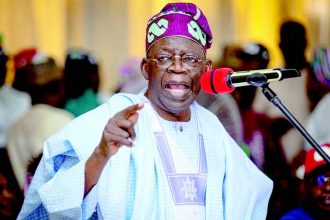
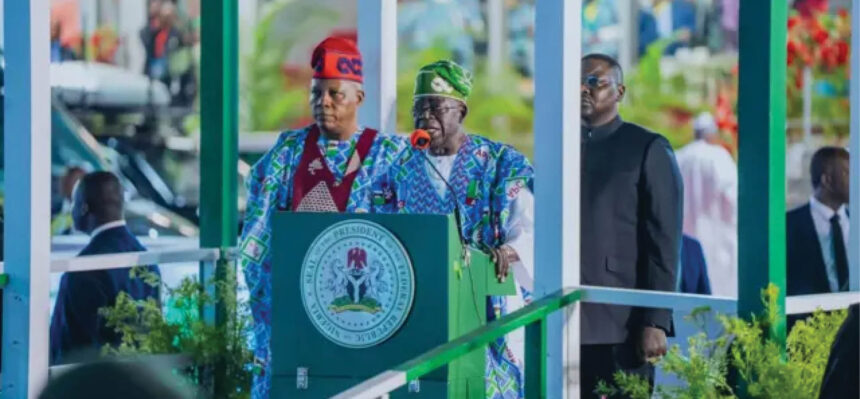
Speaking recently at the 4th Elective National Convention of the All-Progressives Congress (APC) in Abuja, the President acknowledged widespread concerns over erratic power supply.
“I assure you, many of you lamenting the problems of electricity power. Yes, we are paying attention to that,” President Tinubu said.
As part of efforts to stabilise the sector, he disclosed that the newly established Grid Asset Management Company (GAMCO) will inject an additional 1,500 megawatts into a new grid corridor to boost transmission capacity.
“The Grid Asset Management Company will inject up to 1,500 megawatts weekly into a new grid corridor.”
“We are going to improve… Electricity will become better and be assured,” he added, linking improved supply to industrial expansion. “There will be opportunity and progress in our industrial life.”
The assurance comes amid continued grid instability, with multiple collapses recorded in 2025 and 2026, alongside legacy challenges such as debts owed to Generation Companies, GenCos, gas suppliers and ageing transmission infrastructure.
Vice President Kashim Shettima reaffirmed the administration’s resolve to overhaul the sector, stating that energy security remains central to national development.
“What we are set to achieve requires data-driven decision-making, intelligent deployment of technology in asset management, and strong partnerships with both local and international stakeholders,” he said.
“We are open for business. We are committed to creating a transparent and investor-friendly environment. Institutions like NELMCO show that we are not only serious about reform, but capable of sustaining it,” he added.
Minister of Power, Adebayo Adelabu, said reforms anchored on the Electricity Act 2023 have decentralised the sector, enabling 16 state electricity markets and attracting over $2 billion in investments.
He noted that generation capacity has risen from 13 gigawatts to 14 gigawatts, with a peak of 5,801.44 megawatts, while sector revenue grew by 70 percent in 2024 and government liabilities dropped by about N700 billion.
Adelabu added that the Presidential Metering Initiative, PMI, backed by N700 billion from FAAC and a $500 million World Bank facility, is underway to close the metering gap.
He further disclosed that the Nigeria Electricity Liability Management Company, NELMCO, has reduced inherited liabilities from N2.303 trillion to N146.76 billion, alongside a reduction of ground rent claims from N644 billion to N41.8 billion and a 45 percent cut in post-privatisation MDA debts.
Minister of Finance and Coordinating Minister of the Economy, Wale Edun, said ongoing reforms, including GAMCO, will improve efficiency and support small businesses.
NELMCO Managing Director, Ms Mojoyinoluwa Dekalu-Thomas, disclosed that the agency has generated over N30 billion from asset sales and will transition into a strategic asset custodian supporting liquidity and investment.
On the legislative side, Senator Enyinnaya Abaribe, represented by Senator Oyelola Ashiru, pledged continued National Assembly support, while energy expert, Prof Bart Nnaji, warned that Nigeria must urgently address structural gaps, including restoring PPAs, settling over N6.8 trillion owed to GenCos and over N200 billion to DisCos.
He added that Nigeria needs about 100,000MW by 2040 and noted that no new power plant has been built in 12 years aside from the 451MW Azura-Edo plant and 188MW Geometric plant, stressing that it costs about $1.3 million to generate one megawatt.
With reforms underway and investments rising, the administration maintains that improved electricity supply remains central to unlocking industrial growth and economic expansion.