By Kingsley Benson
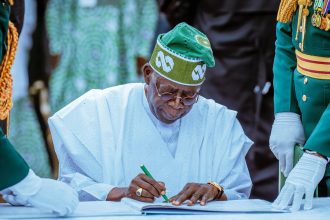
President Bola Ahmed Tinubu has renewed his call on state governors to fully respect and implement the Supreme Court judgment granting financial autonomy to Nigeria’s 774 local government councils, signalling that continued delays could attract decisive executive action.
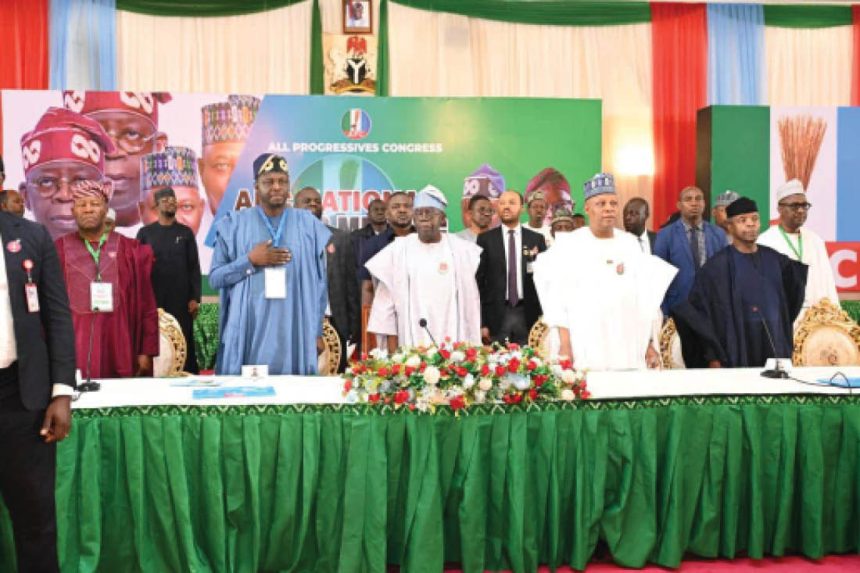
The president made his position clear recently at the 15th National Executive Committee meeting of the All Progressives Congress (APC) held at the State House Conference Centre, Abuja, where senior party leaders, governors, federal lawmakers, and top government officials gathered to review party affairs and national issues.
President Tinubu said that the apex court’s ruling left no ambiguity about how local government funds should be handled, stressing that allocations meant for councils must be paid directly to them, without interference or diversion at the state level. While emphasising his preference for consensus and cooperation, the president warned that persistent non-compliance could compel the federal government to take further steps to enforce the judgment.
“The Supreme Court has said, give them their money directly,” President Tinubu told the gathering. He said he had deliberately exercised restraint in dealing with governors on the matter, but added that patience should not be mistaken for weakness. According to him, failure to align with the ruling could affect how allocations are treated at future Federation Accounts Allocation Committee meetings.
The renewed push for local government financial autonomy comes amid broader efforts by the administration to strengthen governance at the grassroots, improve service delivery, and deepen democratic accountability. President Tinubu noted that empowering councils financially was essential to bringing development closer to the people and reducing overcentralisation within the federation.
Beyond fiscal federalism, the president used the meeting to urge unity and tolerance within the ruling party. He reminded leaders that the APC was founded on progressive ideals that value inclusion, internal democracy, and respect for differing views. Sustaining these values, he said, was critical to the survival of Nigeria’s democracy and the party’s long term relevance.
“We must continue to be resolute that this democracy must not fail,” President Tinubu said, adding that resilience within the party required accommodation and mutual respect. He expressed confidence that adherence to progressive principles would enable the APC to continue steering the country toward stability, prosperity, and inclusive development.
On security reform, the president reiterated his support for the creation of state police, describing it as a necessary evolution in Nigeria’s response to terrorism, banditry, and violent crime. He called on the National Assembly to summon the Inspector General of Police to examine frameworks that would allow state policing while instituting safeguards to prevent abuse of power.
President Tinubu also reaffirmed his backing for initiatives aimed at increasing women’s participation in elective offices, describing gender inclusion as both a democratic imperative and a driver of national development. In addition, he advised lawmakers against efforts to centralise lottery regulation, maintaining that lotto activities fall within the constitutional jurisdiction of state governments.
The tone of the meeting reflected strong internal support for the president’s leadership. Vice President Kashim Shettima commended President Tinubu’s political courage and historical role in sustaining Nigeria’s democratic opposition, arguing that the president’s legacy positioned the APC strongly ahead of the 2027 elections.
Vice President Shettima said that President Tinubu had played a defining role in funding and organising democratic resistance at a time when political engagement carried significant personal risk. Any attempt to challenge his popularity in 2027, he said, would underestimate the depth of political capital he has built over decades.
Party organisation also featured prominently at the meeting. APC National Chairman, Mr. Nentawe Yilwatda, announced plans to commence nationwide electronic registration of party members across wards, local governments, and states. He urged governors, legislators, former office holders, and party stakeholders to provide logistical support to ensure the success of the exercise.
Mr. Yilwatda also disclosed that the tenure of current party executive committees at the ward, local government, state, and zonal levels had been extended until March 2026, a move aimed at ensuring continuity as the party prepares for future electoral cycles.
The meeting further drew commendation from Senate President, His Excellecy Godswill Akpabio and Imo State Governor, His Excellency Hope Uzodimma, who praised the president for pursuing bold economic reforms they said were beginning to reposition the economy for sustainable growth.
As discussions closed, President Tinubu’s remarks on local government autonomy stood out as a signal of the administration’s intent to translate judicial decisions into practical governance outcomes. With the Supreme Court judgment now firmly on the national agenda, attention is expected to shift to how quickly states align their fiscal practices with the ruling and how the federal government balances enforcement with political consensus.