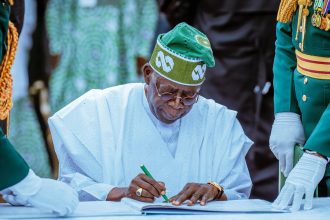

In a decisive move that marks a significant leap in Nigeria’s sports governance and global credibility, President Bola Ahmed Tinubu has signed the National Anti-Doping Bill 2025 into law—ending nearly two decades of delay and reinforcing his administration’s reformist posture across all sectors.
A Reform-Driven Response to Longstanding Institutional Gaps
For years, Nigeria’s failure to domesticate the UNESCO International Convention Against Doping in Sport placed it at odds with the World Anti-Doping Code (WADC) and exposed the nation to threats of exclusion from international sporting events.
“From the very beginning, the President gave us a clear mandate—get this done,” said Mallam Shehu Dikko, Chairman of the National Sports Commission (NSC).
Building Institutions, Protecting Athletes
The National Anti-Doping Act 2025 establishes the Nigeria Anti-Doping Center (NADC)—a fully independent body tasked with overseeing drug testing, enforcing anti-doping rules, and managing compliance among Nigerian athletes.
This landmark also provides a sustainable framework for ethical sports development, where athletes are not only monitored but actively educated on doping prevention—closing the cycle of ignorance that often leads to violations.
Under the 2025 Appropriation Act, President Tinubu has approved funding for the establishment of a state-of-the-art anti-doping laboratory, which will not only process athlete samples domestically but also serve regional needs. “This is what reforms look like—strategic investment in institutions that protect our athletes, generate revenue, and lift our international profile,” said Hon. Bukola Olopade, Director-General of the NSC.
Cross-Governmental Synergy and Policy Alignment
The Office of the Attorney-General, National Assembly Committees on Sports, and international bodies like WADA worked seamlessly to harmonize the bill’s contents and ensure alignment with the National Sports Industry Policy (2022–2026). This multi-sectoral collaboration not only fast-tracked the legislative process but also established a working model for future policy alignment in other sectors of national importance. The law’s passage also fulfills a critical component of Nigeria’s UNESCO treaty obligations.
A Shield Against Sanctions, A Boost to International Access
Prior to the Act, Nigeria risked sanctions and exclusion from international competitions due to its weak anti-doping framework. “This is more than sports legislation. It is a diplomatic signal that Nigeria is serious about integrity,” noted Mrs. Kehinde Ajayi, Director of Information and Public Relations at the NSC.”
The Act also opens up Nigeria to more international competitions, partnerships with foreign sports agencies, and access to global funding and grants tied to fair play and compliance.
Implementation and Education
Implementation of the law will be led by the newly created National Anti-Doping Organization (NADO), supported by the NSC. The NSC Chairman emphasized, “This is not just a law on paper. It’s a new era—one where Nigerian athletes will win on merit and where cheating has real consequences.”
In addition, partnerships with tertiary institutions and medical schools are being explored to integrate anti-doping science into academic curricula, creating a pipeline of future experts in the field.
Reforms That Echo Beyond Sports
With the National Anti-Doping Act now signed, the President Tinubu administration has delivered not only a landmark for sports, but a case study in governance reform, international compliance, and nation-building. It stands as a testament that integrity, when institutionalized, becomes a national asset with generational dividends.
REFORM AGENDA POWERS SPORTS BROADCAST REVOLUTION
In alignment with President Bola Ahmed Tinubu’s Renewed Hope Agenda, Nigeria’s sports sector is undergoing a historic transformation. At the forefront of this revolution is the revived and strategically empowered National Sports Commission (NSC), under the visionary leadership of its Chairman, Mallam Shehu Dikko. This marks the first time in decades that sports reform is being approached as a holistic, inter-ministerial priority—linking innovation, infrastructure, and investment across key government platforms.
FROM VISION TO EXECUTION
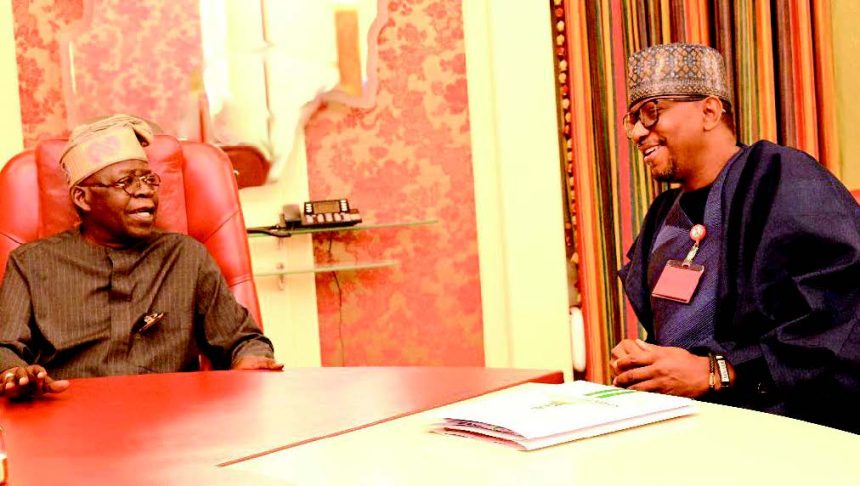
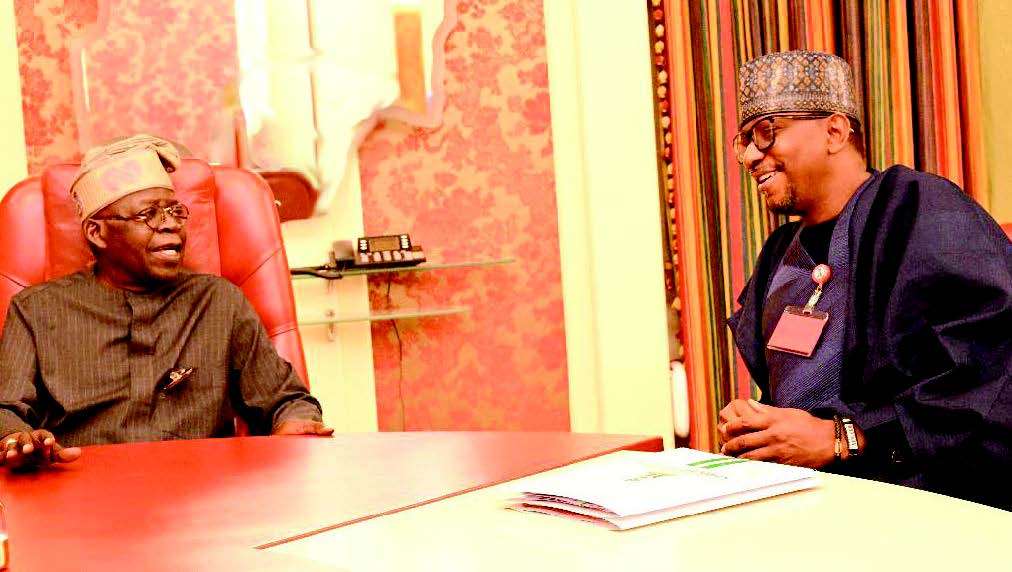
Fresh from a high-level technical mission to Paris, where the NSC held crucial talks with Thomson Broadcast—original manufacturers of Nigeria’s sports OB (Outside Broadcast) vans—Chairman Dikko briefed President Tinubu at the Presidential Villa on the Renewed Hope Initiative for Nigeria’s Sports Economy (RHINSE). The result? Sports in Nigeria is now a viable industrial sector contributing to GDP, youth employment, and digital exports.
HANDS-ON PRESIDENTIAL LEADERSHIP
The policy session with President Tinubu—which spanned over four hours—was more than a courtesy visit. It institutionalized a results-driven, reform-centered governance model that cuts red tape and accelerates implementation timelines.
Key outcomes of the session included the President’s direct engagement on:
• Modernizing Nigeria’s sports broadcasting infrastructure.
- Fast-tracking RHINSE implementation.
- Enhancing Nigeria’s readiness for the 2026 FIFA World Cup qualifiers.
- Creating structural incentives for national teams.
- Driving mass participation through the upcoming National Sports Festival.
- Establishing public-private partnerships for long-term infrastructure maintenance and operations.
• Integrating sports data and analytics into national development planning.
Each of these reflects the administration’s broader agenda: to transform sports into a cross-sectoral development engine —creating jobs, developing human capital, and boosting Nigeria’s international profile.
INTERNATIONAL COLLABORATION, LOCAL IMPACT
The Paris mission was a critical foreign policy extension of Nigeria’s domestic reforms. In collaboration with stakeholders such as the Nigerian Television Authority (NTA), National Broadcasting Commission (NBC), Federal Radio Corporation of Nigeria (FRCN), and Voice of Nigeria (VON), the NSC is focused on revitalizing the country’s high-capacity OB vans and reactivating the long-abandoned International Broadcast Centre (IBC) at the MKO Abiola National Stadium.
In addition, the NSC is initiating a National Sports Content Archive to preserve and digitize Nigeria’s sports heritage while providing streaming platforms with on-demand access to monetizable content.
A SportsTech Innovation Challenge will also be introduced to attract young Nigerian developers to build apps, platforms, and tools that support live sports delivery and fan engagement.
LEARNING FROM THE PAST, LEADING INTO THE FUTURE
Citing lessons from NPFL.TV, the NSC Chairman noted that over 60 league matches were streamed during the 2023/24 season, a proof of concept that validated the appetite for local content. To ensure sustainability, the NSC in line with RHINSE framework will include a Sports Broadcasting Regulatory Framework (SBRF), which will standardize licensing, revenue sharing, IP protection, and content quality assurance across all digital and linear platforms.
Through RHINSE and the NSC’s strategic reforms, sports broadcasting is no longer an afterthought; it is a core component of Nigeria’s march toward digital sovereignty, creative economy acceleration, and global media competitiveness.
As Nigeria prepares for landmark events—from World Cup qualifiers to continental championships—the nation’s sports broadcast infrastructure will not just tell the story of our athletes; it will become the story of Nigeria’s rise as a knowledge-driven, globally connected economy.