
REFORM TALKS with Enam Obiosio
I read the recent announcement of the United States (US) – Nigeria Commercial and Investment Partnership with a mixture of cautious optimism and familiar scepticism. Optimism, because the framing is materially different from the ceremonial trade dialogues Nigeria has grown used to. Scepticism, because I have seen too many partnerships stall at the intersection of good intentions and weak execution. What stands out this time is not the promise of capital alone, but the attempt to structure reform around specific sectors and measurable outcomes.
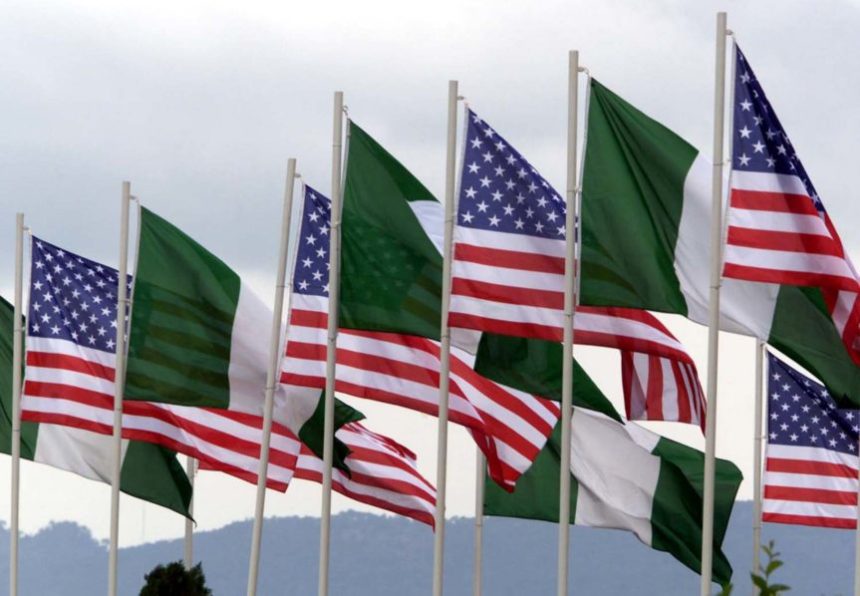
The launch of the Commercial and Investment Partnership, a five-year framework between the United States and Nigeria, signals a shift from episodic engagement to a more programmatic relationship. This is important. Trade and investment relationships do not deepen through summits alone. They deepen when governments agree on rules, timelines, and responsibilities, then allow the private sector to operate within a stable and predictable environment.
The ministerial meeting in Lagos, co-chaired by Bradley McKinney and Jumoke Oduwole, was notable for its focus on working groups rather than speeches. Agriculture, the digital economy, and infrastructure are not arbitrary choices. They represent the structural constraints and opportunities within Nigeria’s economy. Agriculture remains Nigeria’s largest employer but least productive sector. The digital economy is Nigeria’s fastest scaling export opportunity. Infrastructure is the binding constraint that determines whether either of the first two can compete globally.
What I find compelling is that the working groups reportedly focused on practical reforms rather than aspirational targets. For years, Nigeria’s trade discussions have been dominated by abstract commitments to diversification and competitiveness. This partnership appears to start from a different premise, that trade barriers are often administrative rather than ideological. Delays at ports, opaque standards, inconsistent customs procedures, and regulatory overlap do more damage to exports than tariffs alone. If the CIP process can meaningfully address these friction points, it will have achieved more than many grander sounding initiatives.
Bradley McKinney’s description of the proposals as practical measures is significant. The United States has little incentive to indulge symbolic reform. American firms look for certainty, enforceable contracts, and speed. If the US Commercial Service is willing to attach its credibility to these proposals, it suggests that the reforms are not merely rhetorical. For Nigeria, this is both an opportunity and a test. Practical reforms are harder to reverse, but they also expose institutional weaknesses more quickly.
Dr. Jumoke Oduwole’s emphasis on non-oil exports aligns with Nigeria’s stated economic priorities, but I read her comments as an implicit admission that Nigeria’s export challenge is structural, not simply promotional. Nigerian firms do not fail to export because they lack ambition. They fail because logistics costs are high, standards compliance is inconsistent, and access to long term finance is limited. Making local businesses competitive in global markets requires policy coherence across agencies, not isolated interventions.
I am particularly attentive to her reference to predictability. This word rarely features in Nigerian economic announcements, yet it is arguably the most important. Investors can price risk, but they struggle to price uncertainty. When policies change without consultation, when incentives are announced but not implemented, or when regulations conflict across ministries, capital retreats. If the Commercial and Investment Partnership succeeds in improving predictability, even modestly, its impact will exceed its headline value.
The presence of senior officials such as Keith Heffern and Nura Rimi suggests that both governments understand the need for institutional buy in. Too often, bilateral initiatives falter because technical agreements are not backed by administrative authority. Permanent secretaries and senior diplomats are the custodians of continuity. Their involvement increases the likelihood that reforms survive beyond political cycles.
The trade numbers provide useful context. Nearly $13 billion in bilateral trade in goods and services in 2024 is substantial, but it is also revealing. Nigeria’s exports to the US remain heavily skewed toward hydrocarbons, while imports are dominated by finished goods and services. This imbalance is not inherently problematic, but it does limit Nigeria’s leverage. The goal of the partnership, as I see it, should not simply be to grow trade volume, but to rebalance its composition.
The 25 percent increase in US foreign direct investment to $7.9 billion is another encouraging signal. It indicates that US investors are not withdrawing from Nigeria despite macroeconomic headwinds. However, FDI concentration matters. Much of this investment remains in extractive industries and services. If the Commercial and Investment Partnership is serious about private sector led growth, it must catalyse investment into manufacturing, agribusiness value chains, and export oriented digital services.
I am also struck by the deliberate inclusion of the digital economy as a core pillar. Nigeria’s technology sector has demonstrated an ability to scale globally despite infrastructural and regulatory constraints. Fintech, software services, and creative digital exports already reach international markets. What they lack is policy support that recognises digital trade as a strategic export category, with appropriate data governance, intellectual property protection, and cross border payment frameworks. Engagement with the United States, where many of Nigeria’s digital firms already operate, could accelerate this alignment.
Agriculture presents a more complex challenge. Accessing US markets is not simply a question of tariffs, but of standards, traceability, and consistency. Nigerian agricultural exports often struggle with rejection due to quality and certification issues. If the CIP working group can help Nigerian producers meet these standards through technical assistance and regulatory reform, the impact on rural incomes could be significant. However, this will require coordination across ministries, agencies, and state governments, a task Nigeria has historically found difficult.
Infrastructure remains the silent determinant of success. Trade partnerships often focus on policy, but infrastructure determines whether policy can be implemented. Ports congestion, unreliable power, and poor transport networks increase costs and erode competitiveness. If the infrastructure working group confines itself to high level recommendations, it will fail. It must engage with financing models, private sector participation, and regulatory clarity, particularly in energy and logistics.
What distinguishes this partnership from previous initiatives is its explicit orientation toward the private sector. Governments do not trade, businesses do. Encouraging two-way investment flows implies not only attracting US firms to Nigeria, but also enabling Nigerian firms to invest and operate in the US market. This reciprocity is important. It reframes Nigeria not merely as a destination for capital, but as a source of enterprise.
Still, I remain cautious. Five-year initiatives are only as effective as their monitoring mechanisms. Nigeria has a long history of reform committees whose reports gather dust. For the Commercial and Investment Partnership to succeed, it must incorporate clear benchmarks, public reporting, and consequences for non-implementation. Without accountability, even the most well-designed frameworks lose momentum.
I also worry about coordination fatigue. Nigeria is currently engaged in multiple bilateral and multilateral economic initiatives. Without a central coordinating authority, agencies may prioritise different commitments, leading to fragmentation. The Ministry of Industry, Trade and Investment must therefore assert leadership, ensuring that CIP reforms align with broader national strategies rather than compete with them.
Ultimately, I view the US Nigeria Commercial and Investment Partnership as a credible attempt to move beyond symbolism. It acknowledges that trade growth requires reform, that private sector confidence depends on predictability, and that sector specific interventions matter. Whether it delivers will depend less on diplomatic goodwill and more on Nigeria’s willingness to implement uncomfortable changes.