
By Anita Dennis
Women leaders and advocates from across the country have renewed pressure on the National Assembly to pass the Special Seats for Women Bill, describing it as a crucial chance to correct decades of gender imbalance in Nigeria’s political system.
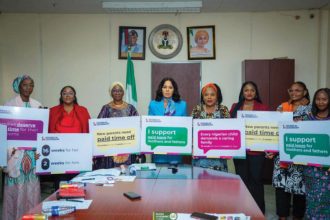
Their call came at the Nigerian Women and National Women Leaders Forum held in Abuja recently.
The forum was organised by the Policy and Legal Advocacy Centre in partnership with the House of Representatives Committee on Women Affairs, with support from the European Union. It coincided with the global 16 Days of Activism Against Gender-Based Violence, which ran from 23 November to 10 December.
At the heart of the discussion was the depth of women’s absence in elective office. The Honourable Minister of Women Affairs and Social Development, Imaan Sulaiman-Ibrahim, told participants that the upcoming vote on the Special Seats Bill marks a critical moment for Nigeria’s democracy.
Nigeria has more than 104 million women, yet only 21 currently serve in the National Assembly, four in the Senate and 17 in the House of Representatives. At the state level, only 48 of 991 lawmakers are women. In 13 states, there is no woman in any legislative chamber.
Sulaiman-Ibrahim said these figures do not reflect a lack of competence or capacity; instead, they stem from long-standing structural and systemic barriers that limit women’s access to political participation. She argued that the Special Seats Bill offers a constitutional, time-bound path to redress the imbalance by creating additional seats exclusively for women.
She urged Nigerians to consider whether issues that disproportionately affect women, such as menstrual hygiene, maternal health, and gender-responsive policymaking, can be fully addressed in legislative spaces where women are barely present.
The bill proposes constitutional amendments that would reserve extra seats for women at both federal and state levels. At the National Assembly, it seeks one additional Senate seat and one additional House of Representatives seat for each state and the FCT, creating 74 new seats exclusively for women.
At the state level, three extra seats would be added to each State House of Assembly, totalling 108 seats. These positions would be temporary measures meant to raise women’s representation and would be contested only by women during general elections.
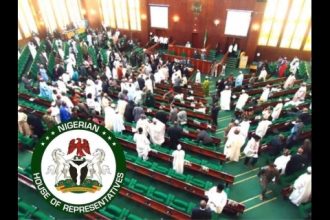
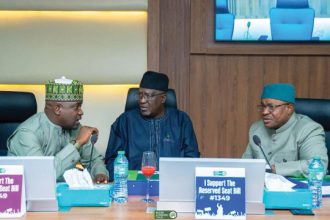
The bill has scaled Second Reading in the House of Representatives and now sits before the House Committee on Constitution Review.
Sulaiman-Ibrahim added that while male allies are important, meaningful change depends on qualified women being part of decision-making. She noted that the renewed advocacy aligns with global milestones, including the 30th anniversary of the Beijing Declaration, the 25th anniversary of UN Resolution 1325, and three decades of the Federal Ministry of Women Affairs.
She commended Deputy Speaker Benjamin Kalu and the wider leadership of the 10th National Assembly for what she described as growing support for the proposal. She also acknowledged President Bola Tinubu and First Lady Oluremi Tinubu for backing policies that promote inclusive governance under the Renewed Hope Agenda.
The Honourable Minister called on lawmakers to give women “something to cheer about” as Nigeria prepares for the 70th Session of the Commission on the Status of Women.
Mary Adile, the national women leader of the All Progressives Congress, described the bill as a legacy-defining opportunity for lawmakers. She said many women face steep political barriers, from financial exclusion to harassment and online attacks.
“It is very hard for women. They are criticised for who they are before they even speak. This bill gives them a fair chance,” she said.
Adile pointed to African countries with far stronger female representation, including Rwanda, Tanzania, Namibia, Mozambique, and Angola. Nigeria, she noted, lags significantly behind, with women holding only 3.9 percent of the seats in the House of Representatives and 2.8 percent in the Senate.
Across the 36 state assemblies, women occupy 5.5 percent of seats, and 13 states have no female lawmaker at all. Adile described the numbers as proof of a deep imbalance in the institutions responsible for shaping national laws and public policy.
She stressed that the push for the Special Seats Bill is not simply a fight for more seats; it is a fight for fairness, equity, and genuine representation in a country where women form nearly half the population but remain largely missing from the policymaking table.