By Musa Ibrahim
Considering how artificial intelligence (AI) continues to shape how people create, share, and consume information, the federal government has called for stronger digital media literacy and responsible use of technology to safeguard truth and public trust in the digital age.
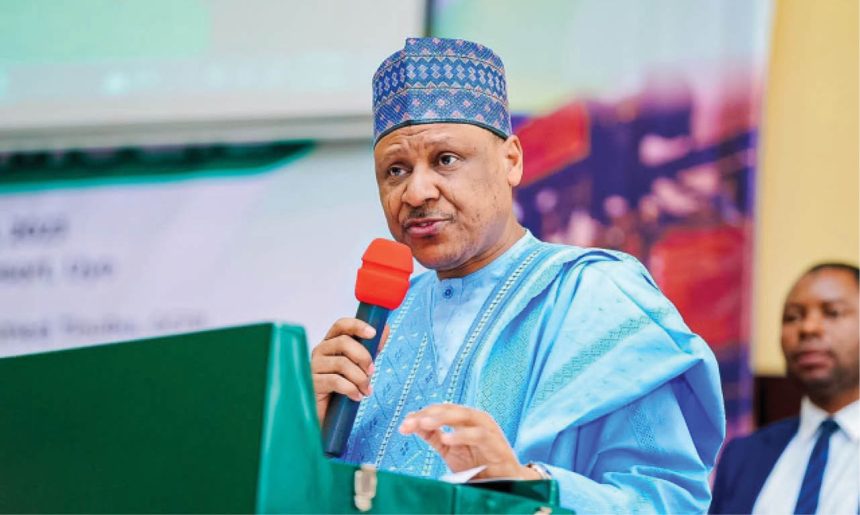
Honourable Minister of Information and National Orientation, Mr. Mohammed Idris, made the call on recently in Abuja while declaring open a symposium marking the Global Media and Information Literacy Week, hosted by the National Open University of Nigeria (NOUN) under the auspices of United Nations Educational, Scientific and Cultural Organization (UNESCO).
Speaking through the ministry’s Director of Public Communication and National Orientation, Henshaw Ogubike, the Honourable Minister said that collaboration between government, media organisations, and citizens is vital to ensuring accuracy, transparency, and accountability in the digital space.
He noted that as social platforms increasingly influence public discourse and access to information, building a digitally literate society has become central to Nigeria’s social and economic transformation.
“By equipping citizens with the skills to think critically and use digital tools effectively, we can unlock new opportunities for creativity, entrepreneurship, and civic participation,” Mr. Idris said.
The Honourable Minister reaffirmed the ministry’s commitment to working with local and international partners to promote media literacy, expand access to reliable information, and strengthen public confidence in digital communication.
In his welcome address, Prof. Olufemi Peters, Vice-Chancellor of NOUN, said Nigeria remains firmly committed to advancing responsible digital practices and media and information literacy (MIL) across Africa.
He described the symposium – themed ‘Promoting AI Adoption and Gratification through Media and Information Literacy,’ which aligns with the global focus, ‘Minds Over AI’ – as a timely opportunity to reflect on both the promise and the risks of emerging technologies.
“We must ask ourselves how we can ensure that these technologies serve humanity – and not destroy it,” Prof. Peters said. “How do we preserve human dignity in an age of automation, and how do we prepare citizens to distinguish truth from falsehood in a digital world?”
Prof. Peters announced that NOUN was at an advanced stage of securing UNESCO Category Two status for the International Media and Information Literacy Institute (IMILI) – the first of its kind in Africa. He said the milestone would strengthen Nigeria’s leadership in digital education and position the country as a global hub for ethical AI and responsible information use.
“For us, this achievement is not just institutional – it is national,” he added. “It signals that Africa is ready to lead, ready to innovate, and ready to shape the global dialogue on digital inclusion and the future of learning.”
Also speaking, Mr. Yachat Nuhu, representing UNESCO Abuja, emphasised the growing importance of digital media literacy in an age dominated by AI, social media, and other technological disruptions.
On his part, Dr. Lateef Adelakun, Acting Director of IMILI, noted that while digital technologies have revolutionised communication, education, and business, their misuse for misinformation, fraud, and manipulation continues to pose serious challenges.
He stressed the need for collective responsibility among governments, academia, media, and citizens to ensure technology remains a force for progress, not distortion.