By Jennete Ugo Anya
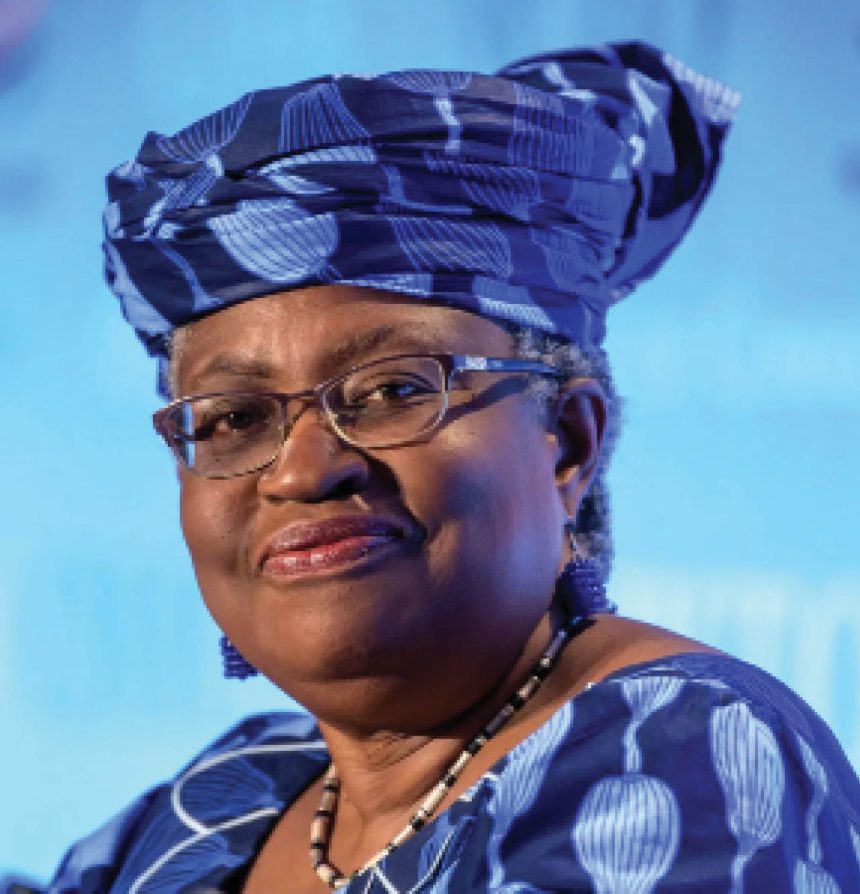
Director-General of the World Trade Organisation (WTO), Dr. Ngozi Okonjo-Iweala, has urged Nigeria to move decisively from importing technology to producing it domestically, warning that continued dependence on foreign innovations weakens the industrial base and limits job creation in the digital economy.
Speaking at Ahmadu Bello University (ABU), Zaria, Dr. Okonjo-Iweala highlighted that global shift in technology, geopolitics, and climate present both risks and unprecedented opportunities for Nigeria and Africa if approached strategically. “It is always a pleasure to come home to Nigeria, but it is particularly special to be here at one of the country’s most important seats of learning,” she said, noting that universities like ABU must remain central to Africa’s technological, industrial, and economic transformation.
Universities as Engines of Innovation
Dr. Okonjo-Iweala traced Nigeria’s post-independence education journey, recalling that at independence in 1960, the country had only one degree-awarding institution. The subsequent expansion of universities laid the foundation for scientific, technological, and entrepreneurial capacity. She highlighted ABU’s contributions, noting its research in practical solutions, from animal feed innovations during dry seasons to wind power generation in rural communities.
The WTO chief identified technology, particularly the internet and artificial intelligence (AI), as among the most disruptive forces reshaping trade, production, and employment. She warned that automation and AI could deepen inequality if benefits are not distributed fairly. “The technological shift we are experiencing has made it easier to communicate, produce and trade, but not everyone has shared equally in the gains,” she said, emphasising the need for nimble multilateral institutions and responsive global trade rules to manage emerging technologies like AI and quantum computing.
Harnessing Africa’s Opportunities
Dr. Okonjo-Iweala urged Nigeria to embrace the emerging “re-globalisation” trend, where global supply chains diversify away from a few countries. She identified opportunities in labour-intensive manufacturing, critical minerals processing, renewable energy, pharmaceuticals, agro-processing, and electric vehicle supply chains. “Africa has the capacity to process its critical minerals all the way to EV battery manufacturing,” she said, citing Nigeria’s lithium processing investments and renewable energy potential.
She reinforced the need for domestic technology production, stressing that Nigeria must stop importing technologies it can manufacture locally. “Instead of importing solar panels, we should be manufacturing them here. That is how we create jobs, build resilience and grow our economy,” she said.
Dr. Okonjo-Iweala noted that Nigeria’s projected economic growth of 4.4 percent is insufficient when population growth is considered. She called for sustained growth of 6 to 7 percent driven by productivity, technology, and value addition, supported by strong digital infrastructure, skills development, and innovation-friendly policies. Full implementation of the African Continental Free Trade Agreement (AfCFTA), she stated, could increase intra-African trade by up to 45 percent and lift millions out of poverty.
Youth as a Strategic Asset
Highlighting Africa’s demographic advantage, she observed that the continent will account for about 25 percent of the global working-age population by 2050, with Nigeria’s young population representing a major technology asset. “On an ageing planet, Africa’s youth represent the world’s future talent pool,” she said, urging stronger collaboration between academia, industry, and government to align education, innovation, and industrial strategy.
In conclusion, Dr. Okonjo-Iweala called for urgency, coordination, and investment in people and ideas. “This country has what it takes. What we need is the courage to act strategically and the discipline to align our resources and policies,” she said, urging Nigeria to leverage global technological disruption to achieve industrial transformation and inclusive growth.
The visit emphasized the role of universities, policymakers, and the private sector in shaping Nigeria’s future in the digital and industrial economy, highlighting the critical need to shift from technology consumption to technology production.