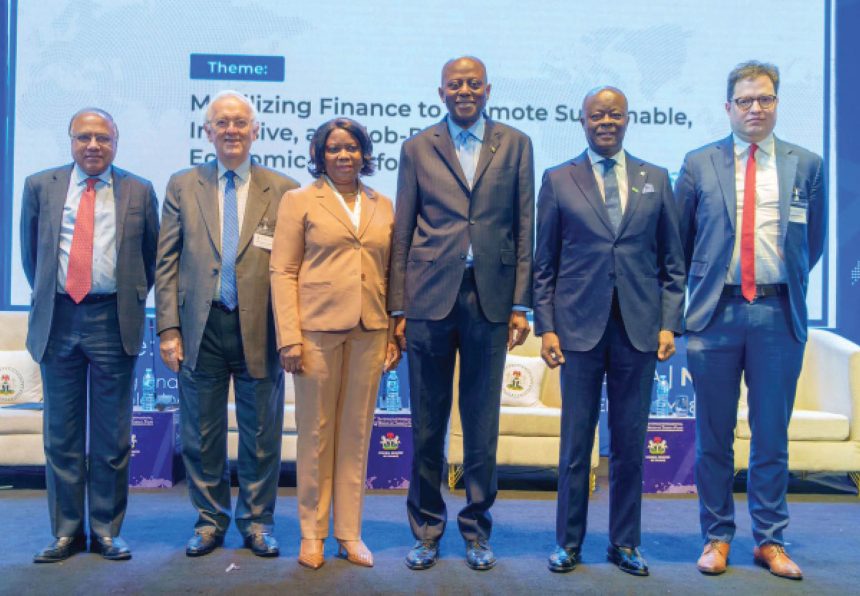
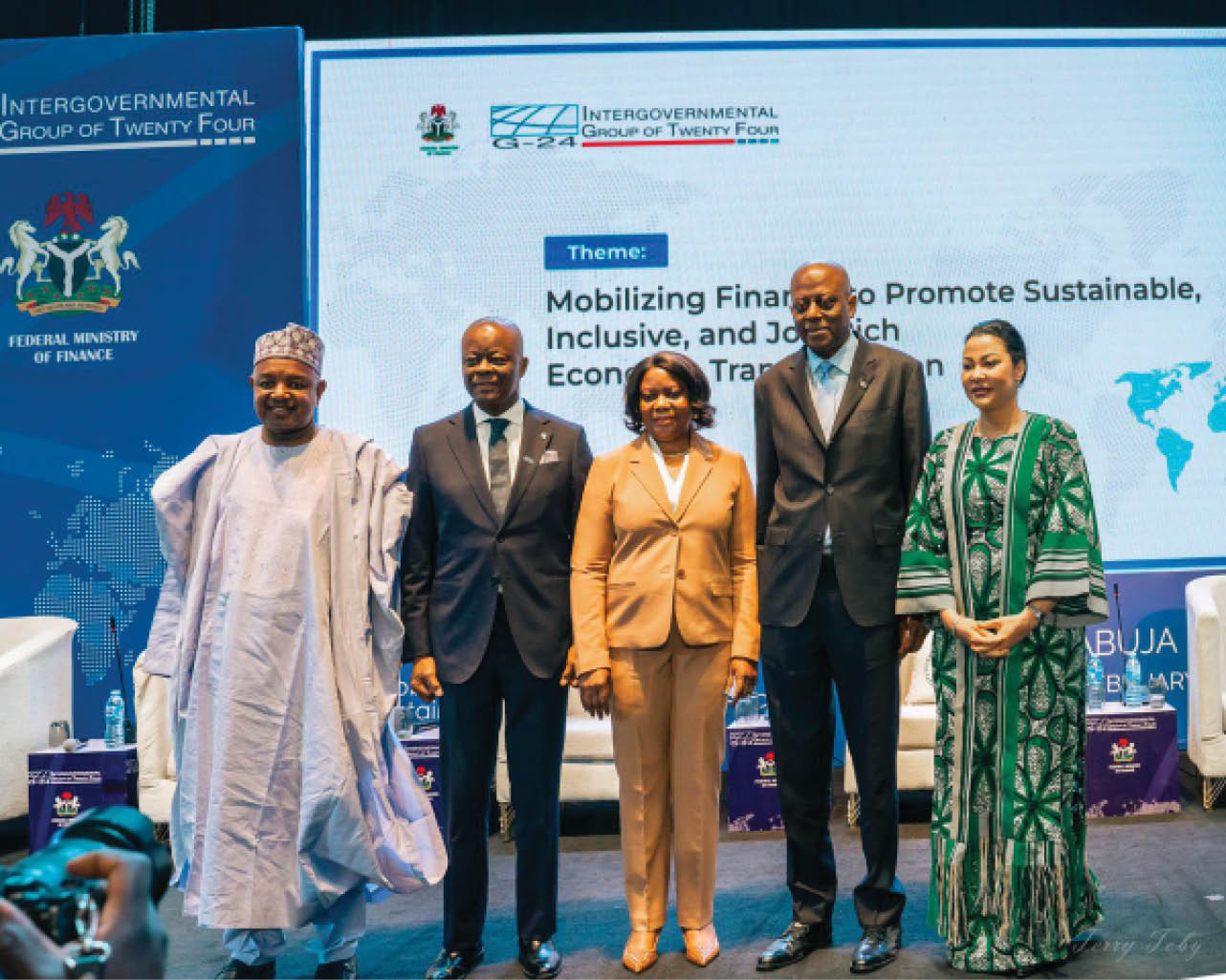
Eighty years after Bretton Woods shaped the modern global financial order, the system it produced is under visible strain. Capital is scarcer, trust is thinner, and development gaps are widening. In Abuja last week, Nigeria placed itself at the centre of a difficult but necessary conversation. Hosting the 2026 G-24 Technical Group Meetings, the country used the moment not for ceremony, but for advocacy. The message was clear. Reform must be practical, coordinated, and driven by the realities of the Global South.
As the World Bank and the International Monetary Fund mark their 80th anniversary, the question is no longer whether reform is needed, but whether developing economies can act together to shape it. Enam Obiosio gives us insights about the meeting.
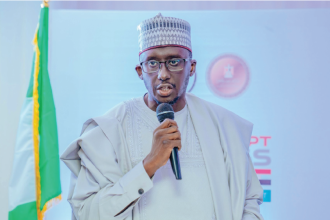
When Nigeria convened finance leaders and central bankers for the 2026 G-24 Technical Group Meetings in Abuja, the gathering arrived at a tense moment for the global economy. Growth remains uneven, capital flows are fragile, and geopolitical rivalry increasingly defines economic choices. Against this backdrop, Mr. Wale Edun, Honourable Minister of Finance and Coordinating Minister of the Economy, used his keynote address to press for something more ambitious than incremental change.
His call was direct. G-24 economies must articulate a united, robust, and results driven agenda to reform the global financial architecture, especially as the Bretton Woods institutions reach their 80-year milestone. According to him, this anniversary should not be symbolic. It should be catalytic.
Speaking on the theme ‘Mobilising Finance for Sustainable, Inclusive, and Job-rich Transformation,’ Mr. Edun framed the moment as a crossroads. The global economy, he said, is caught between fragmentation and integration, with the choices made now likely to shape development outcomes for decades.
“This gathering is not a routine technical engagement,” he told delegates. “It is an opportunity to reshape the development trajectory of the Global South at a time when global risks are converging faster than institutions can respond.”
Mr. Edun warned that the world is entering what analysts increasingly describe as an Age of Competition. Drawing on World Economic Forum surveys, he noted that half of global experts expect continued turbulence over the next two years, while more than half foresee instability lasting a decade or longer. Only a negligible fraction anticipates calm. For developing economies, this environment translates into volatile capital flows, shrinking fiscal space, and higher vulnerability to external shocks.
In this context, Mr. Edun argued, collective action is no longer optional. The Global South must deepen South-South cooperation, expand collaborative financing mechanisms, and demand meaningful reform of global institutions that no longer reflect current economic realities.
At the core of Nigeria’s proposal is the reform of multilateral development banks. Mr. Edun called for expanded concessional lending, revised capital adequacy frameworks, and greater flexibility to support countries that have effectively lost access to international capital markets. He also stressed the need to strengthen the IMF-led Global Financial Safety Net, with a sharper focus on local currency financing, digital payments modernisation, and the role of regional development banks.
Climate finance equity featured prominently in his address. Mr. Edun argued that countries least responsible for climate change continue to face the highest financing costs to adapt and mitigate its effects. Without reform, he warned, climate goals will remain aspirational rather than achievable.
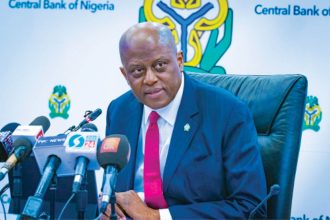
While Mr. Edun set the political and fiscal tone, the technical heart of the conversation shifted to payments and financial infrastructure. Mr. Olayemi Cardoso, Governor of the Central Bank of Nigeria (CBN), made the case that effective cross-border payment systems are no longer peripheral to development. They are central.
“If people cannot move money easily, affordably, and safely across towns, borders, and continents,” Mr. Cardoso said, “then they cannot fully participate in modern economic life.”
His intervention reframed payments reform as a macroeconomic priority. According to Mr. Cardoso, the channels through which remittances, trade flows, and capital move now form a critical pillar of global financial stability. For G-24 economies, inefficiencies in these systems translate directly into higher costs, delayed settlements, fragmented compliance processes, and exclusion of micro, small, and medium enterprises from global trade.
Today, global remittance corridors still cost over six percent on average. Settlement lags can stretch for days. Compliance burdens remain heavy. For millions across developing economies, these frictions are not abstract. They are barriers to opportunity.
Yet Mr. Cardoso argued that digital innovation presents a historic opening to correct these failures. Modern payment infrastructure, instant payment systems, interoperable digital platforms, distributed ledger technology, and robust digital identity frameworks can dramatically reduce transaction costs, shorten settlement times, improve transparency, and widen access for households and MSMEs.
Mr. Cardoso warned that the rapid expansion of private digital payment platforms and stablecoins could undermine monetary sovereignty if left uncoordinated. Risks include currency substitution, weakened monetary transmission, heightened FX volatility, systemic importance of non-bank payment providers, and regulatory arbitrage across jurisdictions.
Without coordination, digital cross-border payments could become fragmented, entrench dominant currencies and platforms, and raise costs rather than reduce them. For emerging and developing economies, this would weaken the very sovereignty reform is meant to protect.
Nigeria’s own experience, Mr. Cardoso argued, shows that these risks can be managed through deliberate policy action. Over recent years, the CBN has modernised its regulatory and supervisory frameworks to keep pace with rapid digital change. Oversight of payment infrastructure providers has been strengthened. Agent banking regulations have been enhanced to address AML and CFT risks. Interoperability across payment channels has improved.
To support regional integration, the CBN introduced simplified KYC and AML requirements for low value cross-border transactions, encouraging broader participation in the Pan African Payment and Settlement System. For Nigerian SMEs, this has reduced paperwork and enabled faster, more seamless intra-African trade payments.
Fintech innovation has also been brought into the regulatory perimeter. Through its Regulatory Sandbox, the CBN allows payment focused fintechs to test cross-border solutions under close supervision, ensuring innovation without compromising stability.
In June 2025, Nigeria launched the National Payment Stack, a real time payment system built on ISO 20022 messaging and designed to support multi-currency and cross-border transactions. AML and CFT frameworks were strengthened in line with FATF guidelines, including dual screening of cross-border transactions.
On remittances, reforms introduced in 2024 removed long standing bottlenecks and expanded efficient corridors. New instruments such as the Non-Resident Nigerian Ordinary Account, the Non-Resident Nigerian Investment Account, and the Non-Resident BVN platform have made it easier for Nigerians abroad to remit funds, invest, and maintain financial ties with home.
The impact has been measurable. According to Mr. Cardoso, digital payment reforms have lifted monthly remittance inflows to an average of about 600 million dollars. The central bank, he said, remains confident of reaching a one-billion-dollar monthly milestone in the near term.
Looking ahead, Mr. Cardoso revealed that the CBN is concluding work on a new Payment System Vision 2028. Developed with industry stakeholders, the strategy is built around five priorities aimed at boosting innovation, strengthening system resilience, and advancing financial inclusion. Improving the cross-border payments environment sits at its core.
Beyond national reforms, he emphasised Nigeria’s engagement at the global level. Through platforms such as the Strategic Fintech Dialogue at the 2025 IMF Annual Meetings, Nigeria has contributed to shaping emerging standards in digital finance.
The broader implications, he argued, go beyond efficiency. Digital cross-border payments are reshaping global finance itself. They enable local currency settlement in trade, open new channels for South-South financial integration, reduce dependence on a narrow set of reserve currencies, and improve the transmission of regional and global capital flows.
Experiments such as mBridge and Dunbar, alongside other multi-CBDC platforms, demonstrate the potential for real time, local currency settlement among central banks. For G-24 countries seeking a more balanced and inclusive payments architecture, these innovations are particularly relevant.