By Kingsley Benson
In a bold move to clean up Nigeria’s agricultural support systems and deliver targeted aid to real producers, the federal government has launched a comprehensive national farmers’ data registry, aimed at eliminating fraudulent ‘briefcase farmers’ and tackling the deepening food crisis.
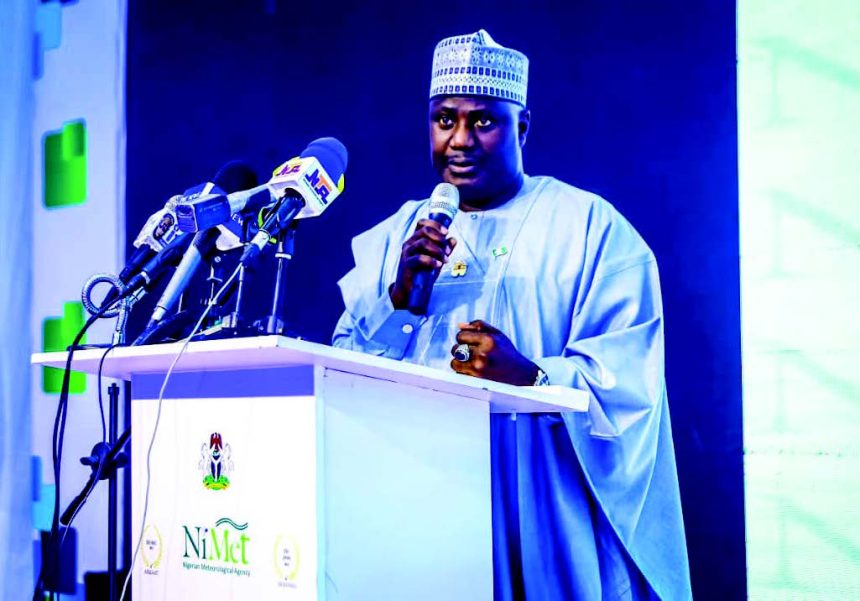
Announcing the initiative in Kaduna during a Government-Citizens’ Engagement Forum organized by the Sir Ahmadu Bello Memorial Foundation, Senator Aliyu Sabi Abdullahi, the Honourable Minister of State for Agriculture and Food Security, said that the new system would restore integrity, equity, and efficiency to government interventions in the sector.
“Our priority is simple: ramp up production, reduce food prices, and ensure equitable access to support,” Abdullahi declared, adding that the days of agricultural impostors benefitting from public funds are over.
The registry, which forms the backbone of the government’s data-driven response to food insecurity, will be used to verify farmers’ identities, locations, crop types, and production capacities. It comes amid growing concerns over subsidy leakages and ghost beneficiaries in fertilizer distribution, mechanization support, and cash-based incentives.
From Crisis to Reform
The move is part of the wider state of emergency declared by President Bola Ahmed Tinubu on food security, which remains in force as the administration scrambles to stabilize food supply, boost productivity, and lower prices across staple markets.
Abdullahi said the administration inherited not just a fragile economy but a distressed food system. He described the registry as a first step toward restoring public trust and laying the groundwork for rural prosperity.
“We are not only responding to today’s needs. We are building systems that will ensure the right farmers get the right support at the right time,” he said.
Wheat Gains, Rice Plans, Mechanized Push
Backing the policy thrust are impressive early gains. Under the government’s Agro Pocket initiative, over 133,000 hectares of wheat have already been cultivated across 15 Northern states—exceeding the 130,000-hectare target. Of that total, Jigawa alone contributed over 50,000 hectares, a significant leap that hints at improved coordination and resource deployment.
Looking ahead, a similar effort is targeting 44,500 rice producers, supported by improved extension services to fix the lopsided farmer-to-extension-worker ratio, which currently stands at 1:25,000.
In the area of mechanization, the government has deployed 2,000 Belarusian tractors and 9,000 implements across key farming clusters. According to the Honourable Minister, this is just the beginning of a sustained effort to modernize farm operations and boost productivity per hectare.
Special Zones and Improved Seeds
Senator Abdullahi also spotlighted the government’s rollout of Special Agro-Processing Zones (SAPZs)—clustered infrastructure hubs that will help farmers process raw produce, access markets, and earn higher returns.
“These zones will change the game. They will reduce post-harvest losses and enable farmers to move from subsistence to surplus,” he said.
Backed by Nigeria’s agricultural research institutes, new and improved crop varieties have been released, including tomato breeds resistant to the notorious “tomato Ebola” virus, a menace that previously decimated harvests.
Livestock, Irrigation, and Renewable Energy
Efforts are also underway in the livestock subsector. The government is working on the establishment of grazing reserves, livestock villages, and transit shelters, and is finalizing a national dairy policy to boost milk production and reduce imports.
Additionally, three major dams—Nwabi Yashin, Nwape, and Amla—have been completed, unlocking 2,700 hectares of irrigable land, while accompanying mini-hydro power projects will bring off-grid electricity to farming communities, further enhancing productivity and rural quality of life.
No More Ghost Farmers
Perhaps the strongest message came when Senator Abdullahi challenged northern leaders and local communities to reject impostors and fraudsters who manipulate agricultural support systems.
“We must discredit such people. The time to act is now,” he said, calling for unity in sanitizing the sector and restoring fairness.
A Whole-of-Government Approach
The Kaduna session brought together a powerful delegation led by Senator Abdullahi, with representatives from the Ministries of Livestock Development, Environment, and Water Resources, as well as key agencies like the National Agricultural Development Fund and the Special Agro-Processing Zones Programme.
The Honourable Minister’s comprehensive presentation outlined not just progress but vision — from reclaiming university farmlands and training youth and women, to reforming systems and planting the seeds of long-term food security.
“This is not just about producing more food. It is about building a new agricultural economy that includes everyone — and leaves no room for corruption,” he emphasized.
Looking Ahead
As Nigeria battles rising food prices, declining yields, and rural poverty, the nationwide registry offers more than cleanup — it offers clarity. With real data, genuine farmers, and firm political will, the government may finally be able to deliver agricultural support where it truly matters.
The challenge now is to ensure the registry isn’t just another bureaucratic exercise — but a transformational tool for one of Nigeria’s most urgent national priorities.