-
Turns Global Sports Hosting Into Economic Engine, Diplomatic Tool
By Musa Ibrahim
In a bold and strategic move that could redefine youth development in Nigeria, the Federal Government has inaugurated a high-powered Joint Committee on Sports and Education—tasked with one clear mission: to integrate sports into the fabric of Nigeria’s educational system and transform school sports into a national talent pipeline.
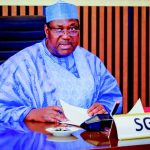
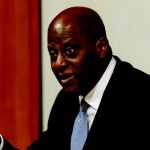
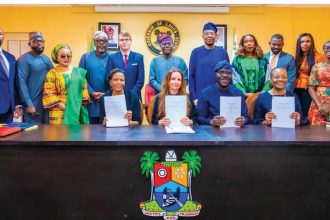
The ceremony, held at the Federal Ministry of Education (FME) headquarters in Abuja on May 28, 2025, brought together top government officials, seasoned technocrats, and private sector experts, signalling a unified front in the push for reform. The Joint Committee is co-chaired by Chairman of the newly re-established National Sports Commission (NSC), Mallam Shehu Dikko, and Honourable Minister of Education, Dr. Maruf Tunji Alausa.
For decades, school sports in Nigeria had suffered neglect, reduced to extracurricular footnotes rather than structured development programmes. But with the unveiling of this initiative, a new era beckons—one where academic learning and athletic training are not only intertwined but elevated together as pillars of national growth.
“Through this programme, and with the wisdom and coordination of this joint committee, we will ensure that every talented student-athlete has the opportunity to thrive — both in the classroom and on the field,” Mallam Dikko said, referencing global data from the Paris Olympics that revealed 38 percent of medalists were student-athletes.
Dr. Alausa echoed similar optimism, describing the initiative as “a defining moment for education and sports in Nigeria.” According to him, the future of Nigeria’s youth lies in a robust synergy between academics and athletics.
“Education is sports, and sports is education — there is no delineation between both,” he stated, noting that the integration would not only build champions on the track but also in leadership, innovation, and nation-building.
The committee is charged with a number of key deliverables—developing a strategic plan for grassroots and school sports across primary, secondary, and tertiary levels; establishing Sports Centres of Excellence in Nigeria’s six geopolitical zones; and strengthening collegiate sports platforms such as Nigerian University Games Association (NUGA), Nigeria Colleges of Education Games Association (NICEGA), and Nigeria Polytechnic Games Association (NIPOGA), and the Principal’s Cup.
But this is not just a government affair. The 20-member committee draws on a broad coalition of expertise, with senior directors from both the NSC and FME, and top-tier professionals from the private sector. Among the notable names: Mr. Joseph Yobo, former Super Eagles captain and Senior Technical Assistant to the President on Professional Football; Dr. Julius Oni, a Nigeria-born orthopedic surgeon and associate professor at Johns Hopkins University, and Mr. Babatunde Ogunade, Vice President of the Nigeria Basketball Federation.
In what appears to be a deliberate structure for success, the committee’s secretariat will be domiciled within the NSC, serving as the operational hub for policy planning and inter-agency coordination.
Also speaking at the event, Honourable Minister of State for Education, Prof. SunuaiB Said Ahmad, highlighted the global relevance of the initiative:
“If you look at other developed nations, most of their talents for sports go through the school system. So, I think this is the right time to do this.”
Both Dr. Alausa and Mallam Dikko paid glowing tributes to President Bola Ahmed Tinubu, for what they described as a visionary reconstruction of the sports sector, leading to the resurrection of the NSC. The appointment of Mallam Dikko, they said, has already begun to inject “a fresh breath of ideas” into the system.
NSC Turns Global Sports Hosting Into Economic Engine and Diplomatic Tool
In a bold and strategic push that mirrors President Bola Ahmed Tinubu’s ‘Renewed Hope Agenda,’ the NSC is positioning Nigeria as a premier destination for international sporting events—unleashing what it calls a “sports economy revolution.”
The commission’s new direction is clear: Nigeria will no longer remain on the sidelines of global sports. Instead, it will host, produce, and profit from the events that once passed it by.
This shift is being powered by the Renewed Hope Initiative for Nigeria’s Sports Economy (RHINSE), which seeks to turn sports into a fully-fledged sector of national productivity—anchoring jobs, tourism, infrastructure, and foreign investment.
“Sport is no longer just about participation,” Mallam Dikko said. “It is about production, global relevance, and driving GDP.”
From Hosting Events to Hosting Economies
In just the first half of 2025, Nigeria has already hosted a series of regional events, including the ECOWAS African Wrestling Tournament in March and the CAVB African Women’s Volleyball Championship in April. These events brought athletes, officials, and attention to Nigeria—boosting local economies and rekindling Nigeria’s image as a capable, stable host.
Next up is Abeokuta’s hosting of the African U18/U20 Combined Athletics Championships in July, a high-energy gathering of the continent’s emerging talent. Beyond medals and records, it is about re-establishing Nigeria’s sporting influence across Africa.
The Formula 1(F1) Gambit
But it is Nigeria’s potential leap onto the Formula 1 calendar that’s making global headlines. The NSC is currently in early-stage talks with F1 executives to develop Africa’s first Grand Prix circuit—an ambitious project that could reposition Nigeria as a heavyweight player in elite motorsports.
The implications are vast: high-end tourism, billion-dollar infrastructure, thousands of jobs, and a new identity as Africa’s innovation hub in sport.
“This is not just about racing,” Mallam Dikko noted. “It is about rewriting how the world sees Nigeria.”
Bidding for History: Commonwealth and Africa Games
The momentum does not stop at F1. Nigeria is actively bidding for the 2030 Commonwealth Games and the 2031 All-Africa Games, signaling its readiness to step onto the biggest stages of global sport. These are not vanity projects—they are calculated economic plays with long-term impact on aviation, hospitality, technology, and real estate.
“We are not just bidding to host,” Mallam Dikko emphasised. “We are bidding to transform.”
More Than Sport: Soft Power and National Branding
The NSC’s strategy stretches far beyond the field. Sports are now viewed as instruments of diplomacy and soft power. In partnership with the Ministry of Foreign Affairs, the NSC is curating each event as an opportunity to showcase Nigeria’s culture, forge international partnerships, and rebuild global confidence.
This narrative shift aligns with the RHINSE blueprint—transforming sports from a ceremonial footnote into a central pillar of the country’s economic and diplomatic future.
A Legacy in the Making
As the world begins to take notice of Nigeria’s ambitious pivot, the country is scripting a new story—one where stadiums replace stereotypes and medals give way to meaningful change.
“The future isn’t about waiting to be invited,” Mallam Dikko stated. “It is about building a Nigeria that the world wants to visit.”
The message is unmistakable: Nigeria is no longer watching the world’s games from afar. It is preparing to host them—and in doing so, reimagine its place on the global stage.