

By Musa Ibrahim
The federal government’s decision to discontinue the use of tax credits by companies for road construction marks a significant shift in how Nigeria plans to finance and govern public infrastructure.
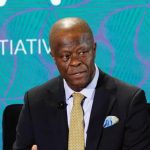
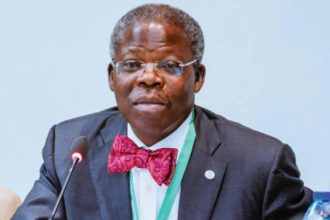
Announced by the Executive Chairman of the Nigeria Revenue Service (NRS), Dr. Zacch Adedeji, the move effectively draws a line under a scheme that for years allowed large corporates to build or rehabilitate federal roads in exchange for future tax offsets.
Speaking at a recent meeting, Dr. Adedeji framed the decision as a constitutional and institutional correction rather than a rejection of private sector involvement. According to him, the tax credit model blurred the boundaries between revenue collection and public spending, roles that Nigeria’s constitution assigns to different authorities.
At the heart of the argument is the mandate of the revenue agency. Dr. Adedeji stressed that the core responsibility of the NRS is to assess, collect, and account for taxes. It does not include spending decisions. Allowing companies to deduct road construction costs from their tax liabilities, he argued, effectively turned tax administration into a form of appropriation.
In his words, once taxes are collected, they cease to belong to the collector or the taxpayer. They become public funds that must pass through constitutionally recognised processes, including the Federation Account Allocation Committee (FAAC). From that pool, elected authorities determine how money is spent. Tax credits for roads, he said, short-circuited that process by letting companies decide how public money was deployed before it ever reached the federation account.
Dr. Adedeji also raised a competence issue. Road construction, he noted, is not within the technical expertise of a revenue agency. Determining standards, costs, and value for money requires engineering and procurement capacity that sits elsewhere in government. For that reason, he said, it was inappropriate for the tax authority to validate or oversee infrastructure projects, regardless of how well intentioned the scheme appeared.
The discontinued programme is the Road Infrastructure Development and Refurbishment Investment Tax Credit Scheme, established under Executive Order 007 around 2019. Its objective was pragmatic. With public funding stretched and road conditions deteriorating, the government sought to leverage private capital to close infrastructure gaps quickly. Companies could fund approved federal road projects and then recover their costs over time by offsetting them against company income tax liabilities.
In practice, the scheme attracted some of Nigeria’s largest corporates. The Nigerian National Petroleum Company Limited (NNPCL) emerged as the biggest participant, financing more than 21 road projects spanning over 1,800 kilometres by late 2024. These included strategic corridors such as the Ilorin Jebba Mokwa Bokani Junction Road and sections of the Lagos Badagry Expressway.
Dangote Group, through Dangote Cement, worked on the Apapa Oshodi Oworonsoki Ojota Expressway and the Obajana Kabba road in Kogi State. BUA Group committed to multiple projects across Kwara and Kogi states, targeting more than 500 kilometres of roads by 2026. MTN Nigeria took on the Enugu Onitsha expressway, while Nigeria LNG funded the high-profile Bodo Bonny Road and bridge project in Rivers State.
Banks and energy firms also participated. Access Bank handled sections of the Victoria Island Lekki circulation road. Mainstream Energy worked on roads in Niger State. Transcorp, GZI Industries, and several manufacturing firms were involved in smaller but locally significant projects. For communities along these corridors, the results were tangible, often delivered faster than traditional public works.
Yet the scheme was not without critics. Some policy analysts questioned its transparency, arguing that it privileged large corporates with substantial tax liabilities while smaller firms and ordinary taxpayers had no comparable options. Others warned that it weakened parliamentary oversight of public spending by relocating decisions from the budget process to bilateral arrangements between companies and the executive.
The government’s decision to end the scheme reflects a broader recalibration of fiscal governance. By insisting that all taxes be paid in full and then appropriated through formal channels, the administration is signalling a preference for clearer institutional boundaries. It is also asserting that infrastructure prioritisation should remain a public choice, not a corporate one, even when private capital is involved.
The move, however, raises immediate questions about funding gaps. Nigeria’s road network remains under severe strain, and public capital budgets alone have historically fallen short. While Dr. Adedeji emphasised that companies should simply pay their taxes and allow government to appropriate funds properly, the effectiveness of this approach will depend on whether appropriated funds are released on time and projects executed efficiently.
There is also the issue of transition. Some projects approved under the tax credit scheme are still ongoing, and clarity will be required on how they are treated. Reports in 2025 already indicated that NNPCL was pausing further commitments under the scheme to refocus on core operations, even before the formal discontinuation.
In ending the tax credit model for roads, the government has chosen constitutional order over improvisation. The challenge now is to ensure that the formal budgetary system it is restoring can deliver infrastructure at the speed and scale the economy demands. Without that, the debate may shift from legality to effectiveness, and pressure for alternative financing models will inevitably return.