
By Kingsly Benson
The federal government has intensified efforts to reposition Nigeria’s livestock sector, establishing a technical sub-committee under the National Economic Council (NEC) to harmonise policies and fast-track a nationwide development roadmap. The move highlights the administration’s vision of livestock as a strategic economic driver for growth, food security, and social cohesion.
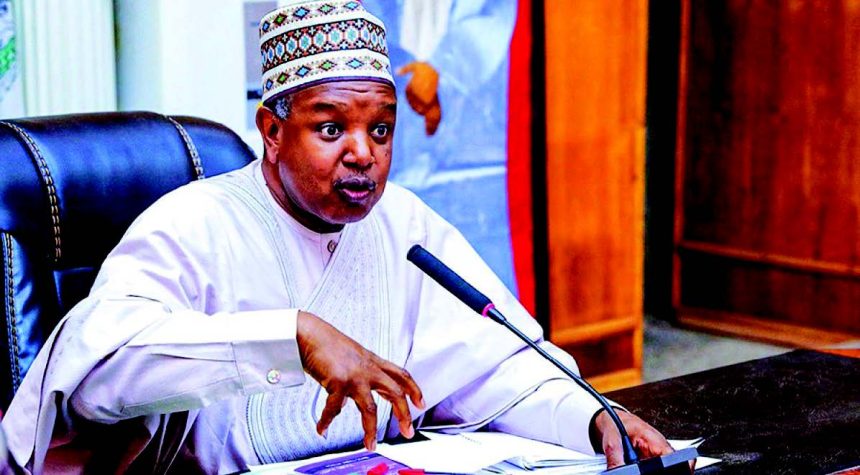
Inaugurating the NEC Technical Sub-Committee on Livestock Development last Monday, the Honourable Minister of Budget and Economic Planning, Senator Abubakar Bagudu, emphasised that the body’s role is to distil existing policy frameworks into a clear and actionable roadmap for consideration by the NEC. “Our task is not to reinvent the wheel,” he said. “A substantial body of work already exists. What is required now is to convert these reports into a practical implementation plan that the NEC can adopt without delay.”
The sub-committee’s formation responds to practical constraints. While a high-level NEC committee on livestock development already exists – chaired by the Governor of Kebbi State, Dr. Nasir Idris, with governors from the six geopolitical zones, relevant ministers, and the co-chair of the Presidential Committee on Livestock Development – the tight schedules of governors limited their direct involvement in day-to-day work. The technical sub-committee, chaired by Sen. Bagudu, will therefore oversee the process more efficiently.
Sen. Bagudu highlighted President Bola Tinubu’s personal commitment to livestock development, noting that his leadership of the Presidential Committee on Livestock Development signals a strategic shift in Nigeria’s economic and agricultural policy. “Livestock is not a marginal activity but a central driver for food security, agricultural productivity, and inclusive growth,” he said, stating that the establishment of a stand-alone Ministry of Livestock Development reflects this prioritisation.
The minister further stressed the need for intergovernmental collaboration. Under Nigeria’s federal system, agriculture and food security, including livestock development, fall within the joint responsibilities of the federal, state, and local governments. The ministry, as the secretariat of the federal system, is tasked with ensuring that national plans, budgets, and programmes are aligned, mutually reinforcing, and implemented collaboratively.
The sub-committee’s mandate also includes identifying investment opportunities and mobilising resources. Sen. Bagudu cited ongoing initiatives such as the World Bank–supported Livestock Productivity and Resilience Support (L-PRES) Project, NG-CARES, the Nigeria for Women Programme, and the Renewed Hope Ward-Based Development Plan. These initiatives aim to unlock economic potential across Nigeria’s 8,809 wards while providing mechanisms to attract private-sector participation, impact investors, and development partners.
Addressing a longstanding source of concern, he acknowledged sensitivities surrounding livestock production, particularly in conflict-prone regions. He emphasised that the sub-committee should help reframe livestock as a driver of prosperity rather than a source of tension. Clear policies and coordinated implementation, he noted, are key to reducing risks and increasing sector resilience.
Dr. Sampson Ebimaro, Director overseeing the Office of the Permanent Secretary, described the meeting as a key step in advancing the President Tinubu administration’s Renewed Hope Agenda. He reinforced the link between food security and national economic growth, underlining the ministry’s commitment to coordinating efforts for sustainable outcomes.
The sub-committee draws from a broad range of expertise, blending policy, technical, and private-sector perspectives. Members include the Permanent Secretary of Budget and Economic Planning, represented by Dr. Sampson Ebimaro; SSA to the President on Agribusiness, Mr. Kingsley Uzoma; commissioners from Cross River, Kebbi, and Niger states; and representatives from the Livestock Productivity and Resilience Support project, Niger Foods, and the Ministry of Livestock.
The establishment of this technical body reflects a deliberate strategy to accelerate livestock sector development through better coordination, policy coherence, and resource mobilisation. By consolidating existing work and aligning stakeholders at all levels, the federal government aims to transform livestock into a more productive, profitable, and conflict-resilient sector.