By Enam Obiosio
In a world where cultural clout rivals military might, Professor Lyndsay Duthie stood before an audience in Lagos, her voice echoing the rhythms of global change. “The creative economy is not tomorrow’s opportunity – it is today’s,” she declared, channeling years of expertise from Britain’s thriving media landscape to spotlight Nigeria’s untapped potential.
As Pro Vice-Chancellor for Partnerships at the University for the Creative Arts (UCA), Duthie – a veteran television producer with credits spanning BBC, ITV, Channel 4, and Sky – recently delivered a keynote that bridged two nations: the UK’s proven success in turning creativity into economic gold and Nigeria’s youthful dynamo poised for a cultural renaissance.
Delivered in early 2025, Duthie’s presentation, titled ‘Creative Economies: UK Success & Nigeria’s Opportunity’, arrives at a pivotal moment. With Nigeria’s government unveiling ambitious roadmaps to catapult its creative sector to $100 billion in GDP contribution by 2030 – potentially creating over three million jobs – her insights offer a blueprint drawn from Britain’s playbook.
It was a moment to explore how the UK’s resilient creative industries, which added £124.6 billion to the economy in 2022 alone, could inspire Nigeria to diversify beyond oil and harness its vibrant youth culture for global dominance.
Setting the Stage: Why Creative Economies Are the New Powerhouse
Prof. Duthie opened her address by dismantling old perceptions: creativity isn’t frivolous leisure; it is essential economic strategy and social infrastructure. Once dismissed by governments as a luxury, culture now drives global growth through innovation, youth empowerment, and technology. “Culture plus creativity equals economic power,” she emphasized, pointing to how nations are leveraging “soft power” – the subtle influence of art, film, and music – to reshape perceptions and boost exports.
This shift is global. A May 2025 New York Times article, ‘Soft Power. Cultural Power.’, underscores how countries are investing in arts to enhance their image and economy. Examples abound: South Korea’s K-pop phenomenon has not only generated billions but also elevated its global standing; Scandinavian noir thrillers have turned Nordic countries into cultural exports; and Nollywood, Nigeria’s prolific film industry, is already proving Africa’s narrative prowess. As Adama Sanneh, CEO of the Moleskine Foundation, noted in the piece, “This is not just a theoretical approach. And you are able to create this only as a city if you create the condition so that the economic indicator is not the only one that counts for public interest.”
In the UK, this evolution is quantifiable. The creative industries grew by 6.8% in 2022, outpacing the national economy twofold and contributing 5.7% to total GVA – up 50.3% since 2010. Subsectors tell the story: IT, software, and computer services led with £53.4 billion, followed by film, TV, radio, and photography at £20.8 billion. Even amid the COVID-19 crisis, the UK’s screen sector demonstrated resilience, exceeding £2.34 billion in production spend in 2020 through rapid adaptations like safety protocols and COVID supervisors.
Duthie highlighted streaming’s transformative role. Platforms like Netflix, Prime Video, and Disney+ pour £1 billion annually into UK originals, exporting British stories to global audiences while creating local jobs. “A drama filmed in Wales or Manchester is now watched in Lagos or São Paulo,” she said. This global shift has fueled ‘set-jetting’ – tourism inspired by film locations. VisitEngland’s 2025 campaign, ‘Starring GREAT Britain’, capitalizes on this, promoting sites from ‘Mission: Impossible’ in Derbyshire to ‘Jurassic World: Rebirth’ in London. Research shows over 90% of potential UK visitors are drawn to these spots, injecting millions into local economies.
Beyond economics, Prof. Duthie framed creativity as social glue. In Medellín, Colombia, libraries and cultural centers turned a violence-plagued city into an innovation hub. Indigenous filmmaking in Australia rewrites narratives of belonging. “Creative projects give people agency, empathy, and pride,” she argued. “They don’t just entertain; they build stronger societies.”
This data, sourced from government estimates, illustrates how strategic investments – in skills, infrastructure, and incentives – have future-proofed the UK. Organizations like ScreenSkills and the British Film Commission play pivotal roles. The latter, with offices in the UK and US, supports productions through tailored assistance, boasting a £4.7 billion spend in 2024 on hits like ‘Bridgerton’ and ‘How to Train Your Dragon’. Duthie, drawing from her own career, stressed talent development: “Shows were greenlit, but crews were all working… We invested in upskilling to fill gaps.”
Nigeria’s Moment: From Underperformance to Global Footprint
Shifting focus, Duthie celebrated Nigeria’s raw potential. With 70% of its population under 35, the country boasts a ‘youth dividend’ ripe for creative explosion. Already, the sector employs 4.1 million – surpassing oil and gas – despite minimal structured support. Officially pegged at 1.2% of GDP, the true impact swells to over 10% when factoring in digital platforms and informal markets.
Recent developments echo Duthie’s optimism. In August 2025, Nigeria’s governors endorsed a federal roadmap to hit $100 billion in gross domestic product (GDP) by 2030, backed by initiatives like the $200 million Creative Economy Development Fund from Afreximbank. The digital economy alone contributed N7 trillion (14.19% of real GDP) in Q1 2025. PwC projects the entertainment and media industry to reach $15 billion this year, fueled by Nollywood’s output – second only to Bollywood in volume.
Nollywood exemplifies this momentum. Streaming exports via Netflix and Showmax boost jobs and foreign exchange, with every state potentially becoming a film destination. Afrobeats, too, tops charts worldwide, while Lagos’ nightlife generates nearly $970 million annually. National touring by top artists could unlock over N1 trillion yearly. Fashion and beauty, often women-led and powered by platforms like Instagram and TikTok, tap a massive domestic market. Festivals like Detty December and NAFEST drive cultural tourism, with Motherland 2025 poised to make it year-round.
Yet challenges persist. Without coordinated investment, growth is stunted. Duthie warned: “This is a generational opportunity – projected at $250 billion by 2035 – but it requires action now.”
Unlocking the Future: Pillars, Partnerships
Duthie’s roadmap rests on four pillars: capacity building, infrastructure and funding, global promotion, and policy/IP monetization. Initiatives like ICE Hubs, Alison/So Creative training, and the Creative Leap Accelerator aim to upskill millions. Major projects include Abuja Creative City and Lagos Arena, funded partly by the $200 million pot.
Globally, strategies like “Nigeria Everywhere” (Destination 2030), UNESCO recognitions, and a Cannes comeback amplify soft power. Duthie envisions bilateral ties with the UK: co-productions, training exchanges, and cultural diplomacy. “The UK–Nigeria connection can nurture future creative leaders,” she said, nodding to UCA’s role in talent development.
As Nigeria created 257,000 creative jobs in 2024 and builds on that in 2025, experts like Samuel Onyemelukwe affirm the $100 billion target is achievable. Duthie, active on X (@Lyndsayduthie) with over 4,800 followers, often shares insights on media trends, reinforcing her call: “If Nigeria scales its creativity, it will scale its prosperity.”
In an era where Milan’s industrial ruins become creative hubs and Detroit’s stations revive through art, Nigeria stands at the cusp. As Duthie concluded, the time is now – to turn beats, films, and festivals into a economic symphony that echoes worldwide.
NGF Backs UK Partnership to Boost Nigeria’s Creative Economy
The Director-General (DG) of the Nigeria Governors’ Forum (NGF), Dr. Abdulateef Shittu, reaffirmed the Forum’s commitment to positioning Nigeria’s creative industries as a central pillar of the country’s economic diversification and youth empowerment strategies.
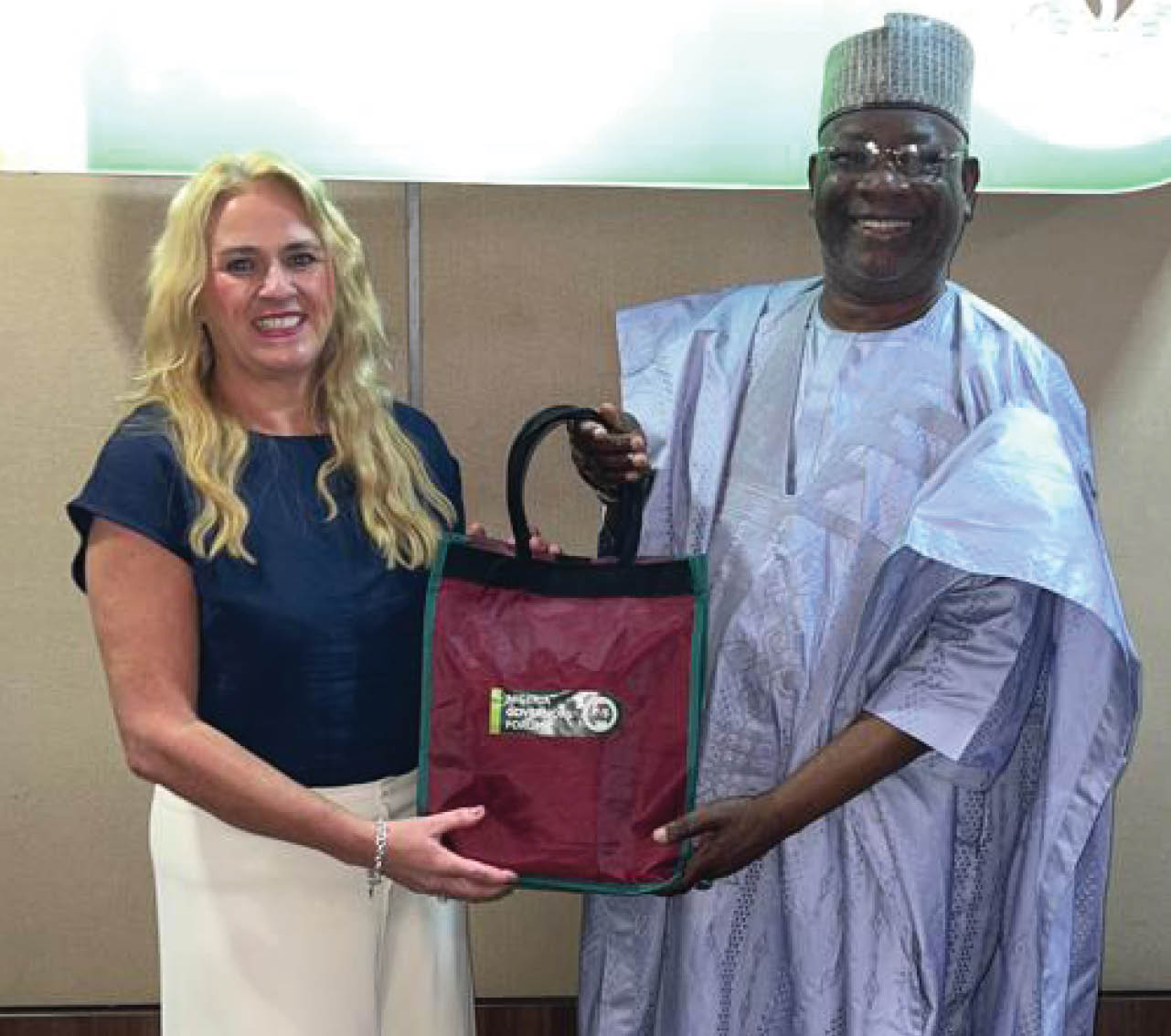
Speaking during a courtesy visit to the Forum by Professor Lyndsay Duthie, Pro Vice-Chancellor of the University for the Creative Arts (UCA), United Kingdom, Dr. Shittu described the engagement as “timely and significant,” coming at a period when Nigeria is deliberately scaling investments in its cultural and creative sectors.
In a release by Mr. Yunusa Tanko Abdullahi, the NGF’s Director of Media and Strategic Communication, Dr. Shittu said: “Your visit is both timely and significant as Nigeria positions the creative economy as a central pillar of economic diversification and youth empowerment,” he said.
The NGF, a non-partisan platform that convenes Nigeria’s 36 state governors to promote good governance, is increasingly turning its attention to sectors that can deliver inclusive growth. Dr. Shittu stressed that the creative industries stand out as one of the most promising drivers of jobs, innovation, and social cohesion.
According to him, the Forum has already begun strengthening partnerships with the National Council for Arts and Culture and the Federal Ministry of Art, Culture and the Creative Economy to build infrastructure, scale up skills development, and integrate creative enterprise into state-level economic strategies.
“Nigeria’s creative talents project the country’s cultural influence globally,” Dr. Shittu noted. “Your focus on skills development, soft-power diplomacy, digital exports, and entrepreneurship resonates with the Forum’s priorities.”
He emphasised that with structured investment, capacity-building, and strong international collaborations, the sector could be transformed into a major source of sustainable prosperity.
Highlighting the role of international partnerships, the NGF DG said the Forum is eager to work with institutions such as the UCA to accelerate knowledge exchange and talent development.
“The NGF is ready to collaborate with the University for the Creative Arts through knowledge exchange and talent development. Building institutional partnerships with globally recognised institutions such as yours will significantly accelerate the growth of Nigeria’s creative economy,” he said.
Dr. Shittu concluded by assuring Professor Duthie of the Forum’s readiness to build lasting partnerships that would empower Nigeria’s youth, strengthen cultural industries, and deepen creative ties between Nigeria and the UK.