By Jennete Ugo Anya
The Nigeria Deposit Insurance Corporation (NDIC) is emerging as a model of fiscal discipline among government agencies, earning high commendation for consistently remitting its operating surplus to the Consolidated Revenue Fund (CRF). The corporation’s performance highlights how self-funded regulatory institutions can combine operational independence with public accountability.
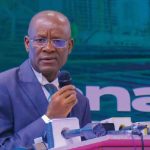
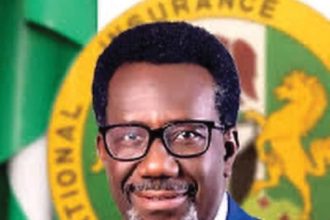
The commendation came during a recent courtesy visit to the Fiscal Responsibility Commission (FRC) headquarters in Abuja by NDIC Managing Director and Chief Executive, Mr. Sunday Oludare Thompson, and members of the corporation’s new management team.
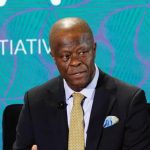
Mr. Victor Muruako, FRC Executive Chairman, described NDIC as “one of the best-performing agencies in terms of operating surplus remittance,” noting that the corporation consistently meets its statutory obligations under the Fiscal Responsibility Act (FRA) 2007. “If any agency deserves recognition for remitting operating surplus into the Consolidated Revenue Fund in strict compliance with the Act, NDIC would come first,” he said.
NDIC plays a critical role in maintaining the stability of Nigeria’s financial system. Established as a statutory financial safety-net institution, it safeguards depositors, guarantees bank deposits, supervises insured institutions, and contributes to systemic stability under the supervision of the Central Bank of Nigeria (CBN). While the corporation is self-funded through premiums from insured banks and investment income, it is classified as a public institution and subject to the FRA, which mandates timely remittance of a portion of operating surplus to the CRF.
Under the latest framework, outlined in Finance Circular No. FMFCME/OTHERS/IGR/CRF/21/2023, NDIC remits 80 percent of 50 percent of its Gross Internally Generated Revenue to the CRF. The adjustment recognises the corporation’s self-funded status while maintaining the principle of contributing to the national revenue base.
For Mr. Thompson, the FRC visit was part of a broader strategy to strengthen institutional collaboration. “NDIC and FRC share aligned mandates centered on transparency, accountability, and public confidence in the management of government funds,” he said. He reaffirmed NDIC’s commitment to complying fully with all fiscal and regulatory obligations while continuing to build and sustain its insurance funds.
NDIC’s operational excellence provides a model for other government-owned entities. Mr. Muruako urged institutions such as the CBN and other public agencies to emulate NDIC’s approach, particularly in terms of transparency and timely remittance of operating surplus.
Analysts say the corporation’s performance underscores a broader lesson for Nigeria’s public sector: self-funded regulatory institutions can achieve operational independence without compromising accountability. NDIC’s consistent remittances not only comply with statutory requirements but also enhance public confidence in the country’s financial system and strengthen fiscal governance.
By combining regulatory oversight with disciplined financial management, NDIC demonstrates that government agencies can contribute meaningfully to national revenue while maintaining the integrity and stability of the sectors they supervise. Its approach provides a blueprint for institutional efficiency and transparency, showing how public institutions can lead by example in meeting statutory obligations and building trust in Nigeria’s fiscal and financial systems.