By Majeed Salaam
The Nigeria Deposit Insurance Corporation (NDIC) has recorded a 97 percent implementation of its 2025 budget, positioning the agency as one of the strongest-performing government-owned enterprises under Nigeria’s fiscal responsibility framework.
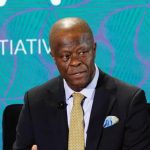
The performance was disclosed during a budget defence session before the House of Representatives Committee on Insurance and Actuarial Matters, where the NDIC Managing Director, Mr. Thompson Sunday, presented the Corporation’s 2026 fiscal projections.
Chairman of the Committee, Hon. Ahmed Jaha, commended the agency’s discipline in revenue management and compliance with statutory remittance obligations.
“I want to put this on record that NDIC is one of the agencies operating strictly under the Fiscal Responsibility framework on cost-to-income ratio,” Hon. Jaha stated. He explained that under the governing framework, 50 percent of the corporation’s generated income must be remitted to the Consolidated Revenue Fund of the Federal Government, while the remaining 50 percent is retained for operational purposes.
Despite this structural constraint, NDIC achieved nearly full budget execution. “Despite this limitation, NDIC has achieved nearly 97 percent budget implementation for 2025. Meanwhile, some other agencies recorded zero per cent performance, particularly on their capital components,” Hon. Jaha noted.
The chairman attributed the performance to the agency’s revenue model and internal controls. “This achievement is largely because NDIC is a self-generating, government-owned enterprise that manages its revenue efficiently within the fiscal responsibility guidelines,” he added.
The 97 percent execution rate is significant within Nigeria’s public finance landscape, where capital budget performance often lags due to funding constraints, procurement delays and revenue volatility. NDIC’s model, anchored on internally generated revenue from financial institutions, provides it with relative stability compared to agencies dependent on federal allocations.
For 2026, the corporation has proposed a total budget of N589.89 billion. According to Managing Director Thompson Sunday, the proposal represents an increase of N151.22 billion over the 2025 appropriation.
Mr. Sunday clarified that projected total expenditure for 2026 stands at N250.46 billion, which represents 50 percent of the Corporation’s anticipated income. This structure is in strict compliance with the cost-to-income ratio policy that governs the agency’s operations.
In addition to its spending plan, NDIC projected a surplus of N254.74 billion for the 2026 fiscal year. Of that amount, approximately N252.60 billion, representing 50 per cent, will be remitted to the Federal Government in line with statutory requirements.
The figures underscore NDIC’s dual role as both a financial system stabiliser and a revenue-contributing public institution. Its primary mandate remains the protection of depositors and the maintenance of confidence in the banking system. However, its consistent remittances also support federal revenue consolidation efforts.
Parallel to NDIC’s presentation, the National Insurance Commission outlined its own 2026 financial projections, signalling tightening regulatory oversight within the insurance sector.
The Commissioner for Insurance at the National Insurance Commission, Mr. Olusegun Omosehin, proposed a 2026 expenditure of N25.667 billion, with projected net revenue of N25.702 billion. He disclosed the figures while appearing before the same House Committee.
Omosehin reported that the Commission’s Internally Generated Revenue is projected to rise to N34.270 billion in 2026, up from N29.921 billion projected for 2025. The increase of N4.348 billion represents a 14 per cent growth.
He attributed the projected expansion in revenue to new initiatives aimed at strengthening collections and closing operational leakages. Enhanced monitoring and improved compliance systems are expected to underpin the revenue growth trajectory.
Beyond fiscal projections, Mr. Omosehin confirmed that NAICOM has commenced the recapitalisation of insurance firms. He described the move as the first phase of a broader restructuring programme designed to stabilise and reposition the sector.
According to him, the overarching objective is to reform, rebuild and recapitalise the industry. “We are committed to a transparent process. The exercise will conclude on July 31, 2026, after which only companies that meet the new minimum capital requirements will remain in operation,” Omosehin stated.
The recapitalisation drive is expected to reduce systemic risk, strengthen underwriting capacity and improve consumer confidence in the insurance market. It also aligns with ongoing efforts to deepen financial sector resilience across banking and non-banking institutions.
Taken together, the NDIC and NAICOM budget presentations reflect a broader pattern of institutional tightening within Nigeria’s financial regulatory architecture. Stronger compliance with fiscal responsibility rules, improved internally generated revenue performance and sector-wide restructuring efforts indicate a focus on sustainability and prudential oversight.
For the banking system, NDIC’s robust surplus and high implementation rate reinforce its capacity to manage potential bank distress events and safeguard depositor funds. For the insurance sector, recapitalisation signals a transition toward higher capital thresholds and operational discipline.
As the 2026 fiscal cycle approaches, legislative scrutiny and regulatory enforcement are likely to intensify. The performance metrics presented at the National Assembly suggest that financial sector institutions are positioning themselves not only as regulators but as accountable, revenue-generating public enterprises operating within defined fiscal boundaries.