
Partners NCDMB To Support Oil & Gas SMEs With 42 Million Funding
By Jennete Ugo Anya
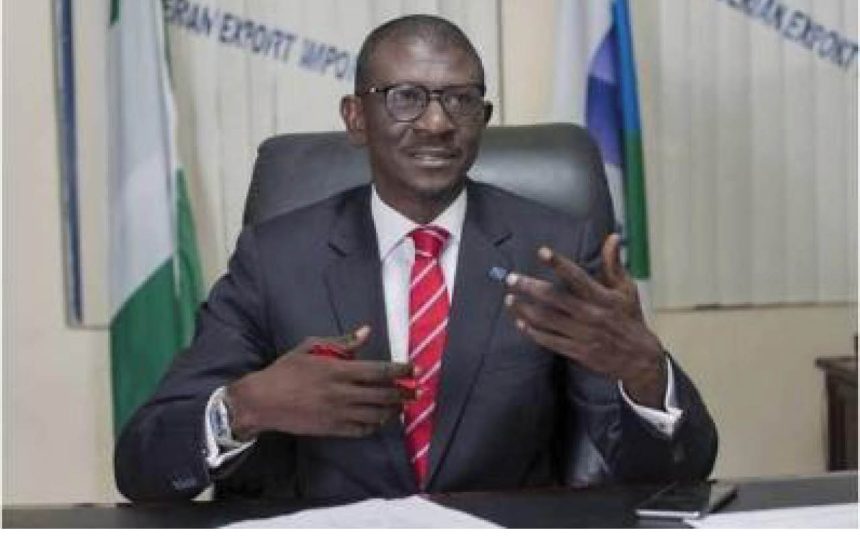
The Managing Director (MD)/Chief Executive Officer (CEO) of the Nigerian Export-Import (NEXIM) Bank, Mr. Abubakar Abba Bello, has reaffirmed the bank’s commitment to providing more affordable financing options to small and medium enterprises (SMEs) in Nigeria, particularly those engaged in export activities.
Speaking in Abuja at the SME Export Finance Sensitisation Forum (EXCEL Programme), jointly organised by NEXIM and Deutsche Gesellschaft für Internationale Zusammenarbeit (GIZ) Nigeria under the Sustainable and Inclusive Economic Development for Decent Employment in Nigeria (SEDIN) Programme, Mr. Bello said that the move is aimed at easing the financial burden on entrepreneurs and enhancing their competitiveness in global markets.
He noted that one of the biggest challenges facing SMEs is the high cost of funds, with interest rates from commercial banks currently hovering around 30 per cent – a rate he described as “too high for small businesses to sustain.”
“Alongside other Development Finance Institutions (DFIs) like the Bank of Industry (BoI) and Development Bank of Nigeria (DBN), NEXIM has been working to reduce the cost of finance and create refinancing opportunities for MSMEs,” Mr. Bello said.
“Our goal is to make them competitive, sustainable, and capable of scaling their operations. As a development finance institution, our role is to help them grow to the level where they can attract financing from multiple sources.”
He identified limited access to finance, infrastructure gaps, and regulatory challenges as major constraints affecting micro, small, and medium enterprises (MSMEs) in Nigeria. He stressed that beyond funding, capacity building remains essential to improving entrepreneurs’ ability to manage credit and sustain growth.
“Banks are not unwilling to lend to MSMEs,” he explained. “However, many small businesses lack the structures, documentation, and management capacity needed to access or effectively utilize credit. That’s why sensitisation programmes like this are so critical.”
Through initiatives like the EXCEL Programme, Mr.Bello said that NEXIM aims to strengthen MSMEs to make them bankable and investment-ready, helping them attract not only bank financing but also private equity.
He highlighted the sector’s importance, noting that Nigeria’s MSMEs account for 96.9 percent of registered businesses, contribute about 48 percent to GDP, and employ 87.9 percent of the workforce. Despite this, he lamented that 55 percent of MSMEs struggle to access financing, with many folding within five years due to high costs, infrastructure deficits, and regulatory burdens.
The NEXIM boss said that the EXCEL Programme was designed to address these gaps and unlock the country’s export potential.
“Globally, export financing has proven to be a powerful driver of economic growth,” Mr. Bello said. “Yet, exports of goods and services contribute only about 7.64 percent to Nigeria’s GDP. This shows the enormous untapped potential within our MSME export sector.”
He added that NEXIM has introduced new financing products, including the SME Export Facility (SMEEF) and the Women and Youth Export Facility (WAYEF), as well as the NEXA digital platform, which enables MSMEs to access export finance and digital management tools seamlessly.
“These initiatives are designed to make export financing more accessible, transparent, and impactful,” he said. “We are also preparing to onboard our SME clients onto the African Trade Gateway (ATG) platform to improve market access, enhance payment systems, and deepen intra-African trade.”
Mr. Bello emphasized that while financial support remains vital, collaboration among stakeholders – including regulators, DFIs, and entrepreneurs – is key to building a stronger and more resilient MSME ecosystem.
Meanwhile, in another development, NEXIM bank and the Nigerian Content Development and Monitoring Board (NCDMB) have disbursed about $42 million to small and medium enterprises (SMEs) operating in the sector – surpassing the fund’s initial $30 million ceiling.
This was disclosed by Mr. Muhammed Awami, Head of Specialised Business at NEXIM Bank, during a panel session at the NCDMB Stakeholders Sensitisation and Engagement Forum held in Port Harcourt, Rivers State.
Mr. Awami explained that the decision to exceed the original cap was driven by the institutions’ commitment to deepen Nigerian participation in the oil and gas value chain.
“The Working Capital and Capacity Fund was initially pegged at $30 million, but we have disbursed about $42 million so far to enable more Nigerian players to participate in the sector,” he said.
Themed ‘Deepening Local Content through Certification, Compliance, and Financing Support,’ the forum convened key stakeholders to deliberate on financing and certification mechanisms for indigenous oil service providers.
Mr. Awami encouraged duly registered Nigerian companies with viable contracts with International Oil Companies (IOCs) and National Oil Companies (NOCs) to take advantage of the facility, managed by NEXIM bank in partnership with NCDMB.
He noted that the fund offers flexible and tailored financing solutions designed to support business growth, facilitate market access, and enhance global competitiveness.
“Once you meet pre-disbursement conditions, the funds are released. After disbursement, we monitor utilization – sometimes jointly with NCDMB – to ensure the funds serve their intended purpose,” he said.
“We’ve also simplified collateral requirements using instruments like assignments of receivables, insurance, and transaction-based structures. This makes the loans self-liquidating, reducing the need for physical collateral.”
Representing the Executive Secretary of NCDMB, Mr. Felix Omatsola Ogbe, Dr. Osa Uchendu said that the engagement highlights the board’s ongoing commitment to fostering collaboration and expanding the participation of Nigerian companies in the oil and gas sector.
“This forum offers a unique opportunity to strengthen engagement with stakeholders and enhance the participation of Nigerian players,” Dr. Uchendu said.