
By Jennete Ugo Anya
Since the inception of President Bola Ahmed Tinubu-led administration, the Family Homes Funds Limited (FHFL) is one institution that has consistently aligned itself with the administration’s commitment to delivering tangible benefits to the people.
In a country where the housing deficit continues to weigh heavily on millions of people, FHFL is emerging as more than a policy implementer; it is becoming a lifeline.
Founded on a social mission to provide affordable housing and promote economic empowerment, FHFL has, in the last year, repositioned itself as a national asset. Under the President Tinubu’s administration, the company has launched innovative housing initiatives, developed inclusive mortgage products, and expanded its reach to underserved Nigerians, including students and widows. Through these interventions, FHFL has woven jobs, homes, and hope into a broader national transformation story.
Affordable Homes at the Heart of the Nation
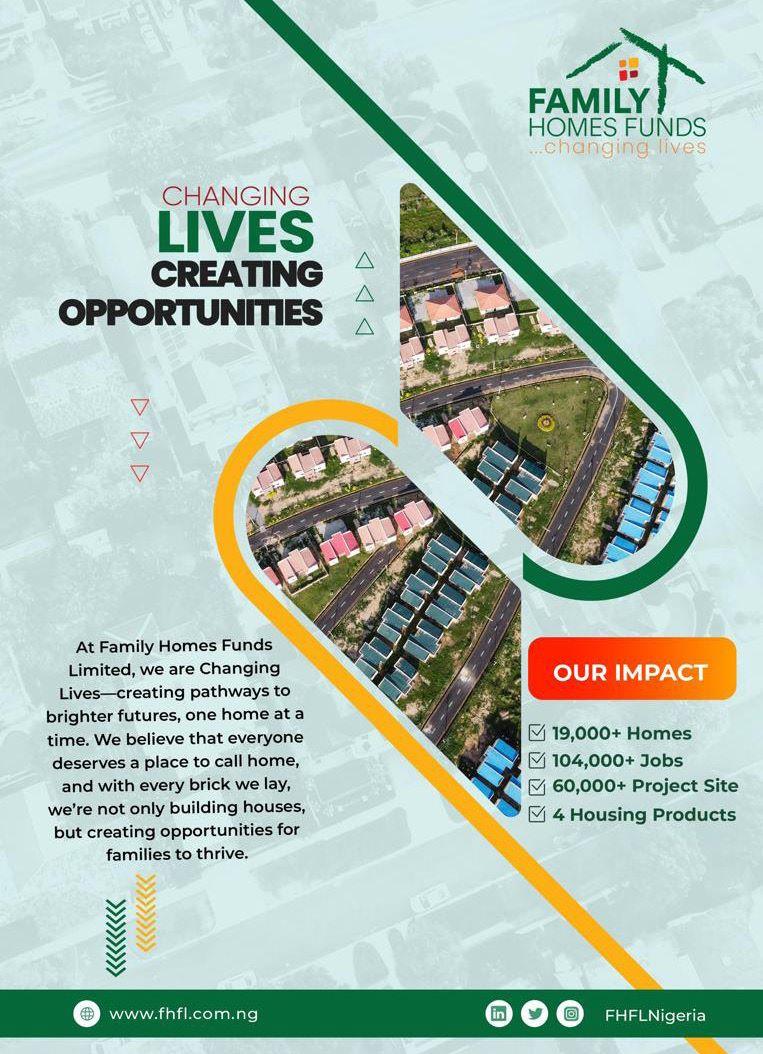
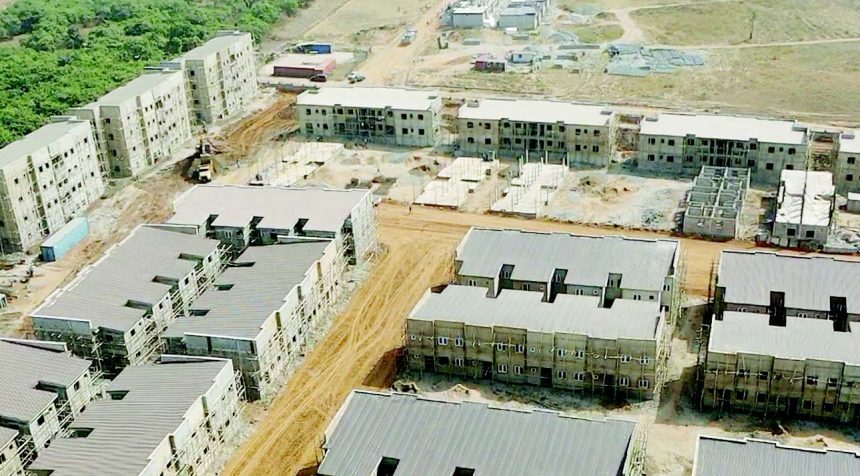
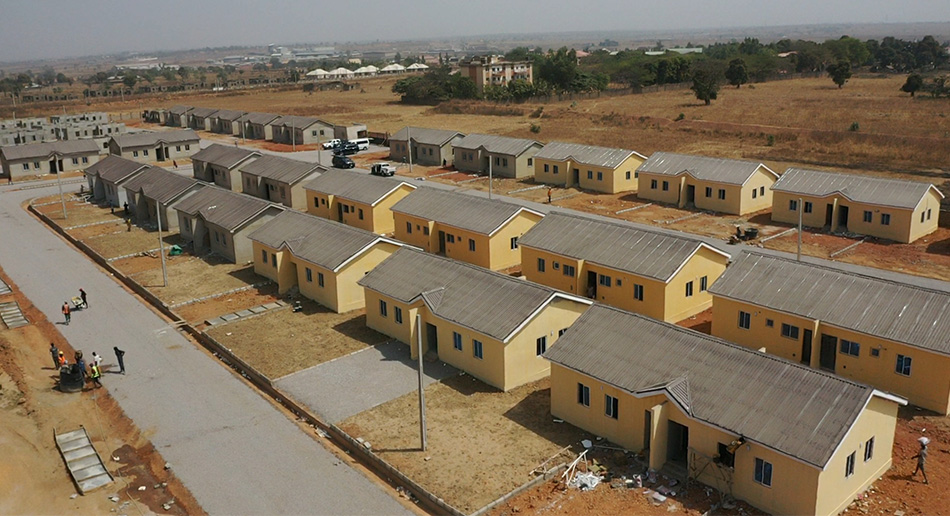
At the heart of its contribution is the flagship housing development project at the Renewed Hope City in Karsana, Abuja. In support of the government’s housing vision, FHFL committed a staggering N20 billion to finance the development of 3,112 affordable housing units in this community. Out of these, 770 homes are on track to be completed by May 2025. But the value of this project extends beyond bricks and mortar. It has already spurred the creation of 3,850 jobs, while N10 billion has been dedicated to direct construction financing. With N3.6 billion generated in tax revenue, 250 artisans trained, and 70 percent of the homes fully subscribed, the Karsana project is not just a housing scheme—it is an engine of inclusive economic growth.
38,400 Beds for a New Academic Era
FHFL’s story does not stop in Abuja. In 2024, the company launched the National Student Housing Programme, targeting accommodation challenges in public tertiary institutions. In collaboration with TetFund, public universities, and private sector partners, FHFL embarked on an ambitious plan to deliver 38,400 bed spaces across 24 institutions nationwide. The first step saw a commitment of N5.2 billion to develop 3,200 bed spaces at two pilot locations. Following this, another N10.4 billion was approved for four additional locations—Akwa Ibom State, Delta State, Kaduna State, Abuja, Ogun State, and Bauchi State. These projects are progressing at different stages, with the inaugural development at Akwa Ibom State University scheduled for completion by October 2025. These hostels are not only well-built and secure, but also designed with social inclusion, affordability, and student welfare at the forefront.
Turning Tenants into Homeowners
To make homeownership attainable for everyday Nigerians, FHFL unveiled the Help-to-Own mortgage product in March 2024, in partnership with the African Development Bank (AfDB). This product offers low-cost, long-term mortgage solutions to first-time buyers, with flexible repayment structures and reduced equity contributions. The response has been significant. As of now, N7.18 billion worth of mortgages has been disbursed, with N4.53 billion mobilized from private sector partners. A total of 1,012 Nigerians has benefitted from the product, and importantly, 34 percent of those mortgages were issued to women. In recognition of its impact, Help-to-Own was named Mortgage Product of the Year at the African Housing Awards 2024. Beyond numbers, it is helping Nigerian families make the critical shift from tenants to homeowners, strengthening the economy while fulfilling aspirations.
Widows and Displaced Women Find Home
In areas where dignity has often been denied—among widows, internally displaced persons, and the ultra-poor—FHFL has stepped in with compassion and innovation. The company’s social housing program spans cities like Kaduna, Calabar, and Ibadan, where 100 energy-efficient two-bedroom homes are being built for disadvantaged widows. These homes are constructed using environmentally friendly, locally sourced materials, reducing the carbon footprint and promoting sustainability. But this initiative goes beyond housing—it is a gateway to economic empowerment. So far, 200 individuals—comprising 100 widows and 100 local artisans—have been trained, equipped with skills in construction, and provided with start-up capital to enhance employability and income generation. Over 500 workmen have also been engaged across these projects, further deepening the program’s economic footprint.
Financial Ratings that Reflect Impact
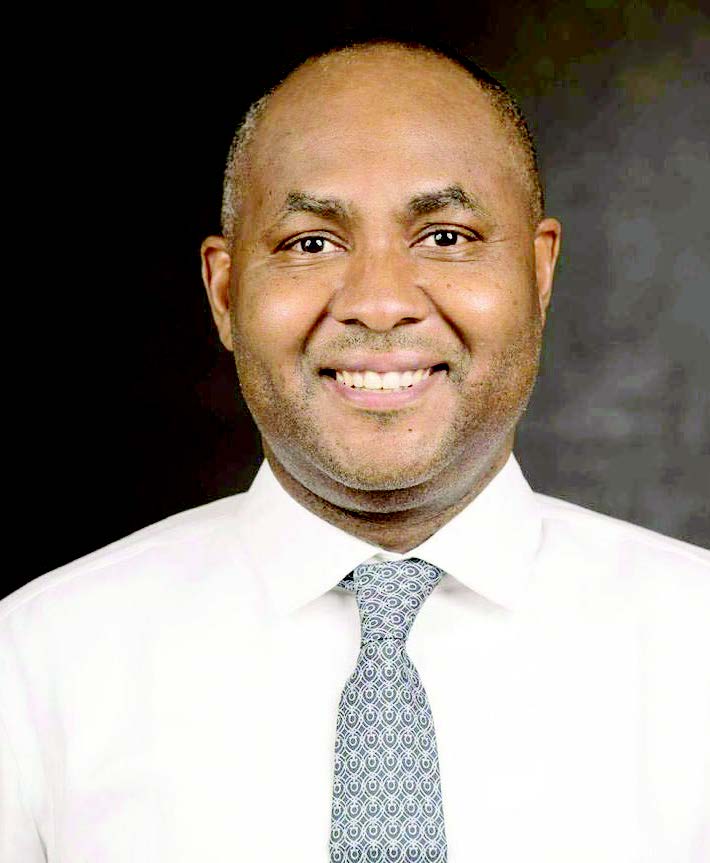
Under the leadership of Mr. Abdul Mutallab Mukhtar, Managing Director/Chief Executive Officer (MD/CEO), the momentum behind FHFL’s work has not gone unnoticed. In August 2024, credit rating agency Agusto & Co. upgraded FHFL’s rating from A+ to Aa-, citing strong financial stability, strategic governance, and continued support from the federal government. The company’s focus on sustainable development and prudent financial management has earned it high praise. Two months later, in October 2024, GCR Ratings also upgraded FHFL’s national scale long- and short-term issuer ratings to A(NG) and A1(NG), up from BBB+(NG) and A2(NG), with a revised outlook from Positive to Stable. The upgrade reflects the company’s consistent growth, access to federal and development finance funding, and a healthy capital and liquidity position.
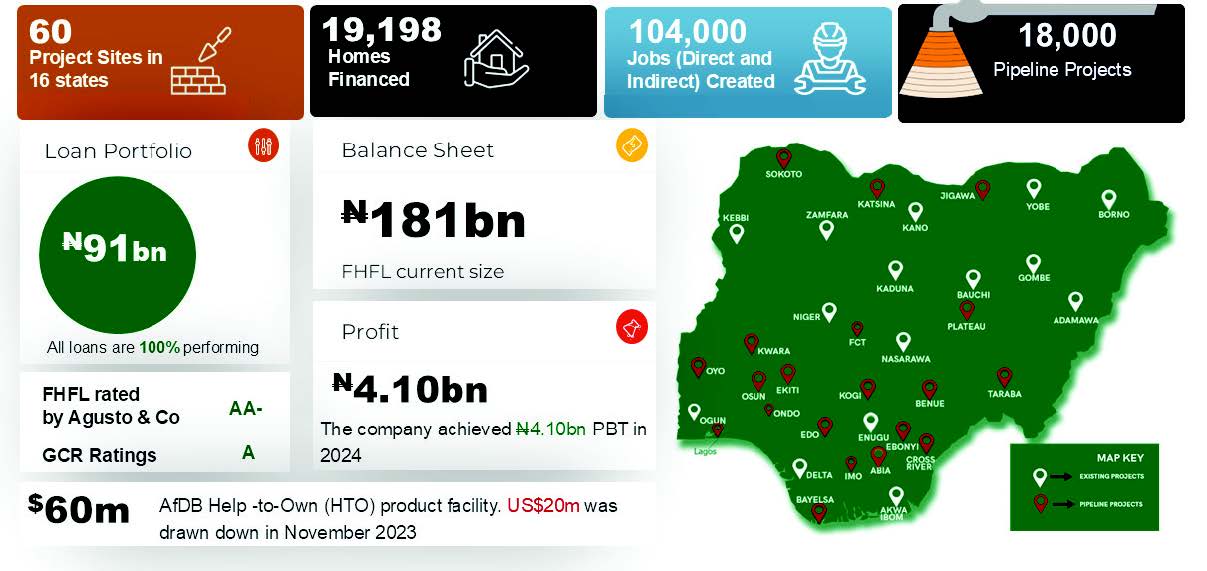
FHFL’s mission is rooted in impact—not just in the physical structures it builds, but in the lives it transforms. Under President Tinubu’s Renewed Hope Agenda, the organization has become an unlikely symbol of national renewal. It is rewriting the narrative around affordable housing in Nigeria—proof that development can be deliberate, inclusive, and deeply human.
In the end, FHFL is not simply constructing homes; it is building futures, strengthening families, and delivering hope—one project, one beneficiary, one brick at a time.