

By Ahmed Ahmed
Nigeria is steadily advancing toward achieving a $1 trillion economy by 2030, the Presidency has affirmed, describing the nation’s current trajectory as a “healing journey” marked by deliberate reforms and inclusive economic strategies.
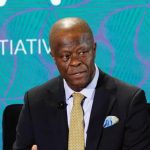
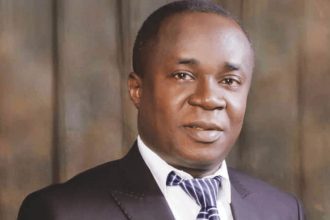
Dr. Nurudeen Zauro, Technical Adviser to the President on Economic and Financial Inclusion in the Office of the Vice President, disclosed this in Abuja over the weekend, highlighting the administration’s efforts to restore Nigeria’s leadership position in Africa through a borderless and inclusive economy.
The announcement coincides with preparations for the RegTech Africa Conference and Expo (RACE 2026), scheduled for May 20 – 22 in Abuja under the patronage of the Office of the Vice President. The conference, organised in partnership with the Presidential Committee on Economic and Financial Inclusion and in collaboration with the Inter-Governmental Action Group Against Money Laundering in West Africa (GIABA), carries the theme: “Building trust, infrastructure, inclusion and policy for a borderless economy.”
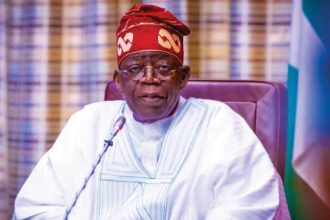
Addressing reporters, Dr. Zauro emphasised that President Bola Ahmed Tinubu set clear economic targets from the outset of his administration. “From day one, Mr President actually set a target. He set a target of deepening Nigeria’s economic and financial sector to achieve a $1 trillion economy by the year 2030. In order for us to achieve that, we have to build trust, we have to build infrastructure, we have to ensure inclusion, and bring in policies that promote partnership and collaboration. That is the definition of the borderless economy,” he said.
Dr. Zauro likened the current policy push to a necessary medical intervention. “It takes a bold decision for a father who knows his child is sick to take him to the hospital, allow him to go through surgery and come out hale and hearty,” he explained. “Nigeria has passed through a lot of reforms and difficult times. We know economic pressure is a global thing, but at this time we are on a healing journey.”
He pointed to emerging signs of improvement in key economic indicators, noting that investor confidence is returning and capital inflows are increasing. “Nigerian numbers are changing. Things are becoming better; the numbers are turning. Investors are coming. In this room, in this office, we have hosted so many people. Nigeria is on its trajectory to success, and I can assure you that the leadership Nigeria has always had in Africa is being reinforced,” Dr. Zauro said.
The adviser highlighted the African Continental Free Trade Area (AfCFTA) as a strategic instrument for regional economic leadership. “In terms of leadership to take advantage of AfCFTA, we are really where the numbers are today, and they are out there. The most important thing is the intentionality of the administration. Mr. President and the Vice President have been all over the world canvassing for support, requesting collaboration and partnership,” he said.
Financial inclusion, Dr. Zauro stated, remains central to the administration’s economic strategy. The Presidential directive on implementing the ASO Accord on Economic and Financial Inclusion guides efforts to expand access, ensure policy coherence, and strengthen partnerships. The government has elevated inclusion discussions to the National Economic Council (NEC) to secure buy-in from states and sub-national actors. “It is not enough to do policy at the centre; you must ensure that the policy goes to the sub-nationals so that every Nigerian is part of the policy and its implementation. Our slogan has always been: no one is left behind,” he said.
Conference organisers emphasised that multi-stakeholder engagement is critical for addressing persistent challenges in policy and technology deployment. “The truth is that conversations like this help us to solve problems. Maybe some policymakers are not even aware of the issues until you ask the questions. The essence of bringing everybody together is to have these conversations and solve these problems,” they said.
They stressed the importance of curating relevant resources, from policymakers to innovators and operators, to respond to sector-wide concerns and practical constraints. The organisers also linked inclusion directly to productivity in rural and underserved communities, arguing that access to markets and payment systems could unlock significant output. “If you give me access to market for my goods, even if I am in one small village, and I have exposure to the world and access to collect my money from the sales, I will produce more,” they noted.
The Presidency’s focus on building a borderless economy combines reforms in financial infrastructure, regulatory frameworks, and digital inclusion to create an enabling environment for sustainable growth. By embedding inclusivity, transparency, and strategic collaboration, the administration aims to strengthen Nigeria’s economic base while promoting broader regional influence.
As Nigeria positions itself to leverage continental trade opportunities and enhance domestic economic resilience, officials say sustained policy implementation, partnerships with private-sector actors, and targeted investments in technology and infrastructure will be key to meeting the $1 trillion target. The combination of reform, dialogue, and intentional inclusion is expected to reinforce investor confidence, expand financial access, and enhance productivity across sectors.