By Kingsley Benson
The United Nations Development Programme (UNDP) has commended Nigeria and South Africa for strengthening a collaborative platform that aims to ensure Africa’s concerns and economic priorities gain firm representation within global governance structures.
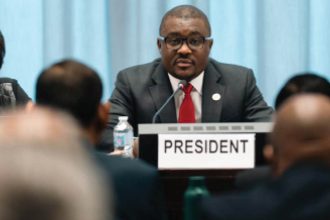
The remarks came from Varsha Redkar-Palepu, the UNDP Deputy Resident Representative for Programme, at the G20 – Africa outreach meeting on industrialisation and agriculture held in Abuja.
The meeting, hosted by the South African High Commission in partnership with the federal government, forms part of preparations for the G20 Summit scheduled for November 22 to 23 this year in Johannesburg.
Representatives of international organisations, African governments, and senior Nigerian officials attended the session, which examined how the continent can translate its natural endowments into competitive industrial and agricultural growth.
Redkar-Palepu said that Nigeria’s role in convening the meeting, along with South Africa’s coordination as G20 president, has created a functional space for African actors to influence global policy discussions. She welcomed the decision to expand G20 engagement to regional consultations and noted that the permanent admission of the African Union into the G20 has institutionalised the continent’s presence at the top tier of global economic decision-making.
According to her, this development gives Africa a chance to ensure that global policies reflect its demographic growth, economic opportunities, and development needs.
In her remarks, she underscored the strategic importance of agriculture to Africa’s economy. The sector sustains roughly half of the continent’s labour force and contributes about a quarter of total gross domestic product (GDP), yet most agricultural exports remain unprocessed. At the same time, African countries import high-value food worth more than one billion dollars each year, a pattern that she said limits the continent’s industrial advancement.
She argued that modernising agriculture and expanding industrial capacity must be pursued together if Africa is to shift from low-value commodity exports to competitive value-addition.
Redkar-Palepu identified the cost of borrowing as a major constraint on growth, noting that Africa continues to face what she described as a risk premium in global lending markets. She said the high cost of capital slows progress across the continent despite reforms undertaken by governments and commitments made by development institutions.
According to her, the absence of a global financial system that supports Africa’s ability to convert natural resources into durable economic expansion remains a central obstacle. She added that aligning investment pipelines with G20 outcomes could help countries reduce post-harvest losses, raise agricultural yields, and attract blended finance at scale.
She framed the African Union’s G20 membership as an opportunity for governments to negotiate fairer financial terms and build stronger industrial foundations. She said the UNDP is prepared to support AU member states in developing strategies that advance industrialisation and meet the Sustainable Development Goals. In her words, Africa now has a moment to shift from dependence on food imports to building industries capable of exporting processed goods, and from economic potential to shared prosperity.
The Abuja meeting also featured contributions from Honourable Minister of Agriculture and Food Security, Mr. Abubakar Kyari, who spoke on the need to strengthen agricultural systems to boost rural incomes and food security.
The Minister of State for Industry, Trade and Investment, Senator Owan Enoh, joined other panelists in discussing how industrial reforms and trade policies can support the continent’s participation in global value chains.
Officials from the South African government, Nigeria’s G20 Sherpa, and representatives of African diplomatic missions also addressed the gathering. Their collective message aligned with the UNDP’s call for deeper cooperation, stronger regional value chains, and sustainable investment frameworks that allow African economies to compete effectively on the global stage.
Also present were Mr. Ben Joubert, Acting-Chief Director, Regional Organisations, Department of International Relations and Cooperation, Amb. Bukar Hamman, Nigeria G20 Sherpa, High Commissioner of Cameroon to Nigeria and Dean, Africa Group, Abuja, Salaheddine Ibrahima.