By Jennete Ugo Anya
Nigeria is setting its sights on a new kind of leadership – one built not on oil exports or raw materials, but on trade, innovation, and investment that unite the continent.
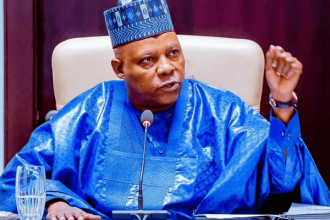
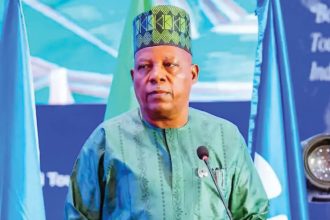
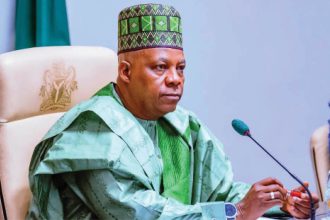
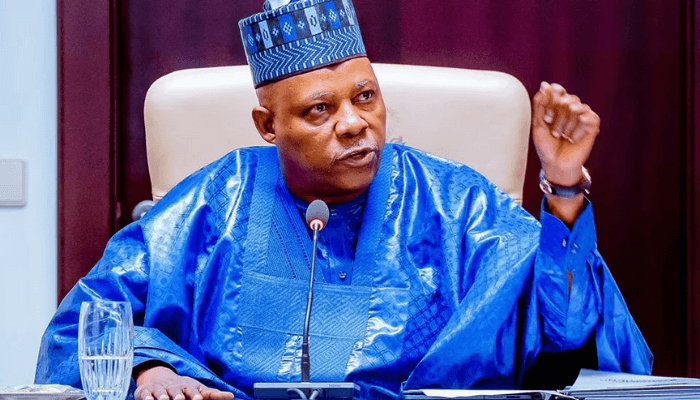
Vice President Kashim Shettima says the country is ready to anchor a new era of intra-African commerce and growth. Speaking recently at the High-Level Conference on Intra-African Trade held at the State House, Abuja, the Vice President described Nigeria as being “positioned to lead Africa’s next commercial revolution.”
The conference, jointly organised by the Nigerian Governors’ Forum (NGF), Woodhall Capital, Afreximbank, and the Presidential Enabling Business Environment Council (PEBEC) – set the stage for upcoming investment roadshows in London, Dubai, and Abu Dhabi.
Represented by Senator Ibrahim Hadeija, Deputy Chief of Staff to the President, the Vice President commended Woodhall Capital for what he called an “audacious and patriotic” effort to turn Nigeria’s vast potential into bankable opportunities.
“For too long, Africa’s trade story has been about what we export to the Global North,” Vice President Shettima said. “Now, we must unlock the untapped energy of trading among ourselves.”
He pointed out that while intra-continental trade in Europe and Asia averages above 60%, Africa’s remains below 17%. The challenge, he noted, is for African nations to embrace the African Continental Free Trade Area (AfCFTA) not as an idea but as a strategy for shared prosperity.
According to him, Nigeria’s states, not just the federal government, must drive this change by presenting sound, de-risked projects that can attract global investors. “Capital follows confidence, and confidence follows governance,” he said, emphasising President Bola Tinubu’s commitment to creating a stable business environment through currency reforms, subsidy rationalisation, and transparency-driven policies.
He urged governors to seize emerging opportunities in agro-exports, power, and digital platforms, declaring, “The capital is ready. The markets are ready. And the world is watching. This is our moment to redefine Nigeria’s place in Africa’s economic story – not as a participant, but as a leader.”
The Chairman of the NGF and Kwara State Governor, Mr. AbdulRahman AbdulRazaq, echoed this optimism. Represented by Mr. Dauda Lawal, Governor of Zamfara State, he said that Nigerian states are “open for business, bankable, and globally competitive.”
Mr. AbdulRazaq highlighted the NGF Investopedia platform, a digital hub launched earlier this year showcasing hundreds of investment-ready projects across infrastructure, energy, logistics, agriculture, and the creative economy – all aligned with AfCFTA priorities. “Our goal,” he said, “is to deepen collaboration, mobilise capital, and strengthen investor confidence in our states.”
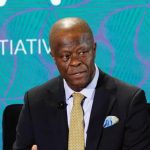
From the regional finance front, Afreximbank reaffirmed its backing for subnational growth. Its representative, Mr. Alain-Thierry Mbongue, said that the bank’s philosophy remains simple: “Development must begin where needs are greatest – in cities, provinces, and regions – and radiate outward.”
Mr. Mbongue, who spoke on behalf of Afreximbank President Prof. Benedict Oramah, announced that Cross River State will host the next African Sub-Sovereign Government Network (AfSNET) Investment Forum in 2026. The AfSNET initiative, launched in 2021, has already helped generate over $2 billion in trade and investment deals across the continent.
For Woodhall Capital’s President, Madam Mojisola Hunponu-Wusu, the event marked a turning point for Nigeria’s investment narrative. “This is not just a conference; it is a bridge – connecting policy with capital, and vision with measurable impact,” she said.
Hunponu-Wusu commended President Tinubu’s economic reforms – from forex liberalisation to capital market deepening – as “bold decisions restoring investor confidence.” She also revealed plans for the NGF–Woodhall Capital investment roadshows in London, Dubai, and Abu Dhabi, where Nigerian states will engage directly with financiers.
“No longer do we go with begging bowls,” she declared. “If you’re an investor looking for partners, look around – they’re here.”
As Africa eyes a future built on shared trade and industrial growth, Nigeria appears ready to lead from the front – not with rhetoric, but with reforms, partnerships, and the confidence that its best economic story is still being written.