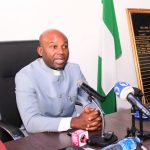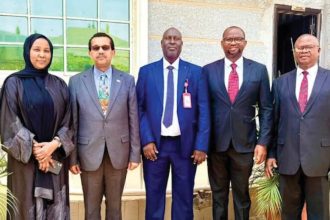
Nigeria’s economic trajectory is showing remarkable signs of resilience and renewed investor confidence, as evidenced by a surge in foreign capital inflows, steady progress in monetary reforms, and strides in economic diversification. Speaking at the Chartered Institute of Bankers of Nigeria (CIBN) 60th annual bankers’ dinner in Lagos, Mr. Olayemi Cardoso, Governor of the Central Bank of Nigeria, disclosed a dramatic increase in foreign investment into the country, painting a picture of an economy poised to recover and grow sustainably. Enam Obiosio writes…
According to Mr. Cardoso, foreign capital inflows into Nigeria reached $20.98 billion in the first 10 months of 2025. This represents a 70 percent rise over the total inflows recorded in 2024 and a staggering 428 percent increase from the $3.9 billion registered in 2023. The governor highlighted that the surge is a clear reflection of growing investor confidence, underpinned by structural reforms that have restored order, transparency, and efficiency in the foreign exchange market.
The implications of this inflow are far-reaching. Nigeria’s exit from the Financial Action Task Force (FATF) grey list was highlighted as a landmark achievement, signalling the country’s adherence to global financial standards and compliance frameworks. Mr. Cardoso explained that countries previously on the grey list typically experience a 7.6 percent decline in gross domesti c product (GDP) -equivalent capital inflows in the first year, a loss amounting to over $30 billion in Nigeria’s case. Exiting the grey list, therefore, is not merely symbolic but carries tangible benefits, easing compliance for correspondent banks, improving access to international finance, and facilitating smoother cross-border payments.
Investors’ renewed confidence has been bolstered by a series of monetary and fiscal reforms, which the CBN governor says are beginning to bear fruit. “Recent reforms have begun to ease inflationary pressures, stabilise the exchange rate, and restore investor confidence,” he said.
He further indicated that as the country transitions toward a full-fledged inflation-targeting framework, fiscal and monetary policies will increasingly reinforce one another, delivering durable price stability. This is a critical development for an economy that has wrestled with persistent inflationary pressures over the past decade.
A striking feature of Nigeria’s economic revival is the gradual shift toward diversification. Historically, the Nigerian economy has been heavily reliant on oil, making it vulnerable to global price shocks. Mr. Cardoso noted that oil now accounts for a smaller share of GDP, contributes only 33 percent to government revenue, and represents 51 percent of exports. This decline in dependence on oil highlights a structural shift, reflecting the growing strength of non-oil sectors and a more balanced economic base. Such diversification is not only strategic but necessary to insulate the economy from external shocks and create more sustainable growth pathways.
The CBN governor also highlighted the significance of Nigeria’s external reserves, which have been rebuilt organically rather than through external borrowing. He explained that the reserves’ growth reflects genuine economic strength, supported by improved market functioning, robust non-oil exports, and strong capital inflows. The emphasis on organic reserve accumulation signals a commitment to financial stability and reduces the vulnerability associated with high levels of external debt, reinforcing confidence in Nigeria’s macroeconomic management.
A central pillar of the CBN’s strategy is the ongoing recapitalisation of the banking sector. Mr. Cardoso revealed that the process remains on schedule, with several banks already meeting new capital thresholds and others making steady progress toward the March 31, 2026 deadline. To date, 27 banks have raised capital through public offers and rights issues, and 16 have met or exceeded the new requirements. This progress reflects not only the depth and resilience of Nigeria’s banking system but also its capacity to support broader economic growth through lending and financial intermediation.
He also highlighted a redesign of Nigeria’s credit-risk framework, aimed at enforcing stronger governance, transparency, and accountability across the sector. The CBN is determined to break the boom-and-bust cycle that has historically plagued past recapitalisation efforts. In strengthening supervision, revising regulatory protocols, and embedding a culture of prudence, the central bank is setting the stage for a more robust and resilient banking sector. These measures will enhance investor confidence and provide the foundation for sustainable credit expansion.
Micro, small, and medium-sized enterprises (MSMEs) remain a key focus of the central bank’s strategy. Mr. Cardoso noted that microfinance lending expanded by over 14 percent in 2025, and new digital credit products reached more than 1.2 million small enterprises. These developments signal a deliberate effort to broaden financial inclusion, deepen the reach of banking services, and empower smaller businesses that form the backbone of the Nigerian economy. Improved access to credit for MSMEs is likely to catalyse job creation, stimulate domestic production, and support the diversification agenda by enabling non-oil sectors to flourish.
The central bank’s commitment to a stable and flexible exchange-rate framework is another critical element of Nigeria’s economic strategy. In allowing the naira to act as a shock absorber while limiting excessive volatility, the CBN aims to protect the economy from destabilising swings in global and domestic financial markets. Mr. Cardoso announced that a revised FX Manual would soon be unveiled to expand market participation, tighten documentation standards, enhance surveillance, and ensure consistent policy implementation. These measures are designed to consolidate investor confidence, reduce speculative pressures, and maintain orderly foreign exchange markets.
His address also highlighted six strategic priorities for 2026. These include strengthening banking-sector supervision, delivering durable price stability, modernising payments, fostering responsible fintech innovation, building institutional capacity, and deepening collaboration with domestic and international partners. Each of these priorities reflects a comprehensive approach to building a resilient and forward-looking financial system, capable of supporting Nigeria’s long-term economic aspirations.
The surge in foreign capital inflows, coupled with the country’s exit from the FATF grey list, is expected to have significant multiplier effects on the broader economy. Foreign investments not only provide the financial resources necessary for development but also bring technology transfer, best practices, and global market linkages. As these inflows continue to rise, sectors such as manufacturing, agriculture, and services are likely to benefit, generating employment and stimulating domestic consumption.
This influx of capital comes at a time when Nigeria is also experiencing broad-based growth across key sectors. Recent data show that the manufacturing, agriculture, services, trade, and non-manufacturing sectors are all expanding, signaling an economic rebound that is gaining momentum. The combination of strong sectoral performance, rising investor confidence, and a resilient banking sector paints an optimistic picture for Nigeria’s medium-term growth prospects.
One of the most remarkable aspects of this development is the alignment of fiscal and monetary policies with structural reforms aimed at stabilising the economy and fostering investment. By refraining from using central bank resources to finance fiscal deficits, as Mr. Cardoso confirmed, Nigeria is signalling a commitment to disciplined fiscal management. This policy shift is critical for sustaining macroeconomic stability, preventing inflationary pressures, and ensuring that growth is underpinned by real economic activity rather than temporary monetary stimuli.
The central bank’s efforts to modernise payments and foster fintech innovation further position Nigeria as a hub for digital financial services in Africa. In enhancing the efficiency, accessibility, and reliability of payments systems, the CBN is enabling businesses and consumers to participate more effectively in the economy. Innovations in digital finance also provide the tools necessary for MSMEs to access credit, expand their operations, and compete in a globalised market.
Nigeria’s improved economic diversification, evident in the reduced dependence on oil, also signals a strategic pivot toward sustainable growth. In promoting non-oil exports, boosting domestic production, and encouraging foreign investment in diverse sectors, the government and central bank are reducing the economy’s vulnerability to external shocks. This approach is crucial for stabilising public revenues, sustaining foreign exchange earnings, and ensuring that growth benefits are widely distributed across the population.
The implications of these developments for ordinary Nigerians are profound. A stable exchange rate, declining inflationary pressures, and increased access to credit are likely to translate into lower costs of living, more affordable financing for businesses, and enhanced opportunities for employment and entrepreneurship. For MSMEs, in particular, the combination of expanded microfinance lending, digital credit products, and a robust banking sector creates an enabling environment for growth, innovation, and job creation.
Despite the positive trends, challenges remain. The economy must navigate global uncertainties, maintain fiscal discipline, and ensure that reforms translate into tangible benefits for citizens. Sustaining investor confidence will require continued transparency, efficient regulation, and effective implementation of structural reforms. Moreover, the banking sector must remain vigilant in managing risks associated with recapitalisation and credit expansion, ensuring that growth is both inclusive and sustainable.
In conclusion, Nigeria’s economic landscape in 2025 is marked by a cautious optimism grounded in measurable achievements. The surge in foreign capital inflows, the exit from the FATF grey list, ongoing banking sector reforms, and structural diversification all point to an economy gradually regaining stability and credibility on the global stage. Mr. Cardoso’s strategic priorities and policy interventions provide a blueprint for consolidating these gains, ensuring durable price stability, and fostering inclusive growth. As Nigeria approaches 2026, the challenge will be to sustain this momentum, deepen economic reforms, and ensure that the benefits of growth are widely shared.