

By Anita Dennis
Nigeria’s education sector took centre stage in Abuja recently as the federal government confirmed that spending on schools, teachers, and students has risen to N3.52 trillion in the 2025 budget. The figure represents a steep climb from N1.54 trillion in 2023 and signals a renewed national push to rebuild a system long strained by underfunding and a fast-growing population.
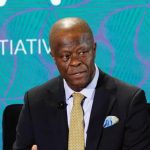
The announcement came at the opening of the 2025 Nigeria Education Forum (NEF), convened by the Nigeria Governors’ Forum (NGF) in partnership with the Federal Ministry of Education and the Committee of States’ Commissioners of Education. This year’s theme, centred on building sustainable and collaborative financing models, framed the day’s discussions.
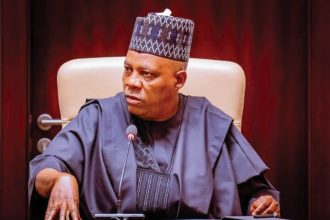
Vice President Kashim Shettima, represented by Aliyu Modibbo Umar, Special Adviser to the President on General Duties, set the tone with a stark warning. He said the country’s rising number of out-of-school children should be treated as a national emergency. “The burden cannot rest on government alone. We must enlist private sector actors, industry leaders, alumni networks, philanthropists, and communities to co-invest in laboratories, research centres, vocational hubs, innovation clusters, and endowment funds,” he said.
VP Shettima argued that Nigeria has reached a point where old funding models can no longer carry the weight of its educational needs. He pointed to significant funding milestones under President Tinubu’s Renewed Hope Agenda, including major disbursements by the Universal Basic Education Commission. UBEC released N92.4 billion in matching grants to 25 states and the FCT, allocated N19 billion for teacher development across 32 states and the FCT, and channelled N1.5 billion into 1,147 communities. States also received increased grants, rising from N1.3 billion to more than N3.3 billion and unlocking over N6.6 billion in counterpart funding.
The Vice President also spotlighted the Nigerian Education Loan Fund created under the 2024 Student Loans Act. So far, NELFUND has disbursed N86.3 billion to 450,000 students in 218 tertiary institutions. “The Fund signals a new era where no Nigerian is denied tertiary education for lack of money,” Shettima said. He added that the country must insist on safe, well-equipped schools and ensure that teachers are properly trained and motivated if it hopes to address the widening learning crisis.
In his remarks, he emphasised the need for joint responsibility at all levels. Collaboration between federal and state authorities, transparent management of funds, and renewed community involvement, he said, are indispensable to sustaining the gains being made. According to him, local governments, traditional institutions and community associations must begin to take greater ownership of school facilities, security and teacher welfare.
“Education is not just a line item in the national budget. It is the foundation of our national identity, the engine of economic transformation, and the shield of our collective security,” VP Shettima said, drawing applause from participants across academia and government.
With the budget now at its highest point in years, expectations are rising just as quickly. The forum’s speakers made clear that the real challenge will be converting this historic investment into tangible improvements for classrooms, teachers, and millions of Nigerian children whose futures depend on a system strong enough to carry them forward.