By Ahmed Ahmed
The Nigeria Sovereign Investment Authority (NSIA) is advancing plans, in partnership with the World Bank, to unlock financing for major infrastructure projects across the power and ports sectors, in a move aimed at addressing long-standing funding gaps in critical assets.
At the centre of the initiative is the proposed Nigeria Infrastructure Finance Guarantee Platform, a joint framework designed to attract private sector capital into large-scale infrastructure by reducing investment risks and improving project viability.
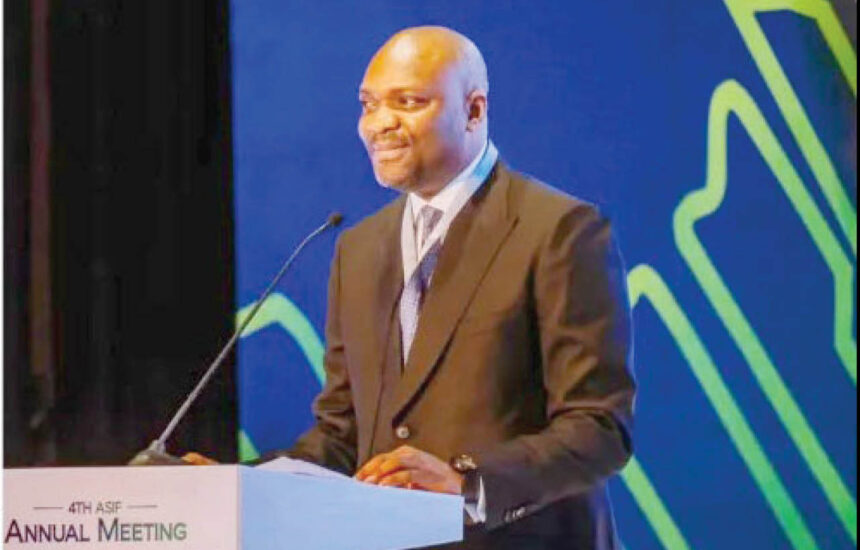
Speaking recently in Abuja, Managing Director of NSIA, Aminu Umar-Sadiq, said that the focus is on mobilising financing for projects of significant scale, particularly in sectors that drive economic productivity such as power transmission, seaports, and airports.
“Financing and execution of large-scale infrastructure projects for a country as large as ours, with the demography, with the size of gross domestic product (GDP), I think it is important for NSIA to lead the way in finding sustainable solutions for funding large scale projects,” he said.
He explained that the platform is structured to address key barriers to infrastructure financing through an integrated approach. “It will be a combination of a project preparatory component, a viability gap component, infrastructure financing component and a guarantee component, basically the four things that are required in general to solve such issues,” Umar-Sadiq added.
According to him, the financing scope will extend beyond the power sector to other critical infrastructure segments. “That large scale financing will focus, not just power sector. It is in any hard infrastructure sector that would allow a scale up of airports and seaports, power transmission, and so on,” he said.
Beyond Nigeria, the Authority is also expanding its investment footprint across the Global South, partnering with other investors to diversify its portfolio and tap into emerging market opportunities.
The financing push comes alongside a strong financial performance by the sovereign wealth fund. For the 2025 financial year, NSIA reported Core Operating Income of N525.3 billion and Core Total Comprehensive Income of N478.8 billion, underpinned by fresh capital inflows and improved investment returns.
Umar-Sadiq said the results were delivered despite a challenging macroeconomic environment. “This resilient growth was underpinned by a total of N360.8 billion in capital contribution during the year and N478.8 billion in core earnings,” he noted.
He added that improved portfolio management also played a key role. “This growth was driven by dynamic asset allocation, efficient liquidity deployment, a 35.8% increase in investment securities, and improved returns across multiple asset classes,” he said.
The planned collaboration with the World Bank signals a more structured effort to bridge Nigeria’s infrastructure financing deficit, positioning the NSIA as a central player in developing sustainable funding models for large-scale national projects.