

By Jennete Ugo Anya
For years, Nigeria’s sugar story has been one of contradiction. The country is one of Africa’s largest consumers of sugar, yet almost all of what it consumes is imported. Billions of naira leave the economy annually to pay for a product that could be grown, processed, and monetised locally, especially in rural areas where jobs and infrastructure are most urgently needed.
Today, that contradiction is being confronted more directly, driven by reforms, stricter policy enforcement, and a growing convergence between the Federal Government, the National Sugar Development Council (NSDC), and the Nigeria Governors’ Forum (NGF). At the heart of this push is a renewed argument that sugar is not just a commodity, but a strategic development platform for Nigerian states.
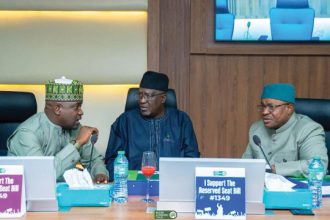
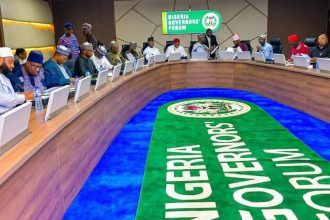
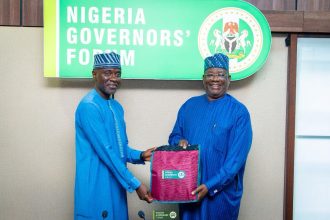
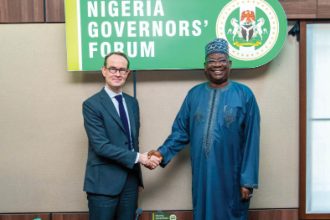
Speaking during an engagement with the NGF Secretariat, the Director-General (DG) of the NSDC, Kamar Bakrin, was blunt about the scale of the challenge and the opportunity before the country.
“Nigeria today consumes about 1.8 million metric tonnes of sugar every year,” he said. “Out of that, roughly 98 percent is imported. Only about two percent is produced locally. To put it plainly, last year all the sugar produced in Nigeria could not even fill one ship.”

How Nigeria Got Here
According to Bakrin, Nigeria’s sugar problem is not rooted in lack of policy, but in weak execution over several decades.
“The sugar industry has existed in Nigeria since the 1960s,” he noted. “So this is not a new sector. The real issue is that incentives were provided, but the expected investments did not follow.”
He identified four core factors behind the persistent underperformance. First, incumbent operators focused on importing and refining raw sugar rather than investing in local production. “Macroeconomic conditions made importation cheaper, so it was easier to bring in raw sugar, refine it, and distribute, instead of tying down capital in farms and factories,” he said.
Second, many new entrants lacked the financial capacity to develop large-scale sugar projects. “A proper sugar project requires significant capital, sometimes upwards of 200 million dollars. Many promoters could acquire land, but that was as far as they could go.”
Third, credible investors stayed away. “Capable local and international investors were wary of entering the industry because of the dominance and perceived clout of incumbents,” Bakrin explained.
Finally, he admitted that government enforcement had been weak. “We also have to take responsibility. Sanctions for non-performance were not applied with sufficient rigour. That has now changed.”
A Shift in Policy Seriousness
One of the clearest signs of that change, Bakrin said, was the decision by President Bola Ahmed Tinubu to cut raw sugar import quotas for non-performing operators.
“For the first time, Mr. President approved the reduction of import quotas to penalise operators who did not meet their backward integration commitments,” he said. “That had never happened before. It sent a strong signal that this time, we are serious.”
Monitoring has also become more scientific. “We no longer accept excuses,” Bakrin said. “We now have independent, professional monitoring. Performance is assessed rigorously. The era of vague explanations is over.”
Why the Economics Now Favour Local Production
Beyond enforcement, Bakrin argued that the broader macroeconomic environment has fundamentally changed the economics of sugar production in Nigeria.
“Currency depreciation, which looks like a bad thing, has actually worked in favour of local sugar production,” he said. “International sugar prices have fluctuated by about 40 percent over the last decade in dollar terms. In naira terms, prices have increased by almost 800 percent. Imported sugar has become significantly more expensive.”
Local production, by contrast, relies largely on naira-based inputs. “Once you do the math, you see that Nigerian sugar production has suddenly become competitive,” he said.
He stressed that operational feasibility is no longer in doubt. “To be self-sufficient, Nigeria needs about 200,000 hectares of sugarcane. We have identified over 1.2 million hectares of prime land suitable for sugarcane cultivation. Land is not the problem. We have the climate, the water, and the human resources.”

Sugar as a State-Level Development Tool
For Bakrin, sugar’s real power lies in its relevance to subnational development. “You cannot grow sugarcane in Abuja,” he said. “By definition, sugar projects are rural. That is why states are central to this agenda.”
Sugar estates, he explained, are not just farms. They are agro-industrial ecosystems. “A properly developed sugar project creates thousands of direct and indirect jobs, improves rural infrastructure, and anchors economic activity in host communities.”
The NSDC’s engagement with the NGF is therefore strategic. “The Governors’ Forum is the engine room of subnational decision-making in Nigeria,” Bakrin said. “Alignment with states on land access, infrastructure, and investor support is critical.”
In its welcome address, the NGF Secretariat emphasised that many states are already exploring sugar estates, outgrower schemes, and agro-industrial initiatives, but often lack coordination, project readiness, and investment frameworks. The Forum sees collaboration with the NSDC as a way to help states convert policy ambition into bankable, investible projects.
Beyond Sugar: Power, Ethanol, and Jobs
Bakrin was keen to dispel the notion that sugar projects are only about food.
“Sugar is a textbook example of the circular economy,” he said. “From one crop, you get sugar, ethanol, animal feed, and electricity. The waste from sugarcane, bagasse, can be used to generate power. A well-run sugar estate uses only about 30 to 40 percent of the energy it produces. The rest can be supplied to the grid.”
This, he argued, makes sugar projects uniquely aligned with Nigeria’s energy transition and sustainability goals. “Sugar ticks the sustainability box on so many levels, renewable energy, rural jobs, reduced imports, and lower carbon emissions.”
Outgrower schemes also place communities at the centre. “The Nigerian sugar industry does not displace communities,” Bakrin said. “It integrates them. Local farmers retain their land, receive training and inputs, and have guaranteed offtake. In some locations, outgrower farmers earn as much as two million naira per hectare annually.”
The Investment Case
From a purely commercial perspective, Bakrin insisted that sugar now makes sense. “We have done the numbers. A model 100,000-metric-ton sugar project can deliver internal rates of return of about 24 percent, with positive net present value,” he said. “This is not charity. This is a viable business.”
Africa’s broader sugar deficit strengthens the case. Despite having multiple producing countries, the continent remains a net importer, with demand projected to rise sharply by 2030. “Nigeria is well-positioned to serve both its domestic market and regional markets under AfCFTA,” Bakrin said.
For Bakrin, the message to states is straightforward. “Sugar should be treated as a priority development engine,” he said. “It delivers jobs, industrial raw materials, energy, and inclusive growth. Few sectors can do all that at once.”
He also urged states to work closely with the NSDC and the NGF to attract credible investors. “Sugar is not for undercapitalised promoters. We need serious investors, and we need states to help create the right conditions for them.”
The convergence between federal policy, state ambition, and private capital, he argued, is long overdue. “For the first time, the stars are aligned,” Bakrin said. “If we get this right, sugar can help rewrite Nigeria’s rural and industrial development story.”
For a country seeking to reduce imports, create jobs, and industrialise its states, sugar may no longer be just a sweetener. It may be one of the clearest pathways from policy to production.