By Musa Ibrahim
Nigeria’s reform trajectory has received a dual boost from the World Bank, combining a strong endorsement of ongoing economic reforms with fresh financing targeted at agriculture, even as the institution pushes for tighter legislative oversight to sustain results.
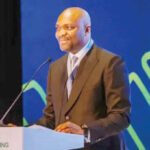
The World Bank described Nigeria as an emerging model for economic reform among developing countries, citing early gains from recent policy adjustments and signalling readiness to deepen support across key sectors. Speaking recently in Abuja, the Country Director, Mathew Verghis, emphasised that sustaining these gains will depend on effective parliamentary scrutiny, particularly for development-funded projects. “Legislative oversight remains a critical pillar for ensuring accountability and effectiveness,” he said.
The bank noted a structural shift in its Nigeria operations, with increasing decentralisation of project implementation to state governments over the past four to five years. While the federal government remains the borrower, states now drive execution based on strict eligibility criteria, a model designed to improve delivery efficiency and enforce performance discipline.
At the same time, the institution is intensifying sectoral interventions, placing particular emphasis on women’s economic empowerment and human capital development, including a forthcoming early childhood programme focused on maternal health, education, and welfare outcomes.
In a major financing move, the World Bank approved a $500 million International Development Association credit for the Nigeria Sustainable Agricultural Value-Chains for Growth (AGROW) project. The initiative targets up to one million smallholder farmers, aiming to raise productivity, strengthen value chains, and enhance food security.
Agriculture remains Nigeria’s largest employer but is constrained by low productivity, weak market linkages, and climate vulnerabilities. The AGROW programme is structured to address these gaps through a results-based matching grant system that incentivises agribusinesses to source from smallholders, alongside investments in improved seeds, fertiliser systems, extension services, and a national digital farmer registry.
The six-year programme, spanning 2026 to 2032, is also expected to mobilise an additional $220 million in private sector investment, with a focus on key crops such as rice, maize, cassava, and soybeans. Verghis described the intervention as “a transformative step for Nigeria’s agriculture,” noting its potential to boost yields, create jobs, and improve resilience to climate shocks.
Beyond Nigeria, the World Bank is also responding to mounting global economic risks. In collaboration with the International Energy Agency and the International Monetary Fund, it has agreed to establish a joint coordination group to address the economic and energy disruptions arising from the Middle East conflict. The institutions warned that the crisis has triggered one of the largest supply shocks in global energy market history, driving up oil, gas, and fertiliser prices while exacerbating inflation and food security concerns, particularly in low-income, energy-importing countries.
The coordination group will pool data, align policy responses, and mobilise financing support to mitigate the crisis’ impact, with a focus on vulnerable economies facing constrained fiscal space and rising debt pressures.
Taken together, the World Bank’s position reflects a calibrated approach, endorsing Nigeria’s reform direction while tying continued support to stronger governance, subnational execution capacity, and measurable development outcomes.