By Ahmed Ahmed
As Nigeria pushes toward a $1 trillion economy, the race to modernize trade and boost investor confidence has gained fresh urgency. At the forefront of this transformation is the National Single Window (NSW) — a digital trade facilitation platform that promises to end decades of inefficiency at Nigeria’s ports and borders.
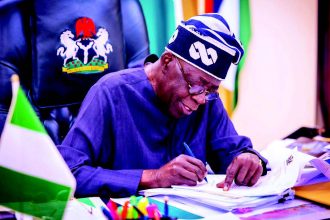
On July 22, 2025, President Bola Ahmed Tinubu issued a clear and firm directive: the NSW must go live by the first quarter of 2026. Speaking through his Chief of Staff, Hon. Femi Gbajabiamila, during the fifth meeting of the NSW Steering Committee at the State House in Abuja, the President emphasized the platform’s strategic importance to Nigeria’s economic ambitions.
“This project is one of Mr. President’s transformative initiatives, and we must collectively ensure it is commendably implemented,” said Hon. Gbajabiamila, urging all participating ministries, departments, and agencies to stay focused and deliver results.
What Is the National Single Window?
The National Single Window is a centralised digital platform designed to streamline Nigeria’s import and export operations. By integrating data and services from over 20 government agencies—including the Nigerian Customs Service, Nigerian Ports Authority, NAFDAC, and FIRS—the NSW aims to eliminate duplication, reduce transaction times, and curb corruption.
Launched officially on April 16, 2024, the platform allows traders to submit documents electronically, track transactions, and make payments in one place, without physically moving from one agency to another. According to projections, the system could save Nigeria up to $2.7 billion annually through improved efficiency, reduced red tape, and enhanced revenue collection.
From Strategy to Execution: The Q1 2026 Deadline
The President’s renewed directive is coming at a critical juncture. With Nigeria undergoing major fiscal and trade reforms, including the passage of the Tax Reform Act in June 2025, the urgency to accelerate economic efficiency is clear.
“We must now shift from strategy to full execution,” said Wale Edun, Minister of Finance and Coordinating Minister of the Economy, who has been a key figure in pushing the NSW project forward. “It’s a complex project, but it is transformational—and the time to deliver is now.”
Backing this sentiment, Dr. Doris Uzoka-Anite, Minister of State for Finance, reiterated Nigeria’s goal to become a regional trade hub and a global investment magnet. She stressed that reforming trade facilitation is central to achieving this vision.
Tracking Progress: Milestones Achieved So Far
Despite the urgency, the project has not been without progress. According to Tola Fakolade, Director of the NSW Project, all Q2 2025 key milestones have been achieved, and customisation of the digital platform is currently underway.
“Our work has moved from planning to action. We’re confident we will meet the Q1 2026 rollout deadline,” Fakolade assured stakeholders.
Dr. Zacch Adedeji, Executive Chairman of the Federal Inland Revenue Service (FIRS), expressed gratitude to the President for his “relentless support” and reminded stakeholders that with every milestone achieved, the responsibility grows.
“The reward for hard work is more work. The Single Window is now enshrined in law—there is no turning back,” Dr. Adedeji said.
Beyond Ports: Why NSW Is a Gamechanger
The NSW is more than a digital portal—it’s a symbol of a new governance ethos. In a country long plagued by overlapping bureaucracy, opaque port processes, and logistical delays that add days—and sometimes weeks—to clearing goods, the NSW promises to rewrite the rules of engagement.
It directly supports President Tinubu’s Renewed Hope Agenda, aligning with key objectives such as:
- Boosting trade revenue
- Attracting foreign direct investment (FDI)
- Improving Nigeria’s Ease of Doing Business index
- Enhancing transparency and accountability in port operations
- Strengthening regional and continental trade frameworks, including AfCFTA
For exporters, the NSW means faster documentation and easier market access. For importers, it means lower costs and fewer interactions with gatekeepers. For government, it translates into better data, higher revenue, and more trust from international partners.
Collaboration Is Key
The NSW project is a whole-of-government effort. It is jointly implemented by the Federal Inland Revenue Service (FIRS) and the Nigeria Sovereign Investment Authority (NSIA), with support from the Ministries of Finance, Industry, Trade and Investment, Interior, and Transportation.
Minister Jumoke Oduwole, who oversees the Ministry of Industry, Trade and Investment, stated a sharp reminder during the recent meeting: “This is not just a technical project; it’s a governance reform. We must meet the deadline—without fail.”
A Digital Platform with Economic Impact
By eliminating manual interventions and consolidating regulatory bottlenecks, the NSW is expected to:
- Cut port clearance times by over 50%
- Slash trade-related costs
- Improve Nigeria’s competitiveness in the West African sub-region
- Digitally link stakeholders in a secure, efficient, and transparent way
Internationally, single window systems have been credited for helping countries like Singapore, South Korea, and Rwanda leapfrog in trade efficiency. Nigeria is now seeking to replicate and localise those successes.
Delivering on a Presidential Vision
As Nigeria works to reposition itself as Africa’s leading trade destination, the successful implementation of the National Single Window could be one of President Tinubu’s most impactful legacies.
With legal backing, institutional momentum, and clear timelines, all eyes are now on the Steering Committee to translate promise into performance.
Whether Nigeria meets the Q1 2026 deadline may ultimately determine more than the future of the NSW—it may shape how the world perceives Nigeria’s ability to digitize governance, drive growth, and deliver reform in the 21st-century economy.