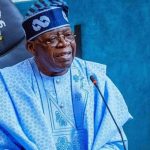

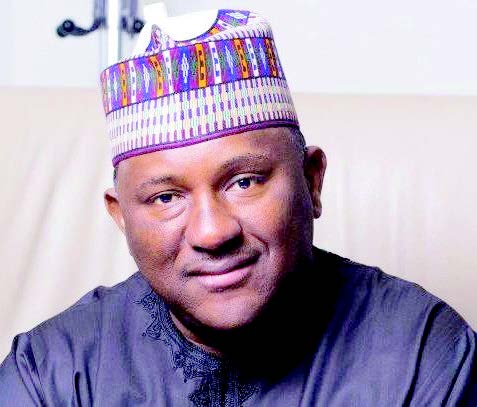
As Nigeria commemorates two transformative years under President Bola Ahmed Tinubu, the Founder and Chairman of BUA Group, Mr. Abdul Samad Rabiu, here offers a rare, firsthand insight into how bold policy shifts—such as fuel subsidy removal, FX unification, and a renewed commitment to fairness in governance—have reshaped the operating environment for Nigerian businesses. In the story that is not just of reform, Enam Obiosio highlights a compelling testament to what becomes possible when leadership aligns with vision, and when courage meets conviction in the pursuit of national progress.
In a candid and sweeping reflection, Mr. Rabiu steps away from politics and power games to offer a grounded, insider’s perspective on what Nigeria’s economy has gained, lost, and recalibrated under President Tinubu’s reform-heavy presidency.
“I speak not only as the Chairman of BUA Group,” Mr. Rabiu begins, “but as someone who has lived through the cost of dysfunction and the promise of reform. These two years have shown us that bold decisions — even when painful — can unlock real, structural transformation.”
From fuel subsidy removal to foreign exchange unification, and from restored investor confidence to sweeping infrastructure investment, Mr. Rabiu paints a portrait of a Nigeria turning the corner, even amid turbulence.
The End of the Subsidy Era: Nigeria Stops Bleeding
Perhaps no single decision has defined President Tinubu’s early presidency more than the abrupt removal of fuel subsidy — a move that many past leaders tiptoed around for decades.
“It was unsustainable,” Mr. Rabiu says firmly. “We were not just subsidizing Nigerians — we were subsidizing our entire sub-region.” He recalls a diplomatic dinner in Niger Republic where President Mohamed Bazoum jokingly thanked Nigeria for the free fuel. “100 percent of premium motor spirit (PMS) in Niger came from Nigeria. That is how bad it was.”
Since the subsidy removal, Nigeria’s daily fuel consumption has dropped dramatically — not because Nigerians use less, Mr. Rabiu explains, but because illicit cross-border arbitrage has all but collapsed. That alone, he notes, is proof the system was hemorrhaging.
Now, the funds once drained by subsidies are flowing into infrastructure projects — roads, power, and regional developments. “Every state is getting more revenue now. That is real impact,” he emphasises.
The FX Unification: From Gatekeeping to Growth
For years, Nigeria’s dual exchange rate system bred inefficiency, corruption, and stagnation. Mr. Rabiu speaks vividly about how business leaders had to “camp” in Abuja for days just to beg the Central Bank for foreign exchange allocations.
“It was humiliating. It was inefficient. I spent half my time chasing FX. Now? I have not been to the CBN in two years,” he notes with quiet satisfaction. “That is a functional market.”
Under President Tinubu’s administration, the FX window has been unified — a move Mr. Rabiu commends as pivotal. “Today, if you need $200 million for trade, you do not need to lobby anyone. That is what a real economy should look like.”
From Hostile to Hospitable: The Return of Business Stability
In a stunning anecdote, Mr. Rabiu recalls how a $500 million BUA Foods facility in Port Harcourt was abruptly shut down under a past Nigerian Port Authority (NPA) leadership — not for any breach, but allegedly due to personal rivalries and vested interests.
“It was closed overnight because we were competing with someone’s friend. That cannot happen under President Tinubu,” he asserts. “The fear of arbitrary shutdowns is gone. That is a huge win for industry.”
Stability, he argues, is a currency of its own. With predictability comes investment. “Now, you do not need access to the President to be treated fairly. That is the biggest shift we have seen.”
Infrastructure Boom: The Roads to a New Economy
From the Lagos-Calabar Coastal Highway to the Sokoto-Badagry corridor, Mr. Rabiu notes that infrastructure investment is finally keeping pace with national ambition.
“Our roads were killing business. Transport costs from Lagos to the North were crippling,” he says. “Now, with these projects — funded by savings from subsidy and better revenue sharing — logistics are improving.”
Through public-private partnerships like the Tax Credit Scheme, BUA itself is backing road projects in Kwara and Kogi. “This government is building for the long-term, and it shows.”
A Billion-Dollar Bet on Nigeria
Since 2023, BUA Group has pumped over $1 billion in new investments into Nigeria. “We are doubling flour and pasta capacity, expanding cement, launching the first POP plaster plant, and breaking ground on a solar plant in Sokoto,” Mr. Rabiu says. “The confidence is back.”
The LNG project in Ajaokuta, he states, will diversify Nigeria’s energy portfolio further. With a stable naira and easier access to FX, “We can now plan, and planning is everything in business.”
Food Security and Smart Policy
Food inflation remains a critical concern for Nigerians. But Mr. Rabiu credits President Tinubu’s six-month tariff waiver on rice imports as a “game-changing intervention” that temporarily broke the grip of hoarders.
“Middlemen were creating artificial scarcity. The waiver disrupted that cycle,” he explains. “It worked. It showed foresight. It showed the government was listening.”
A Philosophy of Self-Reliance: Backward Integration as Policy
At the heart of BUA’s industrial ethos — and now aligned with President Tinubu’s “Nigeria First” policy — is backward integration. Mr. Rabiu proudly highlights how BUA Cement is nearly 100% local, from mining to energy.
“If we were importing cement today, it would cost over N15, 000 per bag,” he states. “Our local capacity is saving the economy.” Mr. Rabiu also credits the government for applying incentives equitably across the industry. “There is no favouritism. There is clarity. That is how you scale an economy.”