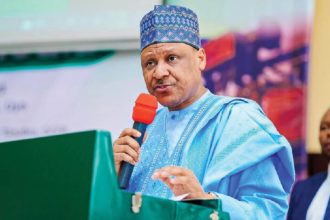
As Okonjo-Iweala Charts $500 Billion Course
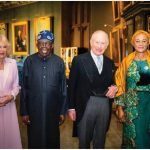
At the inaugural West Africa Economic Summit (WAES) in Abuja, held from June 20 – 21, 2025, President Bola Ahmed Tinubu expanded the frontiers of his reformist vision beyond Nigeria’s borders, while Dr. Ngozi Okonjo-Iweala, Director-General (DG) of the World Trade Organisation (WTO), pushed for a $500 billion course. Enam Obiosio reports.
With deliberate urgency and pan-African ambition, President Tinubu made a compelling case for economic transformation across West Africa – one that rejects the entrenched dependency on raw commodity exports and instead champions industrial self-determination.
Delivering the keynote as the then Chairman of the ECOWAS Authority of Heads of State and Government, he called on the region to abandon the exploitative model known as “pit-to-port” – the practice of extracting raw materials and shipping them abroad unprocessed. “The era of warm pit to the port must end,” he declared with characteristic directness. “We must turn our mineral wealth into domestic economic value, jobs, technology, and manufacturing.”
This was not merely another summit speech. It was a regional call to arms — a signal that President Tinubu is not only determined to reform Nigeria’s economic structure but to catalyse a broader West African industrial awakening.
A Regional Vision Anchored in Value
For decades, West Africa has served as a resource basin for the world, exporting unprocessed minerals, crude oil, cocoa, and agricultural raw materials. President President Tinubu’s address sought to upend this colonial-era paradigm by proposing a regional value chain revolution – where raw materials are mined, refined, processed, and transformed into finished goods within the region.
“We must think beyond exports,” he warned. “Africa’s future is not in what we ship raw, but in what we build and refine with our hands and minds.”
The President’s remarks found fertile ground at the summit, which convened top leaders from ECOWAS member states as well as representatives from Togo, The Gambia, Guinea-Bissau, Liberia, Senegal, Ghana, and Benin. Regional economic actors like the ECOWAS Bank for Investment and Development (EBID), the West African Monetary Institute (WAMI), and the AfCFTA Secretariat also added institutional weight to the discussion.

Regional Trade at a Crossroads
Despite a population of over 400 million, intra-regional trade in West Africa remains under 10% – a figure President Tinubu labeled “unacceptable” but not insurmountable. He blamed fragmented customs systems, non-aligned policies, and poor infrastructure for the low trade figures, asserting that political will alone is insufficient without economic coordination.
“Our economic potential remains locked away,” he said. “We need harmonised rules, seamless logistics, and the infrastructure to match our ambition.”
He urged that AfCFTA implementation must not remain a continental aspiration on paper. Rather, it should serve as the operational platform for West Africa to unlock scale, investment, and competitiveness.
Inviting the Sahel into the Fold
Going beyond ECOWAS borders, President Tinubu made a bold outreach to the Alliance of Sahel States (Mali, Niger, Burkina Faso) and Mauritania, proposing an inclusive economic corridor that transcends recent political rifts. His overture signaled a belief that shared prosperity can be a unifier, even where political differences persist.
This pan-regional outlook, analysts say, reflects President Tinubu’s long-term vision to insulate economic cooperation from political fragmentation — positioning West Africa as a bloc not of crises, but of converging opportunities.
From Ideals to Investment
Private sector leaders welcomed the President’s challenge. A representative of the West African Chamber of Mines applauded the stance, noting that the shift from raw export to local processing is long overdue.
“This will require coordinated investment in smelters, refineries, energy, and human capital – not just speeches,” the representative said.
Development partners, including Afreximbank and the World Bank, indicated readiness to support industrial corridors, special economic zones, and regional logistics infrastructure. Yet, observers cautioned that energy deficits, weak manufacturing ecosystems, and policy volatility still stand as formidable barriers to realising President Tinubu’s vision.
Okonjo-Iweala Charts a $500 Billion Course
Echoing and amplifying President Tinubu’s position was Dr. Ngozi Okonjo-Iweala, Director-General (DG) of the WTO, whose keynote underscored the scale of the opportunity: a $500 billion economic potential waiting to be unlocked in West Africa.
“To achieve this, we must dismantle trade barriers, reduce costs, and act as a region — not as isolated economies,” she said.
She championed regional industrialisation as non-negotiable and highlighted areas like pharmaceuticals, digital services, and mineral processing as low-hanging fruits for West African integration. Her emphasis on collaboration was clear:
“If each of our countries works alone, we will struggle. But if ECOWAS acts collectively, we become more competitive and investor-ready.”
From Nigeria’s pharmaceutical ecosystem to Senegal’s vaccine capabilities, Dr. Okonjo-Iweala envisioned value chains built on shared comparative advantage.
Beyond Raw Commodities: Creative and Cultural Power
She also spotlighted West Africa’s cultural exports – from Afrobeats to digital platforms like Flutterwave – as untapped economic drivers. These industries, she said, are not only symbols of identity but instruments of prosperity.
“Intra-regional tourism, e-commerce, and service trade are where we can lead,” she noted. “But we must build the platforms and policies to support that leadership.”
A Strategic Alignment of Voices
Together, the messages from President Tinubu and Dr. Okonjo-Iweala formed a rare moment of alignment: a regional head of state and a global economic leader calling for the same transformation – industrialisation, integration, and innovation.
While the road to change is fraught with challenges – from financing gaps to infrastructural shortfalls – the 2025 West Africa Economic Summit may well be remembered as the moment when President Tinubu repositioned his domestic economic reforms as a regional doctrine – one aimed at turning West Africa into a producer, not just a provider.
“Let us no longer be exporters of potential,” he concluded. “Let us be builders of prosperity.”
A Reform Blueprint with Regional Teeth
What distinguishes President Tinubu’s WAES address from previous summits is not only the scope of his ambition but the implied readiness to act. Sources within Nigeria’s Ministry of Industry, Trade and Investment confirmed that a draft framework for a Regional Mineral Value Addition Protocol (RMVAP) is already under development – with consultations planned across West African capitals. If adopted, the protocol would require member states to establish minimum levels of in-country processing before mineral exports, creating a unified industrial policy baseline across the sub-region.
Similarly, the Nigerian leader is reportedly championing a West African Industrial Parks Initiative, to be co-funded by regional banks and anchored in key mineral zones across Nigeria, Ghana, Guinea, and Mali. These parks would serve as shared spaces for refining, manufacturing, and trade incubation, effectively turning traditional extractive regions into cross-border production hubs.
West Africa as a Geo-economic Actor
Analysts say President Tinubu’s posture is not just economic, but strategically geopolitical. As Western and Eastern powers jostle for influence over Africa’s mineral resources – particularly lithium, cobalt, bauxite, and rare earths – a more assertive West Africa could reset the power dynamic.
“By refusing to remain mere suppliers in the global mineral rush, President Tinubu is laying down a new rulebook — one where West Africa sits at the negotiating table not with desperation, but with leverage,” said a trade policy expert at the summit.
The reform message is arriving at a time when critical mineral supply chains are under global scrutiny, and West Africa, with its untapped reserves, finds itself at the centre of conversations around electric vehicles, green energy, and advanced manufacturing.
Youth, Women, and SMEs: The Missing Pillars
One of the more subtle but important elements of President Tinubu’s summit rhetoric was the emphasis on inclusion. While the macroeconomic tone dominated headlines, the President also called for youth enterprise, women-led cooperatives, and MSMEs to be integral to the emerging regional value chains.
In response, a communiqué from the ECOWAS Business Council pledged to create a Small Industry Empowerment Fund (SIEF), specifically targeting youth-owned processing startups in agribusiness, textiles, and light manufacturing. The aim is to democratise industrial participation – ensuring that reform is not top-down but distributed and locally rooted.