By Ahmed Ahmed
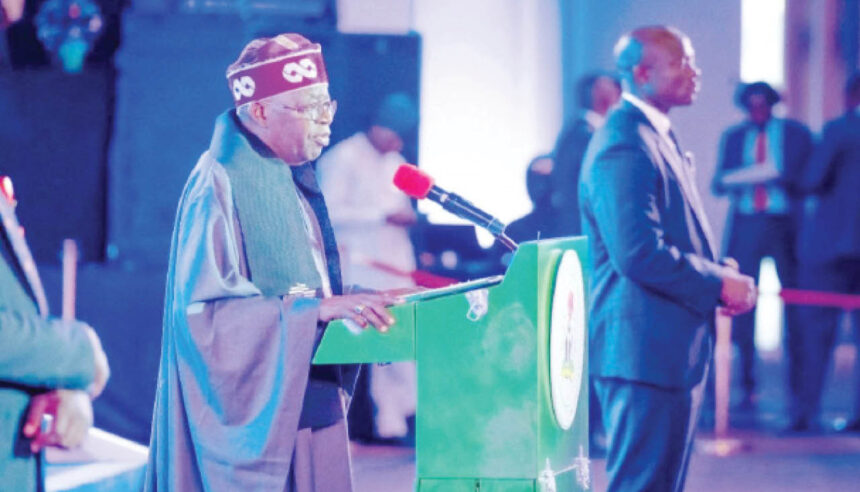
President Bola Ahmed Tinubu has signed the 2026 Appropriation Act into law, setting a record expenditure framework of N68.32 trillion and signaling a stronger fiscal push toward infrastructure, stability and inclusive growth.
The decision was accompanied by a measured extension of the 2025 budget cycle, a move designed to protect ongoing capital investments from disruption.
The 2026 budget is a clear allocation strategy. Statutory transfers stand at N4.799 trillion, while debt servicing will absorb N15.8 trillion. Recurrent spending is projected at N15.4 trillion. The most striking component is capital expenditure, which takes N32.2 trillion through the Development Fund. This accounts for roughly half of the total budget and highlights a policy tilt toward long term assets rather than consumption.
Government officials frame this structure as deliberate. It seeks to balance legal obligations with growth priorities. A senior official involved in the budget process noted that “the allocations are designed to stabilise the economy while unlocking productivity across key sectors.” The emphasis on capital spending aligns with the administration’s stated objective of improving infrastructure, strengthening security and expanding economic opportunity.
The President also approved an amendment to extend the implementation of the 2025 Appropriation Act. Initially set to end on March 31, 2026, the capital component will now run until June 30, 2026. This extension is not procedural. It responds to execution realities across Ministries, Departments and Agencies (MDAs), many of which are managing projects at advanced stages.
According to government sources, the extension will “ensure effective utilisation of funds tied to critical infrastructure and development projects.” It is expected to reduce abandoned projects and improve value for public spending. MDAs now have a defined window to complete projects without the pressure of premature closure of budget lines.
With the 2026 fiscal year taking effect from April 1, attention shifts from legislation to execution. The President issued a directive to MDAs to prioritise transparency and discipline in the use of public funds. He stressed the importance of value for money and timely delivery, stating that agencies must align spending with measurable outcomes.
This directive reflects a broader reform narrative within the administration. Fiscal credibility has become a central theme, especially in a context of high debt obligations and public demand for visible development. Analysts note that execution, rather than appropriation, will determine the real impact of the budget.
The President also acknowledged the role of the National Assembly of Nigeria in the process. He commended lawmakers for what he described as a timely review and passage of the bill. He further called for sustained cooperation between the executive and legislative arms to maintain budget discipline and policy continuity.
Beyond the numbers, the administration is positioning the budget as an instrument for economic transformation. There is a renewed focus on revenue mobilisation and targeted investments. The goal is to stimulate growth, create jobs and expand social protection systems.
A policy adviser close to the process summed up the direction: “This budget is not just about spending. It is about sequencing investments in a way that drives growth and improves living standards.”