By Majeed Salaam
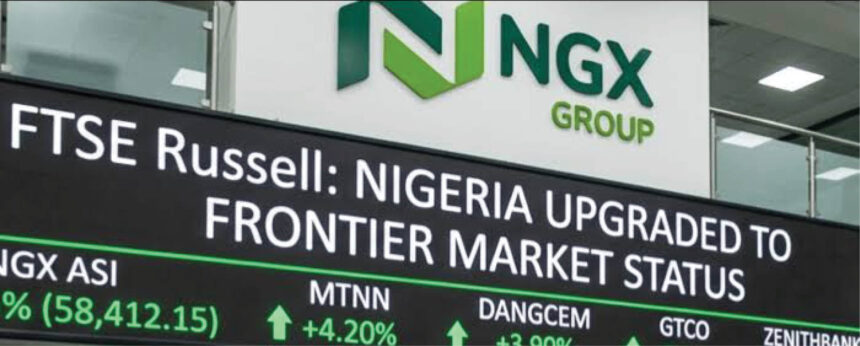
Nigeria’s return to Frontier Market status by FTSE Russell marks a structural inflection point for the country’s capital market, reflecting measurable improvements in trading infrastructure, regulatory alignment and investor access.
The reclassification, from “Unclassified” to Frontier Market, follows a multi-layered review process involving the FTSE Russell Index Governance Board, supported by its Equity Country Classification Advisory Committee and Policy Advisory Board. The decision, announced in the March 2026 interim review, will take effect in September 2026, positioning Nigeria back within the investable universe tracked by global index funds.
At its core, the upgrade is a validation of reforms within the Nigerian Exchange Group ecosystem. Over the past cycle, the Exchange and market regulators have focused on strengthening execution architecture. This includes upgrades to trading systems, improvements in post-trade settlement and enhanced disclosure standards, all aimed at reducing friction for both domestic and offshore investors.
According to the FTSE Quality of Markets assessment, Nigeria achieved “Pass” ratings across several critical indicators that typically determine index eligibility. These include regulatory oversight, ease of capital repatriation, brokerage competitiveness, tax framework and settlement efficiency. The operation of a T+2 settlement cycle further aligns Nigeria with prevailing global standards, reducing counterparty risk and improving liquidity dynamics.
These gains are not incidental. They reflect a deliberate attempt to reposition Nigeria’s capital market from a high-friction environment to one that can support institutional flows. For global asset managers, execution certainty and exit flexibility are as important as return potential. By improving these fundamentals, Nigeria has addressed long-standing concerns that previously constrained participation.
Still, the reclassification is not a terminal point. FTSE Russell’s review identified residual gaps that could influence the next phase of market evolution. Key among these are foreign exchange market depth, transaction cost efficiency, the availability of derivatives instruments and aspects of custody and clearing infrastructure. Each of these factors affects how capital is priced, deployed and exited.
Closing these gaps will require coordinated action across multiple institutions, including regulators, exchange operators and liquidity providers. The foreign exchange constraint, in particular, remains a binding variable. While improvements in repatriation have been acknowledged, sustained liquidity and price discovery will be necessary to maintain investor confidence over time.
FTSE Russell noted that its classification framework integrates both technical metrics and investor feedback, suggesting that Nigeria’s upgrade reflects not only structural reforms but also a shift in how market participants perceive execution risk. The organisation also acknowledged the role of sustained engagement by Nigerian authorities in addressing prior concerns.
For market operators, the upgrade carries both reputational and operational implications. The Group Managing Director and Chief Executive Officer of NGX Group, Mr. Temi Popoola, framed the development as a system-wide achievement anchored on infrastructure reform. “This milestone reflects the strength of collaboration across Nigeria’s capital market ecosystem, but importantly, the deliberate efforts to strengthen the underlying market infrastructure that supports efficient trading, transparency and investor access,” he said.
Mr. Popoola emphasised that the reclassification should be viewed as a midpoint rather than an endpoint. “We have remained focused on building a more resilient, accessible and globally competitive platform, and this reclassification affirms the progress made. We will continue to work closely with regulators, market operators and stakeholders to deepen reforms, address identified gaps and sustain momentum towards higher market classifications,” he added.
The immediate implication of Frontier Market status is visibility. Nigeria is once again eligible for inclusion in FTSE Frontier indices tracked by passive funds and benchmark-aware investors. This creates a pathway for incremental capital inflows, particularly from funds that allocate strictly based on index composition.
However, inflows are not automatic. They are contingent on macro stability, currency conditions and the consistency of policy signals. Frontier classification expands the opportunity set, but real allocation decisions will depend on how investors assess risk-adjusted returns in the Nigerian context.
There is also a signalling effect. In an environment where capital is increasingly selective, index classification serves as a shorthand for market credibility. Nigeria’s return to the Frontier category suggests that, at least at the level of market infrastructure, key thresholds have been met.
More broadly, the development underscores a structural insight. Capital markets do not deepen on liquidity alone. They require systems that can process trades efficiently, enforce rules transparently and allow investors to enter and exit with minimal distortion. Nigeria’s recent reforms indicate a recognition of this reality.