By Majeed Salaam
The Federal Executive Council (FEC) has approved contracts valued at $2.99 billion for three urban rail projects spanning Lagos, Kano, and Kaduna, in a move that signals renewed federal emphasis on transport infrastructure as a driver of economic productivity.
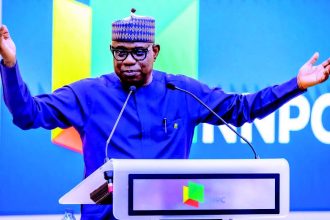
The approvals were announced recently in Abuja after the weekly council meeting, with Mr. Taiwo Oyedele, Honourable Minister of Finance and Coordinating Minister of the Economy, stating that the projects align with the government’s broader objective of investing in infrastructure that supports growth, mobility, and living standards.
According to Oyedele, the projects cover the Lagos Green Line Rail, Phase One; the Kano Metro City Rail; and the Kaduna State Light Rail. All three are to be financed through the Ministry of Finance Incorporated, acting on behalf of the federal government, with additional funding expected from counterpart sources.
The Lagos Green Line is positioned as a central component of the city’s expanding rail network. Planned to run from Marina on Lagos Island through the Lekki corridor, the line is expected to serve one of the most commercially active and densely populated zones in sub-Saharan Africa. The corridor has experienced rapid real estate and business growth in recent years, intensifying pressure on road infrastructure and increasing demand for alternative transport systems.
Oyedele described Lagos, Kano, and Kaduna as strategic urban centres where targeted investments could yield disproportionate economic returns. His remarks reflect a policy approach that prioritises high-impact cities, where improvements in mobility can translate quickly into gains in productivity and commercial activity.
In Kano, the metro rail project is expected to address long-standing challenges linked to urban congestion in one of northern Nigeria’s largest economic hubs. The city plays a central role in regional trade and distribution networks, and transport inefficiencies have continued to constrain movement of goods and people.
Similarly, the Kaduna light rail project is designed to support mobility within a city that has evolved into a key administrative and commercial centre in the north. Improved urban transport infrastructure is expected to facilitate business operations and reduce transit times across the metropolitan area.
Beyond the individual projects, the approvals indicate a broader attempt to reposition rail as a core element of Nigeria’s urban transport strategy. Major cities across the country have faced increasing congestion, with road networks under strain from rapid population growth and urban expansion. Rail systems are being framed as a scalable solution to these pressures, particularly in high-density corridors.
The financing structure, anchored by the Ministry of Finance Incorporated (MOFI), suggests a model that blends public investment with external funding participation. This approach reflects ongoing efforts to mobilise capital for large-scale infrastructure without placing exclusive reliance on direct budgetary allocations.
In parallel, the council also approved the establishment of a presidential power sector task force, to be chaired by President Bola Tinubu. While separate from the rail projects, the decision points to a coordinated policy focus on infrastructure systems, particularly transport and energy, as interconnected drivers of economic performance.
Analysts note that the success of the rail projects will depend on execution capacity, funding consistency, and long-term maintenance planning. Urban rail developments in Nigeria have historically faced delays linked to financing gaps and project management constraints. Ensuring continuity from contract approval to delivery remains a critical variable.
Even so, the scale and geographic spread of the newly approved projects indicate a deliberate effort to address mobility challenges in key economic centres. If implemented as planned, the Lagos, Kano, and Kaduna rail systems could reshape commuting patterns, reduce congestion, and support broader economic activity within their respective regions.