
By Majeed Salaam
The National Human Capital Development Programme 2.0 (HCD 2.0) has called for climate policies and investments that deliver measurable economic and social benefits, including job creation, improved livelihoods and stronger community resilience.
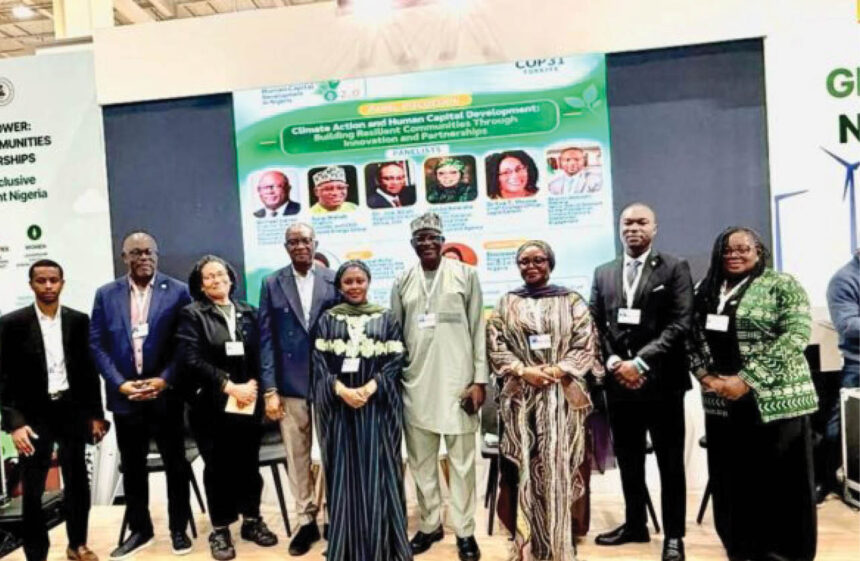
The call was made at a side event convened by the Programme’s National Coordinator, Rukaiya el-Rufai, at the Nigerian Pavilion during COP31 in Antalya, Türkiye. The engagement examined how climate action could be integrated into human capital development to support inclusive economic growth.
The panel discussion, themed ‘Climate Action and Human Capital Development: Building Resilient Communities through Innovation and Partnerships,’ brought together government officials, development institutions and private sector representatives to explore practical approaches to connecting environmental sustainability with people’s economic well-being.
In her opening remarks, el-Rufai stressed the importance of balancing human development, environmental protection, economic prosperity and effective governance.
While acknowledging advances in industrialisation, technology and infrastructure, she noted that economic progress also carried environmental consequences, making it necessary to ensure that climate interventions addressed the needs of affected communities.
She argued that climate action should extend beyond environmental protection to creating economic opportunities, strengthening livelihoods and improving living conditions, particularly for vulnerable populations.
The panel featured Michael Ivenso, Director of Energy, Transportation and Infrastructure at the National Council on Climate Change; Suraj Wahab Ologburo, Founder and Chief Executive Officer of Toyola Energy Group; Dr Joe Abah, Regional Director for Africa at DAI; and Habiba Balarabe Suleiman, Director-General of the Nasarawa State Human Capital Development Agency.
Their discussions examined the contributions of public institutions, private enterprises and development partnerships to climate solutions, including clean energy adoption, sustainable businesses and community resilience.
For Nigeria, the discussion carries economic significance as climate-related pressures increasingly affect agricultural productivity, food security, public health, education and household incomes.
These challenges also intersect with HCD 2.0’s three strategic priorities: Health and Nutrition; Education and Skills; and Labour and Livelihoods.
Integrating climate considerations into these areas could expand opportunities for green skills development, sustainable enterprise creation and clean energy investment, particularly among young people and women.
However, translating these opportunities into measurable development outcomes will require more than policy commitments. It will depend on sustained financing, effective institutional coordination, relevant skills development and private sector participation.
HCD 2.0’s engagement at COP31 therefore highlights an important dimension of Nigeria’s climate transition: ensuring that investments in environmental sustainability also strengthen human capital, expand productive employment and improve the economic resilience of communities.