

By Anita Dennis
The federal government is seeking to attract private investment into childcare, elderly care and disability support services as it moves to establish a $9.3 billion care economy, positioning the sector as a potential source of employment, productivity and economic growth.
The initiative follows the Federal Executive Council (FEC)’s approval of the National Care Policy and Implementation Plan 2026–2030, which seeks to transform care services from largely informal family responsibilities into an organised industry with investment opportunities and professional standards.
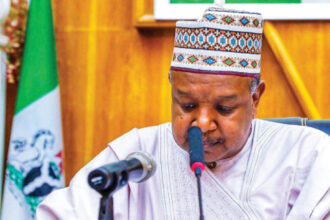
Minister of Women Affairs and Social Development, Hajiya Imaan Suleiman-Ibrahim, disclosed this at the National Care Economy Forum hosted by the World Bank Group in Lagos. She was represented by the Director of the Child Development Department, Ali Andrew Maduga.
“Our task is to move beyond recognising care as a social responsibility to establishing it as an organised, productive and investable component of Nigeria’s economy,” she said.
The minister disclosed that the FEC, on October 28, 2026, also directed the Ministers of Justice and Women Affairs to develop an executive bill to provide legislative backing for the policy.
Citing UN Women’s 2026 care economy modelling, she said closing unpaid care gaps and expanding universal childcare could contribute at least $9.3 billion to Nigeria’s Gross Domestic Product (GDP) and generate between 9.4 million and 17 million jobs.
She also said that caregiving responsibilities accounted for 20.16 percent of women’s withdrawal from the labour force, compared with 0.6 percent for men, highlighting the economic consequences of the unequal distribution of unpaid care work.
Head of Office, Nigeria, International Finance Corporation (IFC), Christian Mulamula, described care services as essential economic infrastructure rather than merely a family responsibility.
“Care may begin at home, but its impact does not end at the front door. It shapes whether people, particularly women, can take up opportunities and participate fully in the economy. Care is economic infrastructure,” he said.
Mulamula disclosed that 92 percent of childcare facilities were small, independently owned businesses, while 76 percent of childcare entrepreneurs lacked access to formal finance.
He argued that expanding investment in childcare would improve productivity while supporting children’s early development.
At the state level, Lagos Governor Babajide Sanwo-Olu, represented by Commissioner for Finance Abayomi Oluyomi, said the government was developing an investment-oriented care policy framework.
“We want a care economy in which families can access reliable and affordable services, care providers can operate viable businesses, and those who work in the sector can earn decent livelihoods under appropriate professional standards,” he said.
Sanwo-Olu urged financial institutions, employers and private investors to support the sector, noting that public funding alone could not provide the facilities and services required.
However, translating the projected economic value into actual investment will depend on affordable financing, reliable service standards, effective regulation and access to care for lower-income households.
The proposed legislation and implementation framework will therefore be important in determining whether Nigeria can turn its care economy ambitions into viable businesses, decent employment and greater labour force participation.