In the face of growing demands for transparency, accountability, and effective governance, the National Bureau of Statistics (NBS) has emerged as a pivotal institution supporting the reforms in Nigeria through the provision of credible, timely, and relevant data.
Over the past two years, the NBS has significantly improved its statistical methodologies and modernized its data collection systems—steps that are already yielding measurable impacts on policymaking and development planning. These advancements align with the reform agenda of the current administration, which places high priority on evidence-based decision-making.
A major highlight is the introduction of a new methodology for the Nigeria Labour Force Survey (NLFS). With a redesigned framework and quarterly releases, the survey now adheres more closely to international standards and offers a more accurate picture of employment, underemployment, and labour force dynamics in the country. This shift has filled critical data gaps and is enabling better-informed labour market interventions.
Another landmark achievement is the comprehensive rebasing of the Consumer Price Index (CPI) and Gross Domestic Product (GDP). These exercises have updated outdated reference periods—with the new base year for CPI set at 2024 and for GDP at 2019—and expanded data coverage to better reflect Nigeria’s current economic structure and consumer behavior. Notably, the new GDP framework captures the informal sector and digital economy more comprehensively, including sectors such as fintech, digital content creation, e-commerce, and logistics platforms. This improvement ensures a more accurate portrayal of economic activity in Nigeria, helping government and private actors design policies and investments that reflect reality.
The result is more reliable inflation and GDP figures that inform macroeconomic policy and public discourse.
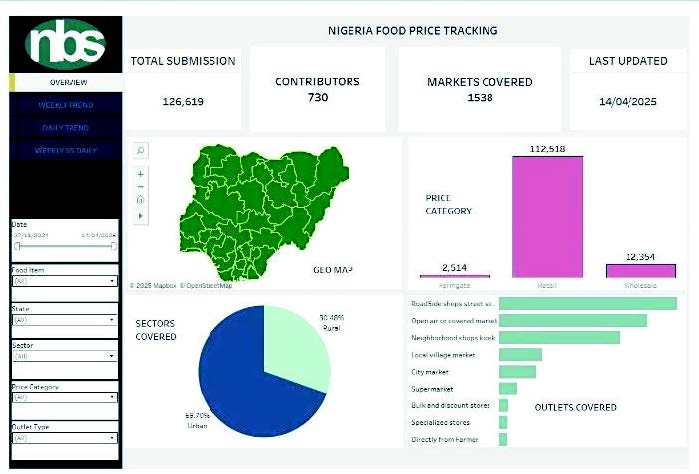
To strengthen food price monitoring, the Bureau is also exploring crowdsourcing and artificial intelligence (AI) tools to collect real-time data from markets nationwide. This innovation blends technology with community-based participation to ensure faster, more responsive tracking of price movements across the country.
Beyond these, the NBS has expanded Nigeria’s statistical landscape in unprecedented ways:
- Conducted the National Agricultural Sample Census—the first in over 30 years—providing critical data for food security and agricultural planning.
- Carried out the third round of the Nigeria Corruption Survey, shedding light on trends in bribery and citizen experiences with public institutions.
- Resumed the Job Creation Survey after a long break, providing data essential for evaluating employment programs.
- Completed the first-ever Time Use Survey, offering fresh insights into how Nigerians spend their time—vital for gender, productivity, and social policy analysis.
- Incorporated big data and modern data science methods to enhance the quality, depth, and scope of its statistical outputs.
- Advanced the drafting of the National Strategy for the Development of Statistics (NSDS), which lays out the long-term vision and roadmap for strengthening the national statistical system.
- Introduced the use of GIS and GPS technology across all surveys, strengthening data quality assurance, consistency in fieldwork, and spatial accuracy.
Further underscoring its leadership and commitment to innovation, the NBS team emerged joint first—alongside Côte d’Ivoire—in a continental hackathon titled “Exposure of African Agriculture to Climate Change.” Organized by France’s National Institute of Statistics and Economic Studies (INSEE), the competition brought together ten national statistical institutes from across the African Union. Designed to promote the use of emerging data sources—such as administrative records and private sector data—the hackathon showcased modern, data-driven solutions to development challenges. NBS’s outstanding performance not only reflects its growing reputation as a forward-looking institution but also affirms its position as a leading National Statistics Office (NSO) championing innovative statistical practices across Africa.
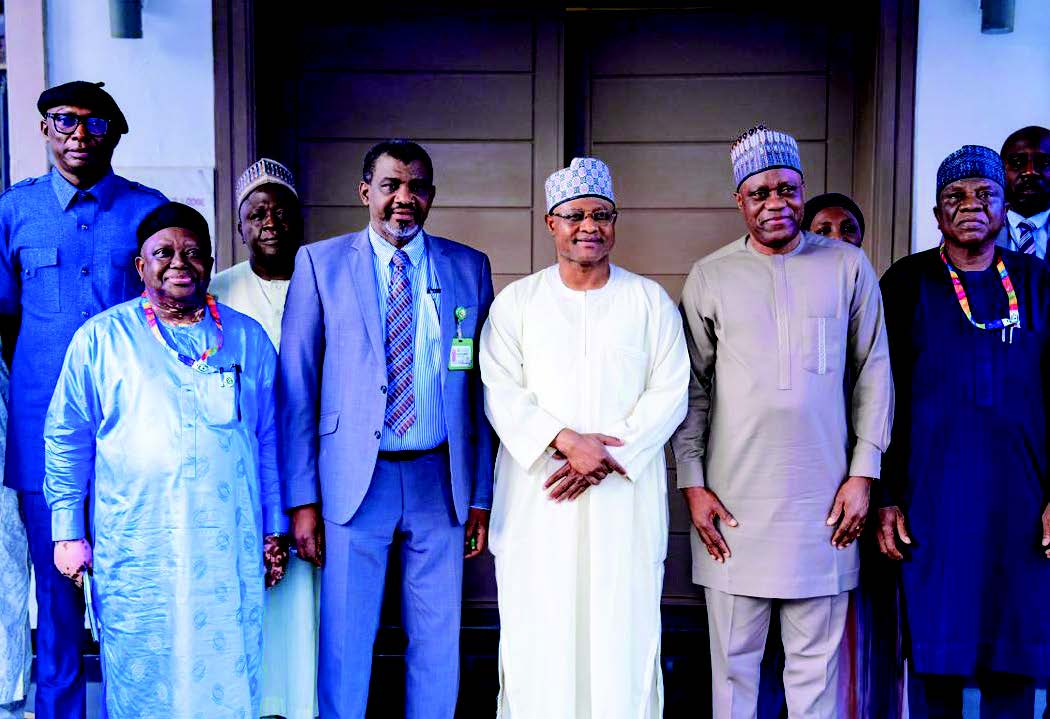
on a statistical advocacy visit to the Kaduna State Governor, Senator Uba Sani (3rd right)
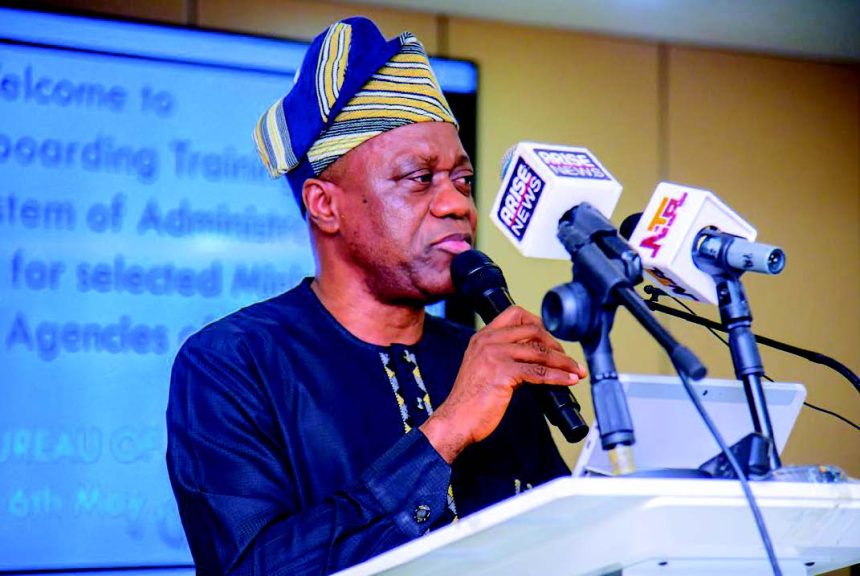
The Bureau has also invested in strengthening the foundations of Nigeria’s statistical system, using an intricate system called the Integrated System of Administrative Statistics (ISAS). ISAS is a comprehensive and integrated approach to transforming how administrative data is collected, managed, shared, and used across all tiers of government. Designed to overcome long-standing challenges of data silos, inconsistencies, and underutilization, ISAS aims to build a centralized, automated, and interoperable system that facilitates real-time data exchange between NBS and MDAs. This will lead to increased coordination among government data producers, expanded data warehousing and storage capacity, and more strategic dissemination through statistical advocacy and stakeholder engagement.
All these milestones reflect the transformative leadership of the Statistician-General of the Federation and CEO of the National Bureau of Statistics, Prince Adeyemi Adeniran, whose vision has anchored the Bureau’s rapid modernization and renewed relevance in national development.
These accomplishments underscore the NBS’s commitment to professionalism, innovation, and relevance. By prioritizing data-driven governance, the current administration is reinforcing the role of statistics not just as technical outputs, but as strategic tools for reform, accountability, and national development.
In a world where nations that measure well manage well, the NBS is ensuring that Nigeria measures better than ever before.