
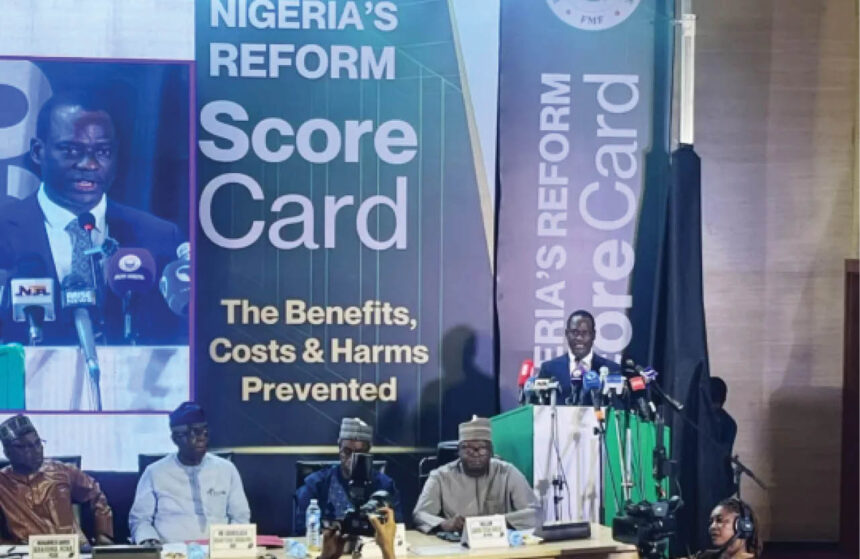
Economic reforms are ultimately judged not only by the changes they bring, but also by how the resources they generate are deployed. Since June 2023, Nigeria has implemented major economic adjustments, including the removal of the petrol subsidy and reforms to the foreign exchange market. While the transition has imposed significant costs on households and businesses, the federal government’s latest reform scorecard offers insight into how the resources mobilised during the period were spent. Between June 2023 and December 2025, N30.64 trillion in incremental expenses went into wages, debt obligations, infrastructure, electricity support and social interventions. Enam Obiosio examines how this spending reflects the government’s response to the fiscal and economic pressures created by the reform process.
When Nigeria’s economic reforms began in 2023, public attention focused largely on what citizens were losing.
Petrol prices rose sharply after subsidy removal. The naira weakened following changes to the foreign exchange regime. Interest rates increased, while households and businesses faced a higher cost of living.
The federal government’s latest reform scorecard raises another question: what did the reforms make possible?
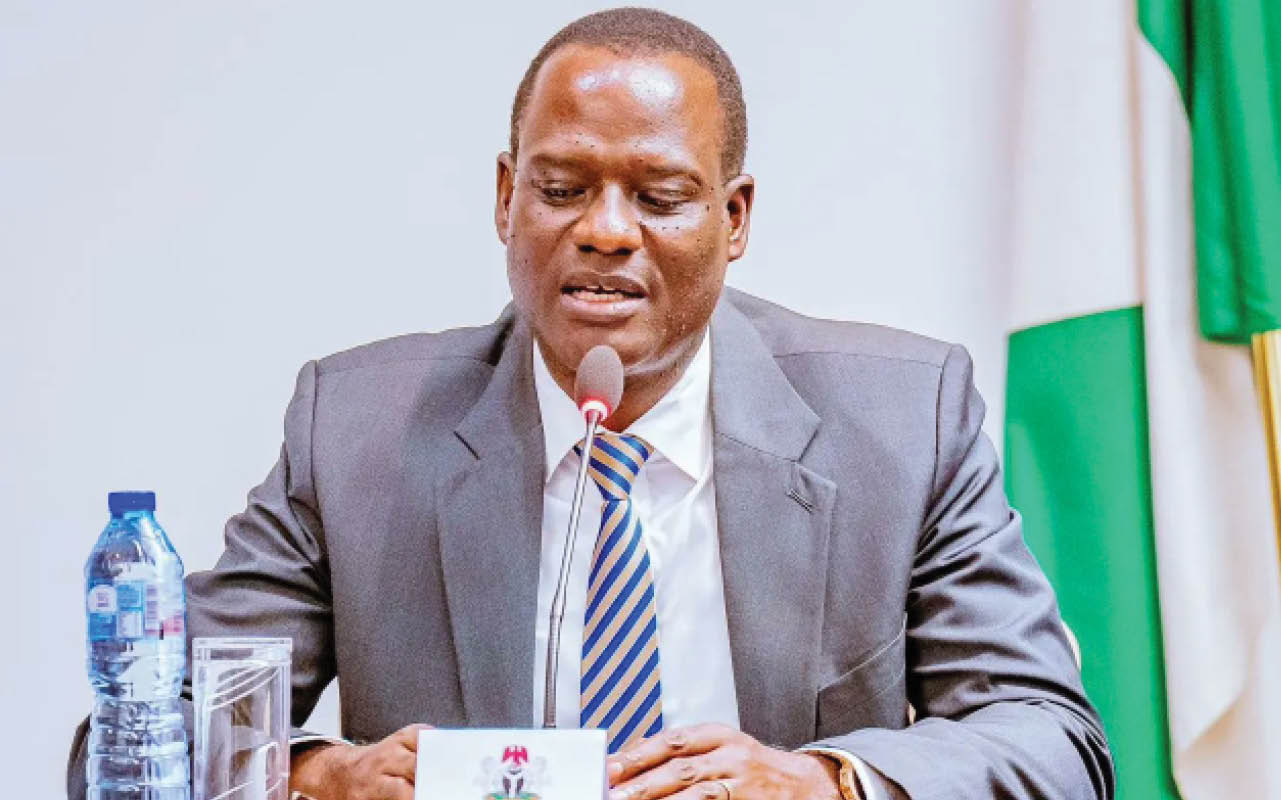
According to the Honourable Minister of Finance and Coordinating Minister of the Economy, Mr. Taiwo Oyedele, during his recent presentation of Nigeria’s Reforms Scorecard in Abuja, the answer can partly be found in the N30.64 trillion spent on incremental obligations between June 2023 and December 2025.
The largest portions went to three areas: wages, external debt service and strategic infrastructure.
Wage adjustments accounted for N9.39 trillion. External debt service consumed N9.37 trillion, while N6.47 trillion went into strategic infrastructure. Together, the three commitments amounted to N25.23 trillion, more than 80 percent of the total incremental expenditure.
The figures demonstrate that the reform programme was not simply about generating additional revenue. Government was also responding to rising fiscal obligations, currency depreciation, infrastructure needs and the pressure on workers.
At the centre of the resource story is the petrol subsidy reform.
Mr. Oyedele said subsidy removal and foreign exchange reforms generated N15.8 trillion in savings for the Federation between June 2023 and December 2025.
But the federal government did not receive all of it.
The federal government’s share was N5.4 trillion, while states received N6.5 trillion and local governments N3.9 trillion. In total, the two lower tiers of government received N10.4 trillion, almost twice the federal government’s allocation.
The savings therefore translated into additional resources available to the Federation through revenue sharing rather than money accumulating in a separate government account.
Mr. Oyedele argued that this distinction demonstrates that subsidy removal was not primarily a revenue-generating exercise.
“That, in itself, is evidence that the reform was never introduced for revenue purposes, but to address entrenched corruption in an artificially managed fuel subsidy and foreign exchange market,” he said.
For the federal government, subsidy savings were only one source of additional resources. It generated N3.1 trillion in incremental independent revenue, mainly through remittances from government-owned entities, and obtained N11.9 trillion in incremental borrowing.
Together, the three sources provided N20.4 trillion in incremental resources.
That amount, however, did not cover the entire N30.64 trillion in incremental expenditure.
About N20.404 trillion came from additional resources generated or mobilised during the period, while N10.236 trillion was funded from the government’s existing revenue base.
Borrowing accounted for 58 percent of the incremental resources, subsidy savings 27 percent and other revenue 15 percent.
So, what did the reforms pay for?
The largest destination was workers.
The government spent N9.39 trillion on wage adjustments, the new national minimum wage and allowances for public servants. The minimum wage rose from N30,000 to N70,000, while the government also reported more reliable salary and pension payments and the settlement of some longstanding pension arrears.
The second major commitment was debt.
External debt service reached N9.37 trillion. The depreciation of the naira significantly increased the domestic currency cost of servicing foreign-denominated obligations.
Mr. Oyedele explained the effect in simple terms. “So, if we’re paying N1 billion, but instead of N460, it’s now N1,415. That’s more naira than we need to incur,” he said.
The third major destination was strategic infrastructure, which received N6.47 trillion.
This spending is particularly significant because infrastructure can influence economic productivity beyond the immediate fiscal cycle. Better transport, energy and other strategic assets can reduce business costs, improve connectivity and support investment.
The government also spent N3.14 trillion on additional electricity subsidy costs and N1.24 trillion on domestic debt service associated with higher monetary policy rates.
Social welfare transfers accounted for N423.8 billion, while N419.1 billion went to Federal Capital Territory development, the Ecological Fund and natural resource investments.
These figures reveal the difficult environment in which the reforms were implemented.
The government acknowledges that the adjustment came with substantial costs.
The Monetary Policy Rate (MPR) rose from 18.5 percent in May 2023 to 26.5 percent. Petrol prices moved from about N185 per litre before subsidy removal to between N1,100 and N1,400.
“These are major, felt costs, and I will not stand here and tell you otherwise,” Mr. Oyedele said.
But the government’s argument is that the alternative could have produced deeper instability.
Its reform scorecard examined 25 indicators covering fiscal sustainability, external stability, investment climate, social impact, and growth and productivity. It compared the May 2023 baseline with the latest available data and estimated what could have happened if the previous trajectory had continued.
One of the strongest examples concerns state finances.
The government said 27 states could not reliably pay salaries in May 2023. That number has since fallen to zero. The ministry estimates that at least 30 states could have faced salary-payment difficulties by 2026 had the previous trajectory continued.
The foreign exchange market also recorded a significant shift. The premium between the official and parallel markets had exceeded 60 percent before the reforms. The government says it has fallen below five percent. Under the previous trajectory, the premium could have exceeded 150 percent.
The government also said the N30 trillion Ways and Means balance was curtailed rather than allowed to grow further.
External buffers improved. Gross foreign exchange reserves increased from about $35 billion at the May 2023 baseline to $52.5 billion, while net reserves rose from roughly $3 billion to $34.8 billion.
Real gross domestic product (GDP) growth strengthened from 2.31 percent to 3.89 percent, according to the scorecard. Stock market capitalisation also increased from about N31 trillion to approximately N150 trillion.
Nigeria subsequently exited the Financial Action Task Force grey list in October 2025 and the European Union’s anti-money laundering deficiency list in January 2026. S&P Global upgraded Nigeria’s sovereign credit rating to B in May 2026.
Yet macroeconomic improvement is not the same as household prosperity.
This remains the unfinished part of the reform story.
Food inflation fell from 24.82 percent at the May 2023 baseline to 17.52 percent in June 2026, while headline inflation declined from 22.41 percent to 15.91 percent over the period cited by the government.
However, lower inflation does not mean lower prices. It means prices are increasing more slowly.
For households, the next phase of the reform programme must therefore be about translating macroeconomic stability into tangible improvements in living standards.
The federal government says it will expand cash transfers, deepen agricultural interventions to reduce food prices, strengthen implementation of the Nigeria Tax Act and improve budgeting and accountability. It also plans to maintain a unified foreign exchange market and continue efforts to reduce inflation towards single digits.
The National Education Loan Fund (NELFUND), which the government says now benefits more than 1.5 million students, is another part of the social response.
The reform scorecard is therefore less a declaration of victory than an account of a difficult transition.
The N30.64 trillion expenditure tells a broader story. It shows N9.39 trillion going into wages, N9.37 trillion into external debt service and N6.47 trillion into strategic infrastructure. It shows additional resources being deployed to electricity, social transfers and other public priorities.
It also shows that reform-generated resources were insufficient to meet the entire additional expenditure, requiring N10.236 trillion from existing government revenue.
The central challenge now is to ensure that the gains recorded in fiscal management, reserves, exchange-rate stability and economic growth become more visible in Nigerian homes.
As Mr. Oyedele put it, “We are not here to pretend these reforms were painless. We are here to show you, honestly and with the numbers, what they cost, the benefits they delivered, and the harm they prevented.”