By Anita Dennis
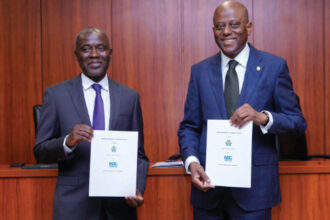
Access to educational resources is increasingly tied to access to the internet, yet the cost of data remains a barrier for many Nigerian students. A new partnership between the Nigerian Communications Commission (NCC) and the Association of Licensed Telecommunications Operators of Nigeria (ALTON) is seeking to reduce that barrier through a free daily data programme for learners.
Under the initiative, eligible senior secondary and tertiary students will receive up to 100 megabytes of free data each day to access approved educational platforms. The service will be zero-rated, allowing participating learners to use the designated platforms without consuming their regular data allowance.
The programme is expected to reach up to 5 million learners and provide access to research materials, online courses and other academic resources.
For the NCC, the initiative forms part of a wider effort to use telecommunications infrastructure to support education, digital skills and human capital development.
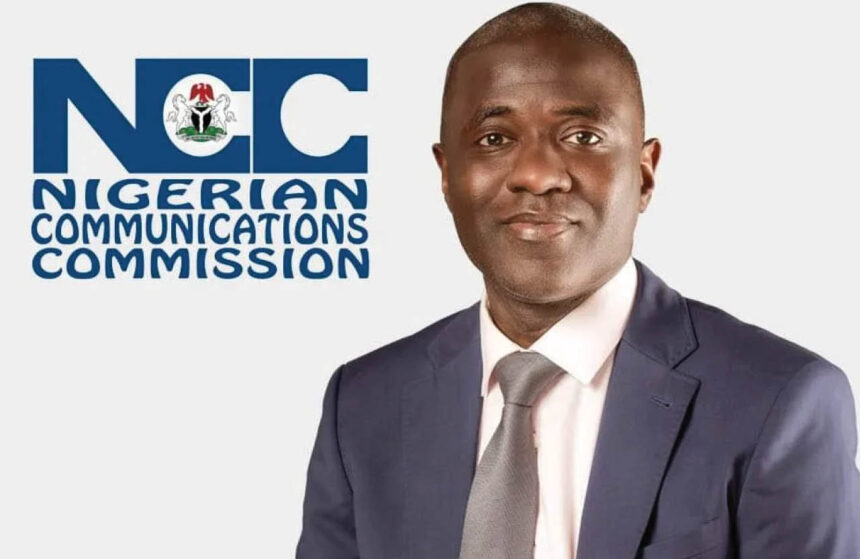
Executive Vice Chairman of NCC, Dr Aminu Maida, said the value of the programme should be considered cumulatively rather than by the daily allocation alone.
“100 megabytes of data might sound a little, but when you look at it over a month and over a year, and cumulatively over the millions of learners and students that are going to access it, it’s really a significant investment by the industry towards the future of this country,” Dr. Maida said.
The intervention comes at a time when digital access is becoming increasingly important to education. Students can use online platforms to supplement classroom teaching, access research materials, take courses and develop skills that may not be readily available within their immediate communities.
Dr. Maida said better connectivity could also reduce geographical disparities in access to educational resources by connecting learners with teachers, learning materials and knowledge irrespective of where they live.
The initiative, however, also highlights an important distinction between being connected and being digitally equipped to learn.
ALTON Chairman, Gbenga Adebayo, said the telecommunications and technology industry had committed almost N200 billion in financial and in-kind contributions towards the initial pilot involving 5,000 learners.
The commitment covers the data allocation as well as network resources, devices, terminals and other support provided by participating industry players.
“This is a partnership in the truest sense: Government provides the policy and educational framework; the regulator provides coordination and oversight; telecommunications operators provide connectivity and network resources; while OEMs, TowerCos and other technology partners contribute devices, terminals and other critical resources,” Adebayo said.
The inclusion of devices and other infrastructure is significant because data access alone cannot guarantee meaningful participation in digital education. A learner without a suitable smartphone, tablet or computer may still be unable to take full advantage of online resources, even when the data cost is removed.
The same applies to educational content. Zero-rated access has greater value when students have access to platforms that are relevant to their curriculum, easy to navigate and capable of supporting sustained learning.
Adebayo therefore called for continued investment in devices, relevant educational content, reliable telecommunications infrastructure and digital literacy.
His position points to the wider requirements for digital education to deliver measurable outcomes. Connectivity can open the door to learning, but the quality of the resources behind that connection, the reliability of the network and the ability of students to use digital tools effectively will determine what happens afterwards.
The programme also represents a different form of collaboration between government and the private sector. Rather than placing the entire cost of expanding digital learning access on public finances, the initiative brings together the regulator, telecommunications operators, equipment manufacturers, tower companies and other technology partners.
That structure could provide a model for addressing other aspects of Nigeria’s digital divide if the partnership can be sustained beyond the initial pilot.
For students, the immediate benefit is practical. Regular access to approved educational platforms could support examination preparation, research, online courses and digital skills development.
For the telecommunications industry, the initiative places existing infrastructure within a broader human-capital development agenda.
The central challenge will be scale and sustainability. Moving from an initial pilot of 5,000 learners to potentially 5 million will require coordination, monitoring and continued investment. It will also require clear criteria for eligible users and approved educational platforms, alongside mechanisms to assess whether learners are actually benefiting from the service.
The initiative nevertheless marks a shift in the way digital connectivity is being positioned within Nigeria’s education system. Data is no longer being treated solely as a telecommunications service. It is increasingly becoming part of the infrastructure through which students access knowledge, develop skills and participate in the digital economy.