By Majeed Salaam
Nigeria is restructuring its $3.3 billion Project Gazelle financing to reduce its crude-oil commitment while unlocking additional liquidity for reserves and national priorities.
The National Economic Council (NEC) approved the refinancing of the outstanding Project Gazelle Pre-Export Finance Facility through a new $4.5 billion arrangement known as Project Gazelle 2, giving NNPC Limited a framework to replace the original 2023 facility on more favourable terms.
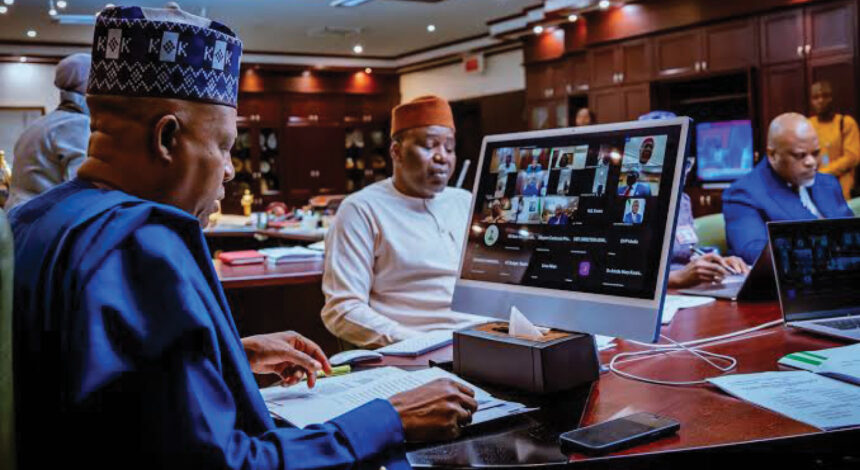
The decision was taken at the 159th meeting of NEC, which also pledged support for the initiative. The refinancing will settle approximately $1.5 billion still outstanding under the original facility while providing an additional $3 billion in liquidity.
For an economy managing competing demands for foreign exchange, fiscal resources and infrastructure financing, the significance of the arrangement lies in its ability to extract more liquidity from an existing financing structure without increasing the pledged crude volume proportionately.
The Minister of Finance and Coordinating Minister of the Economy, Mr. Taiwo Oyedele, said that the new arrangement would reduce the quantity of crude pledged against the facility from 90,000 barrels per day to approximately 78,750 barrels per day, representing a 12.5 percent reduction.
The restructuring will consequently release an additional 11,250 barrels per day for the federation, while reducing the crude volume committed by NNPC Limited.
Oyedele said that the refinancing had been structured on more favourable terms than the original facility and would free resources for strategic national priorities.
The arrangement, therefore, combines debt refinancing with liquidity management. Rather than simply replacing an existing obligation, Project Gazelle 2 is intended to improve the terms of the financing while generating additional financial space for government.
The $3 billion additional liquidity is expected to bolster external reserves and support the government’s fiscal and infrastructure priorities. Its broader significance will depend on how effectively the additional resources strengthen the country’s financing position and support productive public expenditure.
The NEC decision also comes against the backdrop of wider concerns about the economic pressures facing households and businesses.
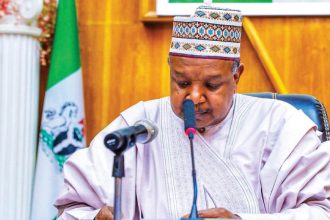
Opening the council meeting, Vice President Kashim Shettima called for a social protection system capable of responding to multidimensional poverty through policies that are responsive, scalable and driven by data.
Shettima argued that the impact of government policy is ultimately experienced in everyday life rather than in policy documents alone.
According to him, government policies are often heard before they are seen, speaking through the price of food, condition of hospitals, records in schools, strain on families, the confidence of those who invest their labour in the nation’s future, and the ambitions of state governments.
The Vice President urged members of the council to ensure that their decisions remained connected to these realities, stressing that government responsiveness must be measured by its impact on citizens.
He called on the council to ensure that every decision assures citizens “that their government is paying attention to the pulse of the nation and is resolved to respond with competence, compassion and purpose.”
The two issues considered at the NEC meeting, refinancing and social protection, point to different sides of the government’s economic challenge. The first concerns how Nigeria can optimise existing financing commitments and create additional fiscal and external liquidity. The second concerns how those resources and policy decisions ultimately affect households and communities.
Project Gazelle 2 consequently represents more than a refinancing exercise. Its immediate attraction is the combination of lower pledged crude volumes, settlement of the existing balance and additional liquidity. Its longer-term value, however, will be determined by whether the financial flexibility created through the transaction can support stronger reserves, infrastructure and fiscal capacity while contributing to the broader economic conditions highlighted by the Vice President.