In a country where millions still live without access to reliable electricity, the Rural Electrification Agency (REA) has emerged as a transformative force, pushing the boundaries of what’s possible in Nigeria’s energy sector. Under the leadership of Mr. Abba Abubakar Aliyu, the agency is spearheading renewable energy reforms with a clear mission: to bridge the energy gap in rural and underserved communities through innovation, partnerships, and strategic investment. Enam Obiosio writes.
The NEP: A Beacon of Light for Over 7.8 Million Nigerians
At the heart of REA’s success story is the Nigeria Electrification Project (NEP), a landmark initiative designed to enhance electricity access across the country. Since its inception, the NEP has deployed over 1 million solar home systems and established 158 solar hybrid mini-grids, directly impacting more than 7.8 million Nigerians—many of whom previously relied on kerosene lamps or had no power at all.
What sets the NEP apart is its focus on decentralized, renewable energy. These solar-powered solutions are not only more sustainable than traditional grid systems but also significantly more cost-effective, especially in hard-to-reach areas. For communities once overlooked in national energy plans, this has meant not just light, but also a pathway to improved healthcare, education, and local enterprise.
Moreover, the NEP has catalyzed private sector participation, encouraging local and international investors to view Nigeria’s renewable energy sector as a viable and rewarding opportunity. With continued support, the project is poised to connect millions more, playing a central role in Nigeria’s journey toward universal electricity access.
DARES: $750 Million for Clean Energy Expansion
A major turning point for the REA came in October 2024, when it secured a groundbreaking $750 million investment for its latest project—Distributed Access through Renewable Energy Scale-Up (DARES). With a target of reaching 17.5 million Nigerians, DARES is one of the most ambitious off-grid electrification efforts in Africa.
The DARES project aligns closely with the global Mission 300—an initiative to deliver energy access to 300 million people in Sub-Saharan Africa by 2030. It aims to roll out distributed solar systems and other renewable technologies in Nigeria’s most energy-deprived regions.
“The significance of this funding cannot be overstated,” noted one REA official. “It gives us the financial muscle to drive long-term change and opens the door for even more strategic collaborations.”
DARES is already making headway, having signed performance-based grants with companies like Privida Power Limited and other solar providers. These firms are deploying mini-grids and plug-and-play solar solutions to thousands of households and micro-enterprises across rural Nigeria.
Strategic Partnerships Driving the Energy Revolution
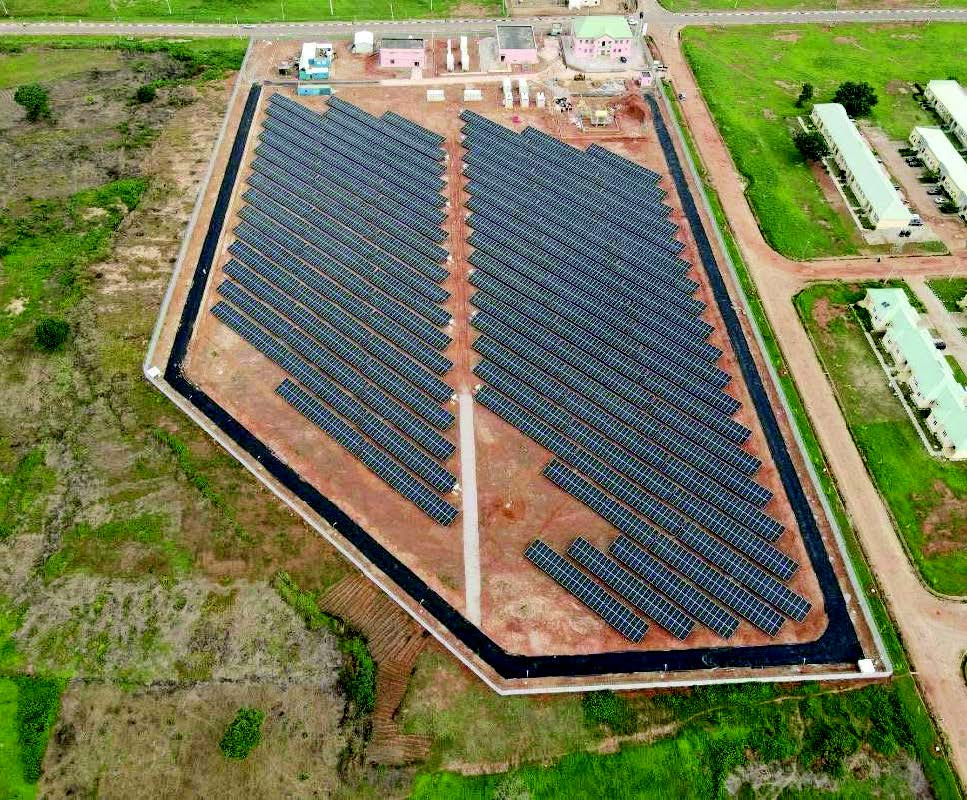
Beyond capital and infrastructure, the REA’s success is deeply rooted in collaborative governance. The agency has signed memoranda of understanding (MoUs) with five federal government agencies and nine renewable energy service companies, paving the way for the generation of over 1,000 megawatts (MW) of electricity via solar systems.
These partnerships are delivering results. In multiple states, new solar-powered systems are lighting up homes, schools, clinics, and markets. But the impact goes beyond energy access. These collaborations are building technical capacity, strengthening local economies, and fostering a more inclusive energy transition.
The private sector’s role has been particularly critical, as companies leverage their expertise and technology to scale up installations, while the government ensures policy support and coordination. Together, they are building a foundation for sustainable, resilient, and decentralized energy systems.
Global Partnerships Fueling Local Impact
In a landmark move that underscores the power of international cooperation, Nigeria signed a $200 million agreement with WeLight, a pan-African Distributed Renewable Energy (DRE) company, in March 2025. The deal—one of the largest of its kind in sub-Saharan Africa—is expected to bring 400 mini-grids and 50 MetroGrids to life, connecting between 1.5 and 2 million people in rural and peri-urban areas across the country.
These mini- and MetroGrids will provide reliable, off-grid electricity to underserved communities, enabling schools to operate longer hours, health centers to run essential equipment, and small businesses to thrive in places once plagued by blackouts or total darkness.
“The WeLight partnership is a turning point,” said a senior REA official. “It signals growing international confidence in Nigeria’s renewable energy future and aligns with our broader goal to electrify every corner of the country—no matter how remote.”
By integrating foreign expertise and financing into local infrastructure development, the REA is building a dynamic ecosystem where Nigeria’s energy needs are met with scalable, affordable, and environmentally-friendly solutions.
Powering Public Institutions for Sustainable Development
While expanding household access to electricity, the REA is also targeting critical public institutions—a move that ties sustainable energy access directly to national development outcomes.
Through solar installations in government offices, schools, hospitals, and health centres, the REA is enhancing the reliability of public services in rural areas. By reducing dependence on costly and polluting diesel generators, this initiative is lowering carbon emissions and operational costs while ensuring that essential services remain uninterrupted.
“These are not just infrastructure upgrades,” said Mr. Aliyu. “They are investments in our future—ensuring that our children can study under bright lights and that our mothers can deliver babies safely in well-lit hospitals.”
This clean energy push aligns with Nigeria’s climate commitments under international frameworks such as the Paris Agreement, as well as the nation’s broader Energy Transition Plan.
Private Sector Participation Scaling Access
Under the Performance-Based Grant (PBG) scheme, the REA is also working closely with private developers to execute clean energy projects. One such beneficiary, Privida Power Limited, has been contracted to deploy 2.47MW of solar mini-grids across 11 communities in Kogi State, a move that will create over 11,000 new electricity connections.
According to William Akalume, CEO of Privida, “We are fully committed and ready to begin work in May. The people of Kogi State deserve reliable electricity, and we’re going to deliver.”
Eight additional firms—including Salphia Energy, Bboxx, D.Light, NTA-StarTimes, and Baobab Plus—are also part of the rollout, delivering plug-and-play solar kits for homes and micro, small, and medium enterprises (MSMEs).
“This is not just a contract; it is a commitment to communities long underserved,” affirmed REA’s CEO, Mr. Aliyu. His sentiments were echoed by Olufemi Akinyelure, Head of the Nigeria Electrification Project (NEP), who emphasized that “each connection is a gateway to healthcare, education, and inclusion.”
Overcoming Obstacles with Vision and Resolve
Despite the substantial progress, challenges remain. Infrastructure gaps, security concerns in rural zones, and the need for sustained financing continue to test the resilience of the REA’s roadmap. Moreover, the technical demands of scaling up off-grid systems across a country as vast as Nigeria are formidable.
However, the REA’s track record offers hope. With strong institutional leadership, international partnerships, and a growing coalition of private sector stakeholders, the agency is well-positioned to overcome these hurdles.