
By Majeed Salaam
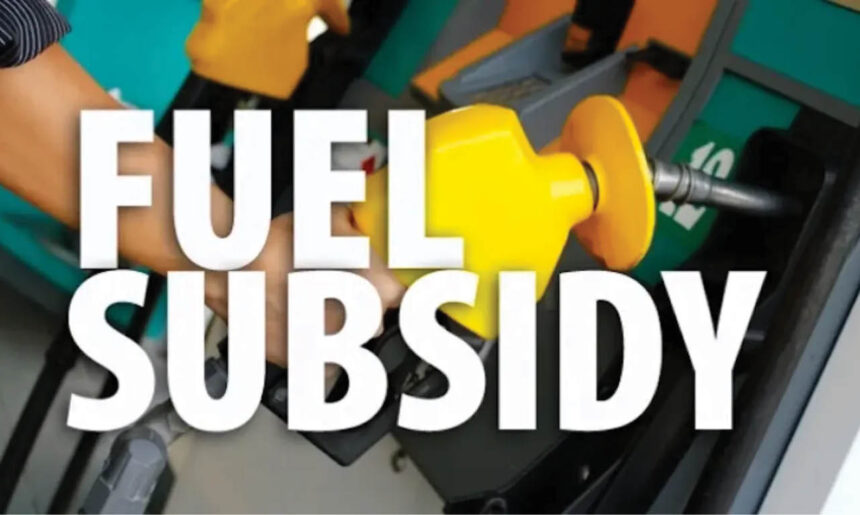
The federal government has clarified that the removal of petrol subsidy did not create a sudden cash windfall for the government, but reduced the fiscal pressure that would have forced it to borrow even more to keep the subsidy regime alive.
The explanation is contained in the Federal Ministry of Finance publication, Nigeria’s Economic Reforms: By the Numbers, which provides the government’s rationale for some of the major economic decisions taken under the current administration.
The clarification comes amid continuing debate over what Nigeria actually gained financially from the removal of petrol subsidy and how the resulting resources have been deployed.
According to the ministry, the reform should not be interpreted as the government suddenly having trillions of naira in free cash. Its immediate fiscal benefit was the removal of a large expenditure obligation and, consequently, a reduction in the amount of additional borrowing that would otherwise have been necessary.
“Subsidy removal, therefore, cut the borrowing that would otherwise have been needed. All borrowing remains subject to National Assembly approval,” the government stated.
The distinction is important in understanding the fiscal impact of the reform.
By early 2023, the government said the cost of maintaining the subsidy had become increasingly difficult to sustain. A full year of petrol subsidy was projected at about N6.7 trillion, equivalent to roughly 70 percent of federal revenue.
The 2023 budget had provided for only six months of subsidy payments, suggesting that the fiscal authorities were already confronting the limits of the policy before its eventual removal.
The government argued that maintaining the subsidy was no longer compatible with the country’s fiscal realities.
It also maintained that the system disproportionately benefited wealthier households and cross-border smugglers rather than the poorest Nigerians. While acknowledging that a phased removal would have been preferable, the government said the country lacked sufficient fiscal space to sustain such an approach.
The immediate consequence was a major shift in how resources from the petroleum sector flow through government finances.
Rather than being absorbed by petrol subsidy payments, the resources became available through the Federation Account, from which the Federal Government, states and local governments receive allocations.
The ministry stressed that states and local governments were major beneficiaries of increased Federation Account allocations. The additional resources, it said, supported salaries, pensions, infrastructure and other public services.
This means the fiscal impact of subsidy removal cannot be assessed solely by examining the federal government’s finances. The reform changed the distribution and availability of public resources across the three tiers of government.
The federal government also said increased revenue did not eliminate the need for borrowing.
This was because government spending requirements continued to exceed available resources, particularly as the administration pursued major infrastructure investments.
About N6.47 trillion in additional spending was directed towards strategic infrastructure, including the Lagos-Calabar Coastal Highway, Sokoto-Badagry Superhighway and Trans-Sahara Superhighway.
The government said the projects are intended to address infrastructure constraints, improve connectivity and support investment and economic growth.
The explanation also touches on the controversial N7.13 trillion energy-security expenditure recorded by the Nigerian National Petroleum Company Limited (NNPCL) in 2024.
The expenditure appeared in NNPCL’s audit report released in November 2025, although the company did not specify its purpose. Some analysts have associated the expenditure with subsidy-related payments or measures to protect gas pipelines.
The Finance Ministry’s position is that the broader fiscal picture must be considered when assessing the effects of the reforms.
The government has also defended another major policy decision: the move to float the naira.
According to the ministry, the reform was necessary because the previous multiple-exchange-rate system had become vulnerable to arbitrage and patronage.
The government said net foreign reserves had fallen to critically low levels, while unmet foreign-exchange obligations had exceeded $7 billion. Under those conditions, continuing to defend the official exchange rate was considered unsustainable.