
By Benson Kingsley
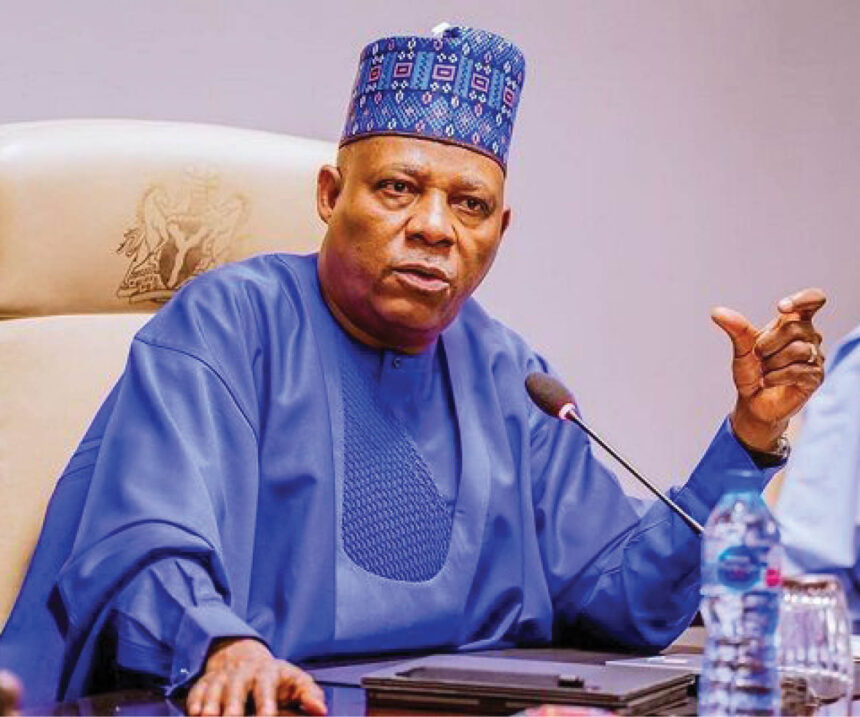
In Abuja, a familiar refrain about Nigeria’s youthful population was given sharper meaning and urgency. At the Abuja Dialogue 2026, Vice President Kashim Shettima made it clear that demographic advantage, on its own, is not a strategy. Without structure, he warned, it risks becoming an empty statistic.
The Dialogue, convened by the Office of the Vice President in partnership with Vice President Shettima’s message was direct. Nigeria’s youth population must be treated as a “national condition with profound consequences,” not as a convenient talking point. “We are one of the youngest nations on earth. That fact should not be treated as a line for conferences or a statistic for brochures,” he said. The implication was clear. Policy must now catch up with population realities.
At the centre of his address was a call for a deliberate framework for youth leadership development. He argued that leadership cannot be left to chance or time. It must be built through systems that identify, prepare and integrate young people into decision-making processes. “Youth leadership must be understood with clarity. It is not a ceremonial handover waiting for age to perform its arithmetic,” he said.
This framing shifts the conversation from aspiration to design. According to the Vice President, leadership pipelines should be embedded within education, public service and enterprise systems. The goal is continuity. The method is structured exposure, responsibility and accountability.
He stressed that leadership matures through practice. Young people, he said, must be given room to contribute and to make decisions, with clear expectations attached. “Responsibility is the workshop where capacity is refined,” he noted, reinforcing the idea that competence grows within institutions, not outside them.
The Dialogue also served as a reflection point on governance in a changing world. Vice President Shettima described it as timely, noting that governments globally are under pressure to respond to rapid shifts in technology, economics and public expectations. In such a context, leadership must be intentional and adaptive.
For young Nigerians, his remarks carried both encouragement and caution. Leadership, he said, is not defined by age but by readiness to bear consequences and prioritise the common good. It was an invitation to participate, but also a reminder that participation requires discipline and preparation.
Lagos State Governor, Mr. Babajide Sanwo-Olu, reinforced this position, pointing to institutional models already in motion. He described the Lateef Jakande Leadership Academy as more than a fellowship. In his words, it is a talent incubator that provides public sector immersion, policy exposure and mentorship, while allowing participants to tackle real societal challenges through capstone projects.
Mr. Sanwo-Olu situated the Academy within a broader youth development ecosystem in Lagos. This includes initiatives focused on employment, digital skills and entrepreneurship. His argument was that leadership development works best when supported by interconnected programmes that address both capability and opportunity.
He also made a policy case. For youth leadership to scale, governments must commit resources and political will. “Good intentions for young people must translate into functioning institutions,” he said, pointing to the need for frameworks backed by funding and execution discipline.
Other speakers aligned with this institutional approach. Senator Ibrahim Hassan Hadejia, Deputy Chief of Staff to the President, described youth leadership as infrastructure that shapes the strength of institutions and the trajectory of national development. His emphasis was on intentionality. Leadership development, he noted, cannot be symbolic.
Honourable Minister of Youth Development, Mr. Ayodele Olawande, stated a government perspective, stating that young Nigerians are ready to take on leadership roles. He pointed to ongoing efforts by the administration of Bola Ahmed Tinubu to create enabling platforms across sectors.
From the programme’s institutional side, Ayisat Agbaje-Okunade, Executive Secretary of the Academy, focused on outcomes. She said the Dialogue presents an opportunity to move youth leadership from the margins of policy into the centre of governance. Her emphasis was on alignment, ensuring that policy statements translate into programmes that deliver measurable impact.