
By Kingsley Benson
With the licences of Nigeria’s electricity distribution companies (Discos) set to expire in 2028, the federal government has begun considering a recapitalisation framework that will make minimum capital adequacy a key requirement for licence renewal.
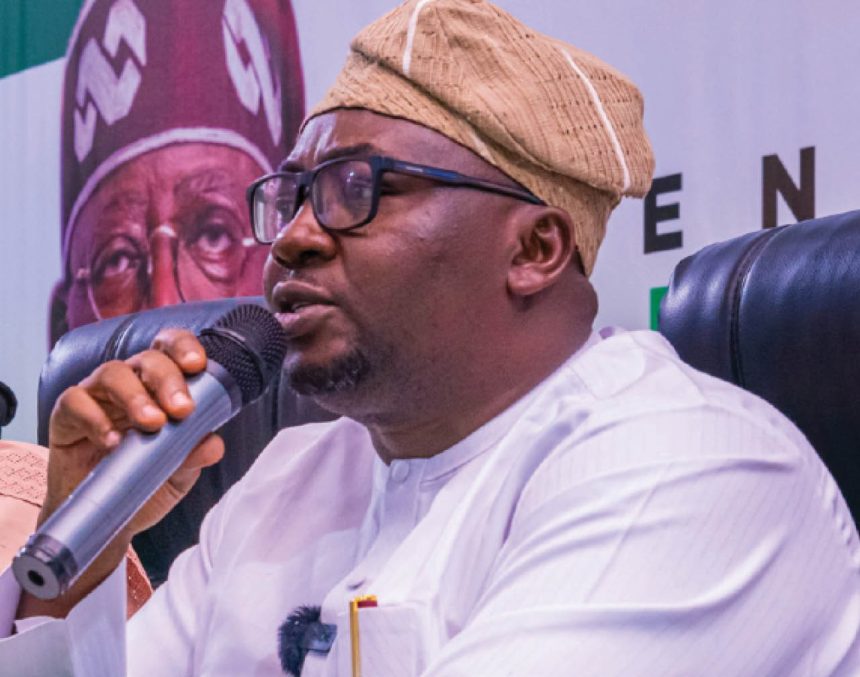
The proposal, according to the Chief Adebayo Adelabu, Honourable Minister of Power, is part of ongoing efforts to enhance the financial health, liquidity, and operational efficiency of Discos across the country.
Chief Adelabu made this known recently during the Leadership Seminar at the Nigeria Energy Exhibition and Conference in Lagos, themed ‘Powering Nigeria through Investment, Innovation, and Partnership.’
The Honourable Minister said that the move became necessary as undercapitalisation and mounting debt burdens continue to cripple the performance of several Discos, limiting their ability to deliver stable and quality power supply.
“As the tenure of their operational licences approaches renewal, the government intends to introduce a minimum capital adequacy requirement as part of the licence renewal process to strengthen the financial health and liquidity position of the utilities,” he stated.
He reminded industry players that the government would not renew licences for poorly performing Discos, reiterating his earlier warning that only those with proven technical competence, financial strength, and a track record of service delivery would be allowed to continue.
“Those that have not shown good faith, demonstrated technical expertise, or acted in the country’s best interest will be kicked out,” the Honourable Minister said, stressing that the administration’s goal is to ensure every household is metered within the next three to five years.
Power Sector Reforms and Financial Stability
Chief Adelabu disclosed that the federal government is deepening power sector commercialisation to boost revenue generation, market liquidity, and investor confidence. He noted that tariff reforms have already enabled cost-reflective pricing for select consumer categories, improving supply reliability and reducing industrial energy costs.
He revealed that industry revenue surged by 70 percent to N1.7 trillion in 2024, up from N1 trillion the previous year, and is projected to exceed N2 trillion in 2025. To stabilise the sector, President Bola Tinubu has also approved a N4 trillion bond to clear verified debts owed to generation companies (GenCos) and gas suppliers.
In addition, a targeted subsidy framework is being designed to protect vulnerable households while steering the market toward full commercial viability.
Chief Adelabu also announced stronger collaboration between the Nigerian Electricity Regulatory Commission (NERC) and state regulators to enforce performance standards and monitor Discos within their jurisdictions.
Legislative and Policy Frameworks
Highlighting progress made under the Electricity Act 2023, he described the law as a “major milestone” in Nigeria’s electricity reform journey, as it devolves regulatory powers to states, promotes competition, and encourages private participation.
He disclosed that 15 states have already secured regulatory autonomy, with one fully operational subnational market. The Ministry, he said, is working with the states to align retail and wholesale markets to ensure coherence in operations.
To further harmonise policies, the Integrated National Electricity Policy, approved by the Federal Executive Council in February, is being finalised alongside a Strategic Implementation Plan – the first comprehensive, sector-wide framework in nearly two decades.
Infrastructure Expansion and Metering Drive
On infrastructure, Chief Adelabu said the government is aggressively expanding and modernising the national grid through the Presidential Power Initiative (PPI). Under Phase Zero, Nigeria achieved over 700MW of additional transmission capacity, while Phase One, involving global partners such as Siemens Energy and Power China, aims to deliver 7,000MW in new operational capacity.
Generation capacity has also improved, rising to 5,300MW in 2024 from 4,200MW in 2023, aided by the integration of the 700MW Zungeru Hydropower Plant and rehabilitation of key NIPP plants.
In a landmark move, the Transmission Company of Nigeria (TCN) has been unbundled into two entities, the Nigerian Independent System Operator (NISO) and the Transmission Service Provider (TSP). A reform aimed at enhancing efficiency, market operations, and infrastructure development.
To close Nigeria’s metering gap, Chief Adelabu said the Presidential Metering Initiative (PMI) has been operationalised with N700 billion secured from the Federation Account Allocation Committee (FAAC) to deploy 1.1 million meters by the end of 2025 and an additional 2 million annually over the next five years.
This, he explained, complements the 3.2 million meters being financed through the World Bank’s DISREP programme, setting Nigeria on course to achieve nationwide metering within five years.
Energy Transition and Investment Outlook
On energy transition, Chief Adelabu noted that the government has mobilised over $2 billion in bilateral and development finance to scale renewable energy deployment and expand access for underserved communities.
This includes the $750 million World Bank DARES programme, the $500 million NSIA RIPLE platform, and the $190 million JICA fund – all designed to unlock private capital for renewables and expand off-grid power solutions for schools, healthcare centres, and rural communities.
“We are open to strategic partnerships to mobilise the necessary investments and unlock Nigeria’s energy potential,” he said. “Our market fundamentals are improving, our policy environment is clearer, and our leadership is committed to creating the conditions for long-term investment and innovation.”
He urged investors, regulators, and stakeholders to “think boldly, collaborate strategically, and invest with purpose,” emphasising that the reforms underway are geared toward powering Nigeria’s next phase of industrial and economic growth.