At a time when Nigeria’s digital economy is expanding at speed, regulators are moving to close the gaps that growth often exposes. The formalisation of a Memorandum of Understanding (MoU) between the Central Bank of Nigeria (CBN) and the Nigerian Communications Commission (NCC) signals a coordinated shift toward a safer, more accountable financial ecosystem where consumer protection and system integrity take priority. Enam Obiosio writes…
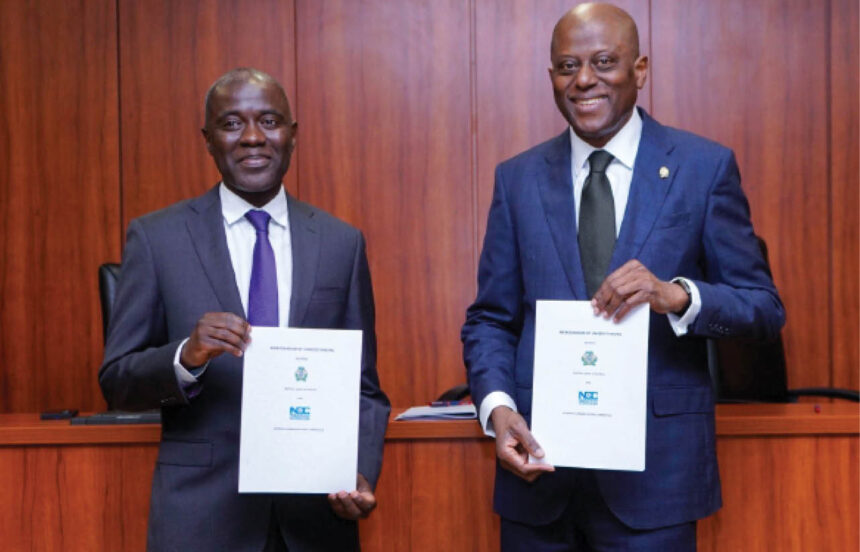
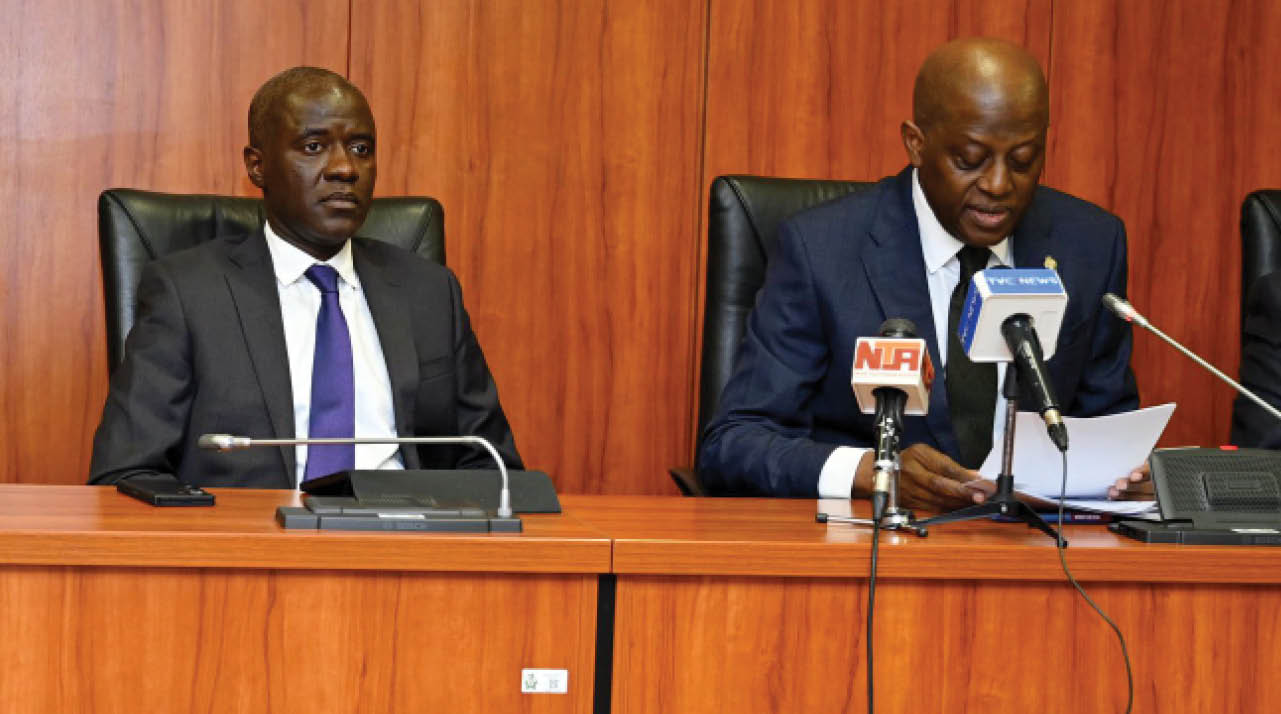
The agreement, signed in Abuja by Mr. Olayemi Cardoso, Governor of CBN and Mr. Aminu Maida, Executive Vice Chairman of NCC, is designed to bridge long standing regulatory divides between finance and telecommunications. Both sectors have grown increasingly interdependent, yet their oversight frameworks have not always evolved at the same pace.
Mr. Cardoso presented the development as a necessary response to a changing risk landscape, stressing that the scale and complexity of the digital financial ecosystem now require a more enduring framework. “Given the scale and complexity of today’s digital financial ecosystem, there is a need for a more comprehensive, forward looking and enduring framework to address emerging issues,” he said.
Nigeria’s financial system, now driven by instant payments, mobile banking, and fintech innovation, relies heavily on telecommunications infrastructure. That reliance introduces vulnerabilities that cannot be addressed in isolation. The MoU attempts to close that gap through structured coordination.
Closing the Gaps in Digital Identity and Fraud Risk
Central to the MoU is the creation of mechanisms that allow real time verification of mobile number status across banks, fintechs, and digital platforms. This addresses one of the most exploited weak points in the system. Fraud linked to recycled, swapped, or compromised phone numbers has become increasingly sophisticated.
Mr. Cardoso underscored the importance of this capability. “The ability to verify mobile number status in real time across banks, fintechs, and other digital platforms remains a critical layer of protection for consumers and for the financial system,” he noted.
To operationalise this, both institutions introduced the Telecom Identity Risk Management Portal, a secure data sharing platform that provides visibility into the status of phone numbers. It allows financial institutions to determine whether a number is active, swapped, reassigned, or flagged for suspicious activity.
Mr. Maida expanded on its relevance. “This means that financial institutions will be able to determine when a line is active, when it has been swapped, when it has been disconnected due to inactivity and reassigned, and when it has been flagged for suspicious or fraudulent activity,” he said.
Governance, Data Protection and System Integrity
The agreement embeds strict governance standards. Data sharing will operate within defined protocols aligned with Nigeria’s data protection requirements, including encryption and consent mechanisms.
Mr. Cardoso emphasised that innovation must be matched with discipline. “We will continue to encourage innovation, but we will also insist on responsibility: robust infrastructure capacity, strong controls, responsive complaint handling, and full compliance with applicable laws and regulatory directives,” he stated.
He linked system integrity to infrastructure alignment. “As we deepen instant payments, expand QR based payments, and advance open banking and API interoperability, it is essential that infrastructure across both sectors is aligned so that transactions are reliable and consumers enjoy safe and seamless experiences.”
Committees to Drive Implementation and Accountability
Beyond the signing, the MoU establishes two joint committees tasked with execution. The Joint Committee on Payment System and Consumer Protection will oversee coordination, while the Joint Committee on Telecom Identity Risk Management Portal will focus on operational delivery.
Mr. Cardoso made it clear that outcomes will define success. The committees, he said, will “provide structured coordination, resolve operational frictions, recommend improvements, and report progress, so that this partnership delivers measurable outcomes, not just good intentions.”
This structure reflects a shift from policy declaration to implementation discipline, a gap that has often weakened previous reforms.
A Clear Signal to Industry Stakeholders
The MoU sends a direct message to banks, fintech firms, mobile network operators, and payment service providers. Regulatory collaboration will now be more predictable and aligned, reducing uncertainty while raising expectations.
Mr. Cardoso described the agreement as a signal of intent. It shows that “regulatory collaboration will be predictable, coordinated, and anchored on the public interest.”
For industry players, this introduces both opportunity and obligation. Innovation will be supported through coordinated approvals and sandbox testing, but institutions will also be required to strengthen controls and improve operational readiness.
Telecoms as the Backbone of Financial Inclusion
The telecommunications sector is central to financial access. Strong networks and secure identity systems enable inclusion, particularly for underserved populations and MSMEs.
Mr. Cardoso framed the relationship in practical terms. “When the communications sector is strong, the financial system is more inclusive and more efficient; and when the financial system is sound, investment and innovation in the digital economy can thrive,” he said.
Mr. Maida echoed this view, describing the MoU as a milestone in regulatory stewardship and a reflection of shared commitment to strengthening Nigeria’s digital economy.
Consumer Protection at the Core
Consumer protection remains the anchor of the agreement. Persistent issues such as failed airtime transactions and unresolved payment disputes have often exposed regulatory gaps.
Mr. Maida placed consumers at the centre of the initiative. “With this handshake, consumers who experience issues such as airtime recharges that do not deliver value can be assured of prompt resolution within the shortest possible time,” he said.
The aim is to ensure that digital services deliver consistent value and that complaints are addressed efficiently.
Learning from Past Collaboration
The partnership builds on previous coordination between both regulators. Maida pointed to the resolution of the USSD debt impasse as evidence that collaboration can address complex challenges.
“That experience reaffirmed a simple truth: that complex, cross sector challenges are best addressed through structured collaboration,” he noted.
The MoU extends this approach into new areas, including fraud mitigation and digital inclusion.
Strengthening Fraud Detection and Prevention
With mobile numbers now central to identity and authentication, their security has become critical. The Telecom Identity Risk Management System provides financial institutions with real time visibility that strengthens fraud detection.
Mr. Maida stressed the urgency of this intervention. “Electronic fraud has become increasingly pervasive, with significant implications for the integrity of our digital economy,” he said.
By improving access to relevant data, the system enables faster and more effective responses to emerging threats.
Educating Users as the First Line of Defence
Both regulators recognise that technology alone cannot eliminate fraud. Consumer awareness remains essential.
Cardoso highlighted the need for coordinated education. The MoU, he said, will support “a harmonised consumer sensitisation programme, particularly for underserved segments and MSMEs who are often most exposed to these risks.”
These efforts aim to build a more informed user base capable of navigating digital platforms safely.
From Parallel Oversight to Integrated Regulation
Dr. Yusuf Rakiya Opeyemi, Director of Payment System Supervision at the CBN, noted that the relationship between both institutions has evolved significantly. What began as separate regulatory oversight has become an integrated collaboration focused on securing Nigeria’s digital future.
This reflects a broader shift in regulatory thinking. As digital systems converge, risks become interconnected. Effective oversight now requires coordinated action.
Positioning Nigeria’s Digital Economy for Growth
The timing of the agreement aligns with Nigeria’s push to deepen digital payments and expand financial inclusion. These initiatives offer efficiency but also introduce new vulnerabilities.
Mr. Cardoso emphasised the broader stakes. “Across Nigeria, our citizens and businesses increasingly depend on digital channels to save, pay, trade, access credit, and build livelihoods,” he said. “That is why this MoU is not merely an administrative document. It is a practical statement of national interest.”
For consumers, the benefits include reduced fraud risk and improved service reliability. For businesses, it creates a more stable environment for digital transactions.
The MoU represents a structural shift in how Nigeria manages the intersection of finance and technology. Its success will depend on implementation and industry compliance.
The committees must translate policy into action, while institutions must adapt to new standards. The emphasis on measurable outcomes suggests that both regulators are focused on delivery.