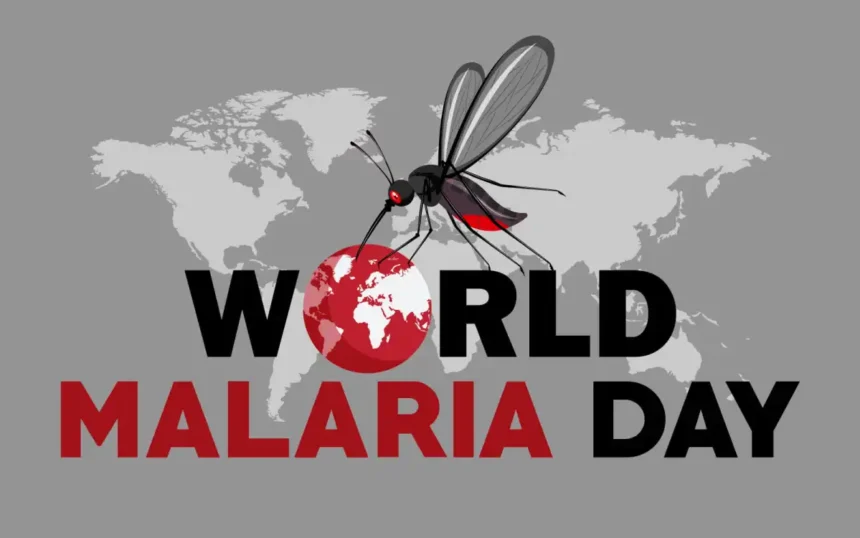
As the world marks efforts against malaria, we are compelled to confront a difficult reality, progress has been recorded, but the fight is far from being won, particularly in Nigeria where the burden remains disproportionately high.
We acknowledge that global efforts have yielded measurable outcomes. Billions of cases and millions of deaths have been averted since 2000, and several countries have achieved malaria-free status. Yet, these gains sit uneasily alongside the persistence of 282 million cases and over 600,000 deaths in 2024 alone. This contradiction underscores a systemic problem, progress is being made, but it is not being sustained or evenly distributed.
In Nigeria, the situation is more acute. We account for nearly a quarter of global malaria cases and over 30 percent of deaths. This is not merely a statistic, it is an indication of structural inefficiencies in public health management, environmental control, and socio-economic conditions. With 97 percent of the population at risk, malaria is not just a health issue, it is a national development constraint.
We recognise the reported reduction in malaria prevalence from 42 percent in 2010 to 15 percent in 2025. This reflects improvements in prevention, treatment, and awareness. However, we must resist the temptation to overstate this progress. A 15 percent prevalence rate still represents a significant public health burden, particularly in a country of Nigeria’s population size.
More importantly, the persistence of malaria at this scale points to deeper systemic gaps. Funding remains inconsistent, with external support such as the U.S. President’s Malaria Initiative being scaled down. At the same time, domestic investment, though increasing, is still insufficient to meet elimination targets. This creates a dependency cycle that undermines long-term sustainability.
We are also confronted with operational inefficiencies. The misuse of insecticide-treated nets, gaps in surveillance, and a detection deficit approaching 40 percent reveal weaknesses not in policy design, but in implementation and community engagement. Public health interventions cannot succeed where behavioural adoption is weak and accountability is diffuse.
The issue of resistance further complicates the landscape. Drug efficacy remains high in Nigeria for now, but the presence of insecticide resistance and emerging threats such as invasive mosquito species signal future risks. These are not distant concerns, they are immediate challenges that require anticipatory policy responses rather than reactive adjustments.
We must also confront the economic dimension of the crisis. Nigeria loses about $1.1 billion annually to malaria through treatment costs, prevention efforts, and lost productivity. This is a direct drag on economic growth, yet investment in local pharmaceutical production and research remains limited. Continued reliance on imported medical inputs not only increases costs but weakens national resilience.
There are promising developments. Vaccine rollout is expanding, new vector control strategies are being introduced, and a National Malaria Strategic Implementation Plan for 2026 to 2030 has been developed. However, we must be clear, strategy without execution will not deliver results. The history of public health in Nigeria is replete with well-designed plans that falter at implementation.
We therefore argue that the malaria challenge in Nigeria is no longer primarily technical. The tools exist, from effective drugs to advanced nets and vaccines. The real constraint lies in coordination, funding consistency, community participation, and institutional accountability.
To move from progress to elimination, we must prioritise sustained domestic investment, strengthen healthcare systems, enforce environmental sanitation, and build stronger linkages between research and industry. We must also deepen community ownership of interventions, ensuring that preventive tools are used as intended.
Malaria has persisted not because solutions are unavailable, but because systems are weak. Until those systems are strengthened, the cycle of progress and reversal will continue.