
By Ahmed Ahmed
The federal government has called for a transition from trade-driven consumption to domestic production and value addition, as Nigeria’s non-oil exports exceeded $6.1 billion in 2025, highlighting the need to strengthen manufacturing and improve the competitiveness of local businesses.
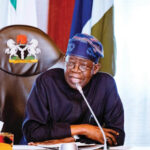
The Minister of State for Industry, Trade and Investment, Senator John Enoh, made the call while representing President Bola Tinubu at the opening of the 40th Lagos International Trade Fair, where he argued that sustainable economic growth would depend on the country’s ability to produce goods for domestic consumption and international markets.
“Trade without production is merely buying and selling other people’s work. True growth will only come when we make things, add value and employ people at home,” Enoh said.
He maintained that Nigeria must expand its productive capacity to reduce dependence on imported goods, generate employment and strengthen its position in global trade.
The minister disclosed that non-oil exports surpassed $6.1 billion in 2025, while capital importation reached approximately $21 billion. He also reported that gross external reserves stood at $55.07 billion as of October 2026, with net reserves exceeding $40 billion.
On other economic indicators, Enoh said headline inflation declined to 14.63 per cent in September 2026, from above 34 percent at its peak, while the economy recorded 4.43 percent growth in the second quarter of 2026.
He described these developments as evidence of improving economic conditions, while urging the government and private sector to consolidate the gains through investments in productive industries.
Enoh identified the African Continental Free Trade Area (AfCFTA), which provides access to a continental market of approximately 1.4 billion people, as an opportunity for Nigerian manufacturers. However, he stressed that improved product standards, faster customs procedures and the removal of unnecessary trade barriers would be necessary to maximise its benefits.
He also highlighted the recently approved Nigeria Industrial Policy as a framework for strengthening manufacturing, developing local value chains and converting raw materials into finished products.
Lagos State Governor, Babajide Sanwo-Olu, represented at the event, similarly called for stronger industrial capacity, identifying access to finance, technology and larger markets as critical requirements for enterprise expansion.
He disclosed that Lagos had supported 253 small and medium-sized enterprises through its Export Readiness Programme, while recording an 85.6 percent score in the 2025 Presidential Enabling Business Environment Council Subnational Ease of Doing Business Report.
Meanwhile, President of the Lagos Chamber of Commerce and Industry, Leye Kupoluyi, said the trade fair should translate into tangible commercial partnerships and business expansion.
He, however, emphasised that businesses needed reliable infrastructure, affordable financing, efficient logistics, improved security and predictable government policies to scale production.
With more than 1,000 exhibitors expected from over 20 countries, the fair provides an opportunity to connect Nigerian businesses with international markets.
Nevertheless, the $6.1 billion export performance highlights only part of the production challenge. Sustaining export growth will require consistent industrial investment, competitive production costs and stronger domestic supply chains. The success of the government’s production-led ambition will ultimately depend on whether policy commitments translate into improved capacity and market access for Nigerian enterprises.