REFORM TALKS with Enam Obiosio
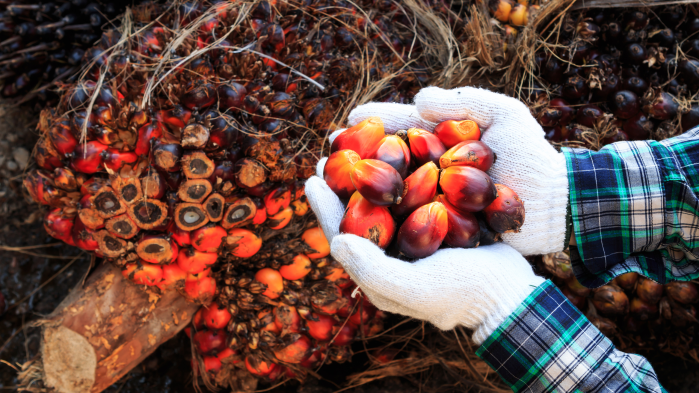
It is becoming increasingly difficult to justify Nigeria’s continued dependence on imported palm oil, especially when the numbers are this stark. We produce roughly 1.4 million metric tonnes annually, yet demand exceeds 2.5 million metric tonnes. That leaves a deficit of over one million metric tonnes every year, a gap that translates into as much as $600 million in import costs. For a country that once dominated the global palm oil market, this is not just an economic inefficiency, it is a structural failure.
What concerns me more is not the deficit itself, but the persistence of it. This is not a sudden shock. It is a long-standing imbalance that has been allowed to deepen over time. Every year we import what we should be producing, and in doing so, we export jobs, weaken our currency, and suppress the development of a critical agro-industrial value chain.
So, when I see the Federal Government and private sector investors moving to scale up domestic production, I do not interpret it as a breakthrough. I see it as a long overdue correction.
The intervention, anchored on the National Oil Palm Development Strategy, signals a shift toward coordinated action. What stands out to me is the attempt to move beyond fragmented initiatives into a more structured framework that aligns government institutions, private investors, and smallholder farmers. This matters, because Nigeria’s problem has never been the absence of policy ideas. It has been the absence of alignment and execution.
The Minister of Agriculture and Food Security, Abubakar Kyari, puts it in clear terms: “This strategy is practical, inclusive, and action-oriented. It brings together government institutions, research bodies, private sector operators, commodity associations, and development partners under a shared framework designed to expand production, improve yields and strengthen processing capacity.” I take that statement seriously, but I also read it with caution. Nigeria has seen many strategies described in similar terms. The real test is whether this one moves beyond articulation into measurable outcomes.
Still, there are elements of this initiative that suggest a more grounded approach. The proposal by Mass Industrial Development and Logistics Limited to establish seven integrated oil palm estates of 10,000 hectares each is not incremental. It is industrial in scale. These are not just plantations, they are designed as agro-industrial hubs that combine cultivation, processing, logistics, and community development. That integrated model is exactly what has been missing in Nigeria’s agricultural sector.
I have always believed that agriculture in Nigeria suffers less from lack of land and more from lack of structure. We have over three million hectares of suitable land for oil palm cultivation, yet we remain a net importer. That contradiction can only exist in a system where production is disconnected from processing, and where smallholders are left outside organised value chains.
What this initiative attempts to do is close that gap. By integrating smallholder farmers into structured systems, it creates a pathway for scaling production without excluding the very people who dominate the agricultural landscape. That is critical. Large-scale estates alone cannot solve Nigeria’s production deficit. Inclusion is not a moral argument here, it is an economic necessity.
The numbers attached to the project are also difficult to ignore. The minister projects over 100,000 direct and indirect jobs, alongside potential savings of up to $500 million annually through import substitution. If achieved, that would significantly reduce pressure on foreign exchange and create new streams of export revenue. But again, I am cautious. Projections are easy. Execution is where Nigeria often struggles.
From the private sector side, the model appears more deliberate. Engr. Emmanuel Obiorah, Managing Director of Mass Industrial Development and Logistics Limited, emphasises inclusive ownership and local participation, with about 350,000 beneficiaries projected across the seven estates. That scale of participation suggests that the initiative is not just about production, but about distribution of economic value.
What I find particularly compelling is the production potential. Each 10,000-hectare plantation is expected to yield up to 40,000 metric tonnes of crude palm oil annually. Multiply that across seven estates, and the output begins to meaningfully close the national deficit. More importantly, it feeds downstream industries, from food processing to manufacturing, creating a multiplier effect that extends far beyond the farms.
This is where I think the conversation needs to shift. Palm oil is not just an agricultural commodity. It is an industrial input. When we import it, we are not just importing food, we are importing raw materials for entire sectors. That has implications for manufacturing costs, competitiveness, and ultimately, economic growth.
I also see this initiative within a broader global context. Demand for palm oil is estimated at over $70 billion globally. Nigeria is not just trying to meet domestic demand, it is attempting to re-enter a highly competitive international market. That is an ambitious goal, and one that requires more than increased production. It requires efficiency, quality standards, and export infrastructure.
This is where I remain sceptical. Scaling production is necessary, but it is not sufficient. Nigeria must also address issues of logistics, processing capacity, and market access. Without these, increased output could simply create new bottlenecks rather than new opportunities.
There is also the issue of time. Oil palm is not a crop that delivers immediate returns. It requires years of cultivation before reaching full productivity. This means that the benefits of this initiative will not be immediate. It requires patience, consistency, and policy stability, all of which have been in short supply in Nigeria’s agricultural sector.
Yet, despite these concerns, I see this as a necessary direction. Nigeria cannot continue to import its way out of structural deficits. The current model is unsustainable. It drains foreign exchange, limits domestic value creation, and exposes the economy to external shocks.
What this initiative represents, at its core, is an attempt to rebuild a lost advantage. Nigeria was once a global leader in palm oil production. That position was not lost due to lack of capacity, but due to policy neglect and structural inefficiencies. Reclaiming it will require more than isolated projects. It will require sustained commitment across multiple fronts.
I also think this initiative sends an important signal. It suggests a recognition that government alone cannot drive agricultural transformation. The involvement of private sector investors introduces capital, efficiency, and accountability that are often missing in public sector-led projects. At the same time, government’s role in providing policy direction and coordination remains critical.
The real question, in my view, is whether this partnership can be sustained. Nigeria has a history of strong starts followed by weak follow-through. If this initiative is to succeed, it must avoid that pattern. It must be insulated from policy reversals, funding disruptions, and bureaucratic inertia.
Ultimately, I see this as a test case. If Nigeria can successfully scale palm oil production through a coordinated public-private model, it provides a template for other sectors. If it fails, it reinforces a pattern that has held the economy back for decades.
For now, I remain cautiously optimistic. The scale is right. The structure appears more coherent than past efforts. The alignment between government and private sector is a positive development. But optimism alone is not enough. Nigeria does not need another strategy. It needs results.