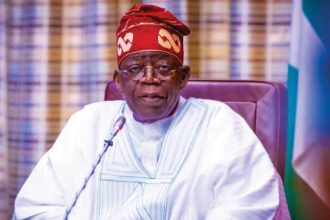


As soon as President Bola Ahmed Tinubu got in the saddle, his administration rolled out a sweeping set of structural reforms aimed at stabilizing the economy, unlocking productivity, and charting a course toward sustainable, inclusive growth. At the heart of the vision lies a strategic hinge from a dependence on oil rents to a diversified, export-driven economy. In this context, the Nigerian Export-Import (NEXIM) Bank is emerging as a critical catalyst, recalibrating its mandate to support President Tinubu’s Renewed Hope Agenda.
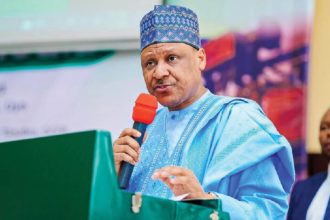
Under the leadership of Mr. Abba Bello, the Managing Director and Chief Executive Officer (MD/CEO) who has continued to steer the institution since 2017, NEXIM Bank has deepened its interventionist posture while realigning with President Tinubu’s pro-market, trade-expansionist outlook. The bank’s evolving operations mirror the administration’s priorities: boosting non-oil exports, improving access to trade finance, strengthening regional value chains, and promoting Made-in-Nigeria goods on the global stage.
Reforming Trade Finance for National Competitiveness
In line with the Tinubu administration’s push for economic diversification, NEXIM Bank has aggressively pursued trade finance reforms. The administration’s broader objective is to improve Nigeria’s current account balance and reduce vulnerability to oil price shocks. For a country where non-oil exports still contribute less than 10% of total export earnings, NEXIM’s renewed mandate is essential.
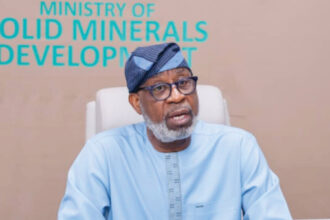
To this end, the Bank has scaled up its Export Development Fund (EDF) and expanded concessional loan offerings to agro-processing firms, light manufacturers, solid mineral exporters, and creative economy entrepreneurs. Between 2023 and the first quarter of 2025, NEXIM reportedly disbursed over N240 billion in facilities targeted at non-oil exporters—an increase of more than 70% from the previous two-year period.

In addition, the Bank has launched structured export finance schemes, including:
- The Women and Youth Export Facility (WAYEF), which supports women-led MSMEs in the shea butter, fashion, and crafts value chains.
- The Small and Medium Export Enterprise Facility (SMEEF), designed to help emerging exporters access working capital, machinery, and logistics support.
These facilities align with President Tinubu’s broader vision of inclusive economic participation and youth empowerment through trade.
African Trade Integration and AfCFTA Alignment
President Tinubu has consistently emphasized the need for Nigeria to assert itself as a dominant player in intra-African trade, especially under the African Continental Free Trade Area (AfCFTA) agreement. NEXIM has taken the lead in operationalizing this directive through various cross-border initiatives.
The Bank is a key promoter of the Sealink Project, a private-sector driven maritime initiative that seeks to improve direct shipping connectivity between Nigeria and West/Central African countries. The project, expected to become operational by the end of 2025, will drastically cut logistics costs, reduce export timelines, and improve regional trade flows.
In addition, NEXIM is actively supporting the development of Export Processing Zones (EPZs) in partnership with the Nigeria Export Processing Zones Authority (NEPZA), enabling Nigerian producers to manufacture, process, and ship products seamlessly to African markets.
This regional strategy resonates with President Tinubu’s foreign policy ethos—economic diplomacy backed by trade infrastructure.
Export Credit Insurance and Risk Guarantee Expansion
As part of the administration’s efforts to de-risk the business environment, NEXIM has intensified efforts to provide export credit guarantees and insurance products for Nigerian exporters. Working in partnership with the Central Bank of Nigeria (CBN) and the Nigerian Export Promotion Council (NEPC), the Bank has:
- Expanded its Credit Risk Guarantee (CRG) schemes to mitigate default risks by up to 80%.
- Deployed credit insurance policies to attract commercial lenders into the export value chain.
- Launched a Trade Information Portal, giving Nigerian exporters data-driven insights into destination markets, compliance requirements, and buyer risk assessments.
These measures support President Tinubu’s investment narrative: a government that reduces risk and encourages innovation and enterprise.
Boosting Export Infrastructure through PPPs
One of the persistent bottlenecks for Nigerian exporters has been poor trade infrastructure—port congestion, inadequate storage facilities, and high transaction costs. NEXIM, under Tinubu’s PPP-anchored infrastructure plan, is increasingly investing in hard and soft infrastructure to support trade facilitation.
Key initiatives include:
- Development of Export Trade Houses (ETHs) in select African and European markets to showcase Nigerian goods and aggregate demand.
- Financing of inland dry ports and commodity aggregation centers in the North and Middle Belt, easing the burden of transporting goods to the coast.
- Partnering with state governments to develop Special Agro-Industrial Processing Zones (SAPZs), aimed at turning raw agricultural produce into export-grade products.
These projects tie directly into President Tinubu’s goal of generating $100 billion in non-oil export revenues by 2030.
SMEs and the New Exporters’ Onboarding Programme
Recognizing that small businesses face the steepest challenges in entering global markets, NEXIM has launched the New Exporters’ Onboarding Programme (NEOP), targeting 10,000 SMEs by the end of 2025. The initiative includes:
- Capacity-building workshops on documentation, quality standards, and packaging.
- Access to pre-shipment finance and subsidized FX.
- Export mentoring in collaboration with chambers of commerce and export veterans.
Governance Reforms and Institutional Accountability
One of the pillars of President Tinubu administration is transparency and institutional accountability. In this light, NEXIM has adopted a corporate governance overhaul in line with international development finance best practices. New internal reforms include:
- Quarterly transparency reports detailing disbursements, repayment rates, and impact assessments.
- Implementation of an Environmental and Social Risk Management Framework (ESRMF) for all projects.
- Integration of the GIFMIS/TSA system for improved public fund oversight and CBN compliance.
NEXIM’s Role in Nigeria’s Economic Renaissance
President Tinubu’s Renewed Hope Agenda is built on a clear premise: Nigeria must export its way to prosperity. In this context, NEXIM Bank is no longer a silent institution operating in the background of trade facilitation. It has become a strategic national vehicle for implementing export-led growth, poverty reduction, and inclusive economic empowerment.