By Jennete Ugo Anya
The Debt Management Office (DMO) has disclosed that Federal Government of Nigeria bonds accounted for 79.85 percent of the total domestic debt stock, which stood at N74.89 trillion as of March 31, 2025.
The figure was contained in the latest domestic debt report released recently by the DMO. According to the breakdown, FGN bonds amounted to N59.8trillion, comprising N58.39trillion in naira-denominated bonds and N1.41trillion in US dollar-denominated bonds. The dollar bond figure includes a USD 917.4million issuance in September 2024, converted to naira at an exchange rate of N1, 536.32 per dollar, as applied by the Central Bank of Nigeria (CBN) as of March 31, 2025.
The report also showed that Nigerian Treasury Bills made up 16.96 percent of the total domestic debt stock, amounting to N12.7trillion, while FGN Sukuk stood at N992.6billion, representing 1.33 percent.
FGN Savings Bonds contributed N82.6billion, or 0.11 percent, and Green Bonds stood at N15billion, or 0.02 percent.
Promissory notes totalled N1.3trillion, accounting for 1.74 percent of the total, with N1.03trillion denominated in foreign currency and N271.4billion in local currency. The foreign currency portion was converted using the official exchange rate of N1, 536.32 per dollar.
The DMO also noted that the N74.89 trillion domestic debt stock includes N22.72 trillion in bonds issued to restructure the Central Bank of Nigeria’s Ways and Means Advances.
Domestic Debt’s Factors
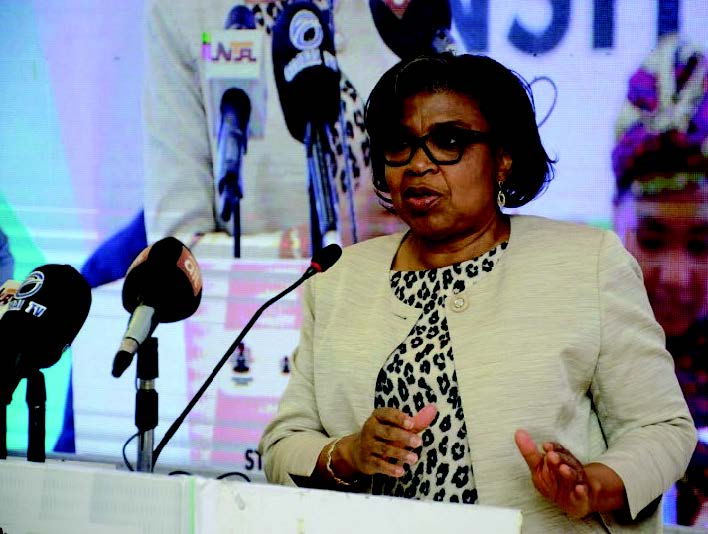
Recall that in in April, the Director-General (DG) of the DMO, MS. Patience Oniha, attributed Nigeria’s rising debt profile to a combination of factors, including new borrowings and the continued issuance of promissory notes to settle obligations without sufficient revenue backing.
She said that although borrowing is an accepted form to fund government activities, there should be revenues generated to support such. “What triggers debts and why the debt stock keeps growing is because when the debt stock is growing, debt service also grows. The government has been issuing promissory notes to settle obligations for which it does not really have the revenue. So, that is why the debt stock has been growing,” she noted.
Nigeria’s domestic debt has hit a staggering N74.89 trillion, according to the latest report from the DMO. And while the figure itself is enough to raise eyebrows, the composition of the debt – and what it tells us about the government’s financing habits – offers a more sobering insight into the country’s fiscal direction.
At the heart of the report is a revealing statistic: Federal Government of Nigeria (FGN) bonds account for 79.85% of the entire domestic debt profile. That translates to N59.8 trillion, further broken down into N58.39 trillion in naira-denominated bonds and N1.41 trillion in U.S. dollar-denominated bonds. The latter includes a USD 917.4 million bond issued in September 2024, converted using the Central Bank of Nigeria’s official exchange rate of N1,536.32 to the dollar as at March 31, 2025.
The Growing Weight of Bonds
FGN bonds – long-term securities issued by the federal government – have become the go-to instrument for financing Nigeria’s persistent budget deficits. They’re attractive to investors because of their relatively high yield and perceived low risk. But they’re also telling of a government that’s relying more and more on future promises to solve today’s problems.
The debt figures highlight the continuation of a trend: the steady crowding-out of other debt instruments like Treasury Bills, Sukuk, and Savings Bonds. Nigerian Treasury Bills (NTBs), which are typically short-term in nature, make up only 16.96 percent of the total domestic debt, amounting to N12.7 trillion.
Meanwhile, Sukuk – non-interest Islamic bonds used primarily for infrastructure – stood at N992.6 billion, representing just 1.33 percent. FGN Savings Bonds contributed N82.6 billion (0.11 percent), while Green Bonds – debt instruments used for financing climate-related projects – accounted for a mere N15 billion, or 0.02 percent.
Promissory Notes, Restructured Advances
Another significant component of the debt profile comes from promissory notes, which totalled N1.3 trillion. These notes are typically issued to settle obligations like contractor debts or refunds to states, and of this total, N1.03 trillion is foreign currency-denominated. Again, the exchange rate of N1, 536.32/$ was used to convert the foreign portion.
But perhaps the most striking detail in the DMO’s breakdown is the inclusion of N22.72 trillion in bonds issued to restructure the CBN’s Ways and Means Advances. These are essentially emergency loans extended by the apex bank to the federal government to plug budget shortfalls.
Originally intended as short-term stopgap funding, the Ways and Means facility ballooned in recent years – becoming a source of concern among economists and legislators. The restructuring of these advances into bonds signals a move toward transparency and longer-term debt management, but also adds significantly to Nigeria’s already weighty obligations.