
As President Tinubu’s Reforms Begin To Refine Nigeria’s Economy
By Jennete Ugo Anya
A
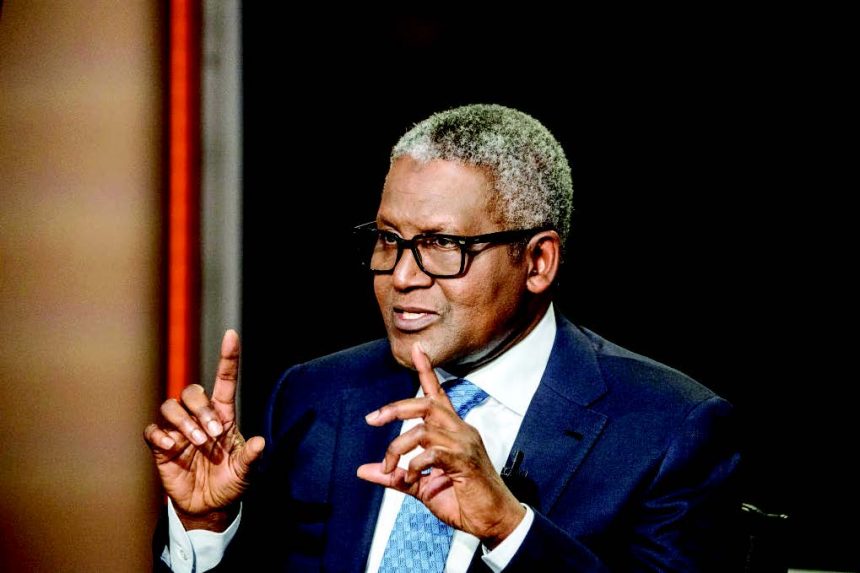
frica’s richest man and President of the Dangote Group, Alhaji. Aliko Dangote, has commended President Bola Ahmed Tinubu for what he described as “visionary leadership” in driving Nigeria’s infrastructure renewal and implementing effective flood control strategies.
In an open letter titled ‘Appreciation: Open Letter to President Bola Ahmed Tinubu’, Alhaji Dangote commended key projects undertaken under President Tinubu administration, notably the Eko Atlantic City land reclamation initiative and the recently launched superhighway projects. The letter was made public recently through the X handle of President Tinubu’s Special Adviser on Information and Strategy, Mr. Bayo Onanuga.
From Bar Beach to a Modern City
Alhaji Dangote particularly highlighted the transformation of the Bar Beach area into the 1,000-hectare Eko Atlantic City, noting its success in protecting Victoria Island from ocean surges and coastal erosion.
“Those of us who live in Victoria Island are much better off for it,” he wrote, applauding President Tinubu’s role in spearheading the sea wall and land reclamation project during his tenure as Lagos State Governor. “Your exemplary intervention in ending the era of ocean surge and continuously tackling the issue of perennial flooding in the area is a legacy to be proud of.”
He cited several areas of Lagos – such as Ahmadu Bello Way, Akin Adesola Street, and Adetokunbo Ademola Street – as beneficiaries of the project’s protective infrastructure.
Reviving Dormant Dreams
Alhaji Dangote also commended the federal government’s kick-off of two major road networks: the Lagos-Calabar Coastal Highway and the Sokoto-Badagry Superhighway. He described the latter as the “resurrection of a 48-year-old project,” both now under construction by Hitech Construction Company Limited.
Drawing comparisons with successful land reclamation efforts in the Netherlands, Alhaji Dangote stated that the Bar Beach project reflected a similar level of ingenuity. “The same ethos resonates in the Bar Beach project, for which I salute you,” he said, likening it to the transformation of submerged land in Zeeland into fertile, habitable terrain.
Philanthropy Meets Climate Action
Beyond his commendation, Mr. Dangote also used the letter to express sympathy with victims of recent flash flooding in Kerr County, Texas, which claimed over 100 lives. In response to the growing threat of climate-related disasters, he announced that the Aliko Dangote Foundation would soon unveil a Climate Fund focused on protecting Nigeria’s most vulnerable regions.
A Political Undercurrent
Reacting to the letter, Mr. Onanuga said that the gesture represents “an honest assessment of President Tinubu’s leadership” and counters opposition narratives that the President has made no meaningful impact in office.
As Nigeria faces mounting environmental and infrastructural challenges, Dangote’s endorsement stands as a high-profile vote of confidence in the administration’s development agenda—linking public policy with private sector acknowledgment and future-oriented philanthropy.
In another development, the federal government says the tide may finally be turning. With cautious optimism, it has declared that the country’s economy is beginning to show signs of sustained recovery – thanks, it says, to bold and often painful reforms championed by President Bola Ahmed Tinubu.
Speaking during a courtesy visit by the newly elected executives of the Nigerian Guild of Editors in Abuja, Prof Mohammed Idris, Honourable Minister of Information and National Orientation, offered a candid appraisal of Nigeria’s economic trajectory under the current administration.
“We are not in El-dorado yet, but progress is undeniable. The President has said it repeatedly – we are turning the corner. And today, international rating agencies are beginning to acknowledge that our direction is right.”
It is a sentiment that reflects a broader narrative the government is eager to project: that despite current hardships, a foundation is being laid for long-term economic stability and inclusive growth.
At the heart of the reforms are two headline-making policies—the removal of fuel subsidies and the unification of the foreign exchange rate. Both moves sparked fierce public debate and discomfort across sectors. Yet, government insists they were necessary first steps toward rebuilding a healthier economy.
“These policies are tough, no doubt,” Prof Idris acknowledged. “But they are part of a deliberate, long-term strategy. The aim is to stabilise our economy, even if the short-term sacrifices are significant.”
Beyond economic figures and forecasts, the government points to human impact – especially through the Students Loan Scheme, which it hails as one of its most transformational social investment programmes so far. The initiative, which currently supports over 300,000 students, is giving young Nigerians a lifeline to education and a future that might have otherwise been out of reach.
“Because of this intentional policy, students who could have dropped out or never even had the chance to attend school are now being supported by the government,” Prof Idris said. “We are not just talking change – we are enabling it.”